
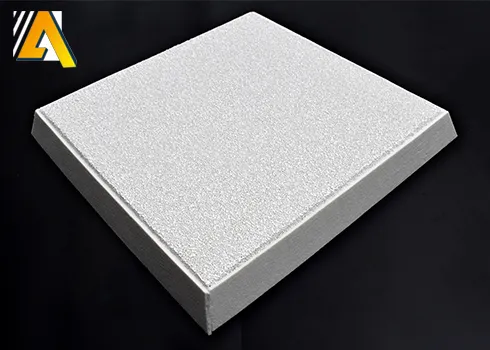
15 Nov Ceramic Foam Filter: Alumina & SiC Specs for Aluminum Casting
Foam Ceramic filters
The main working principle of Foam Ceramic filters is to make the chaotic, torn metal liquid pass through the foam ceramic honeycomb hole and become a smooth, uniform, and clean metal liquid.
The unique honeycomb structure can adsorb some small particle impurities in aluminium water, such as non-metal particles, slag, refractory fragments, etc., into the filter.
Secondly, the smooth metal laminar flow fills the model better, on the one hand, overflowing the gas, on the other hand, reducing the erosion of the model and reducing the product scrap rate.
It can improve the metallographic structure and mechanical properties of castings, produce high-quality standard precision castings, reduce the scrap rate of castings, reduce the wear of cutting tools during casting processing, and increase the economic and social benefits.
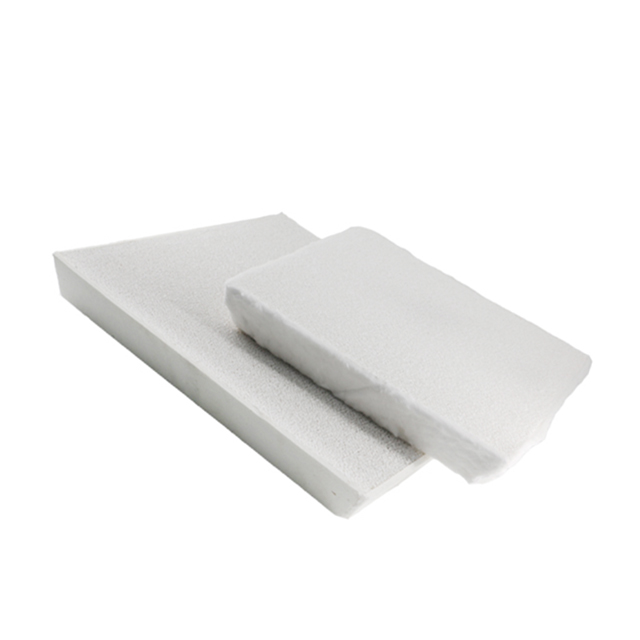
The specific functions and characteristics of Foam Ceramic filters
1. The honeycomb structure can adsorb particles filter the inclusions in the casting, and escape the bubbles contained in the molten metal, effectively reduce the internal and external pores of the casting, reduce surface defects, reduce the filling turbulence during casting, and significantly improve the casting yield. This is superior to high silica mesh screens and straight-hole filtration products. The former is for sieving and adsorption of tiny slag, while the latter two are only for sieving.
2. Let the molten metal change from eddy current to stable flow and stabilize the purified metal liquid. It not only uniforms the metal liquid, but also increases the compression sealing of the casting, further enhances the casting elongation (about 25%) and tensile strength, and the surface finish is relatively improved.
3. Simplify the design requirements of the casting system, reduce the length of the runner, and improve the production rate of the casting process.
4. The inside of the casting is clean, which reduces the machining time and tool damage of the casting, and the production efficiency is improved.
The Science of Molten Metal Filtration: Mechanism of Action
To achieve superior cleanliness and minimize casting defects, the Ceramic Foam Filter operates through a complex, three-part mechanism. It is not simply a sieve; it is a sophisticated system for Deep Bed Filtration that enhances metal quality by eliminating both macroscopic and microscopic non-metallic inclusions.
The Three Primary Filtering Effects
A. Sieving / Mechanical Entrapment (Macroscopic)
This is the most direct and initial filtering effect. As the molten metal flows through the ceramic network, larger inclusions (macroscopic impurities) that are dimensionally greater than the filter’s pore opening size are mechanically blocked and captured on the filter’s front surface. This creates the initial filtration layer.
Result: Effective removal of large dross and oxide skins, preventing immediate damage to the final casting.
B. Deep Bed Filtration / Adsorption (Microscopic)
This is the critical function that differentiates ceramic foam from standard mesh filters. As the metal is forced to flow tortuously through the deep, maze-like internal structure of the filter’s porous body, the inclusions are brought into repeated contact with the filter’s ceramic struts.
The high surface area and specialized material structure (especially for Alumina and SiC) promote chemical and physical forces (adsorption) that cause smaller, often microscopic inclusions (e.g., fine oxide particles, carbides) to adhere to the ceramic walls.
Result: Significant removal of inclusions as small as 10-30 mm, leading to high purity.
C. Filter Cake Effect
As the filtration process continues, the entrapped inclusions, particularly those gathered during the sieving phase, accumulate on the filter surface and within the first layer of pores. This dense layer of deposited material acts as a secondary filter medium.
This filter cake effectively reduces the apparent pore size of the filter, enhancing the capture efficiency for even smaller particles that were not trapped initially.
Result: Filtration efficiency increases slightly over time until the accumulation limits the metal flow.
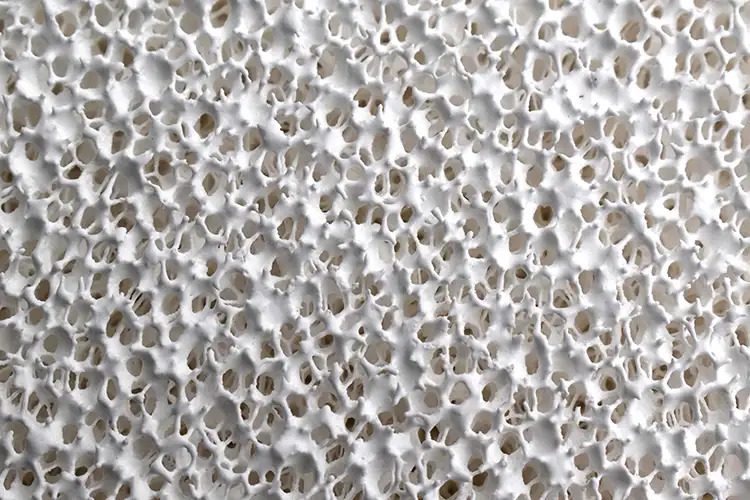
AdTech Ceramic Foam Filter: Detailed View of Porous Surface Structure
Filter Material Selection Guide: Matching Filter to Alloy
Choosing the correct ceramic material is crucial for avoiding filter corrosion, thermal shock, and maximizing filtration performance for specific molten alloys. AdTech offers three primary materials, each optimized for different foundry conditions:
1. Alumina Al2O3 Ceramic Foam Filter
| Key Alloy Focus | Primary Material Feature | Operating Temperature Range | Best Application |
| Aluminum and its Alloys | Excellent chemical stability and high-purity composition. Non-wetting to aluminum. | Up to 1100℃ (2012°F) | Primary and Secondary Aluminum Casting, low-pressure casting, rod & billet production. |
| Pore Size Range | 10 PPI to 60 PPI |
2. Silicon Carbide (SiC) Ceramic Foam Filter
| Key Alloy Focus | Primary Material Feature | Operating Temperature Range | Best Application |
| Copper, Bronze, Brass, Ductile Iron, Gray Iron | Superior thermal shock resistance and high mechanical strength. Excellent corrosion resistance to iron slags. | Up to 1500℃ (2732°F) | Iron and Copper Alloy Foundries, continuous casting lines requiring high mechanical robustness. |
| Pore Size Range | 10 PPI to 30 PPI |
3. Zirconia (ZrO2) Ceramic Foam Filter
| Key Alloy Focus | Primary Material Feature | Operating Temperature Range | Best Application |
| Steel and Superalloys | Highest service temperature and superior resistance to molten steel and severe corrosive environments. | Up to 1700℃ (3092°F) | Investment Casting of Steel, filtration of superalloys (Nickel-based, Cobalt-based), aerospace components. |
| Pore Size Range | 10 PPI to 30 PPI |
Comprehensive Technical Data Specifications
The performance of a ceramic foam filter is defined by its physical and thermal properties.
1. Alumina (Al2O3) Filter Specifications
| Property | Unit | Specification | Notes |
| Pore Size Range (PPI) | N/A | 10 to 60 | Higher PPI = Finer Filtration |
| Porosity | % | [80 – 90]% | High porosity ensures minimal pressure drop |
| Bulk Density | g/cm³ | [0.35 – 0.45] | Lightweight, minimal thermal loss |
| Maximum Operating Temp | ℃ | 1100 | Stable for standard aluminum alloys |
| Cold Crushing Strength | MPa | ≥0.8 | Resistance to mechanical damage before use |
| Thermal Shock Resistance | N/A | Excellent | Withstands pre-heating cycles |
2. Silicon Carbide (SiC) Filter Specifications
| Property | Unit | Specification | Notes |
| Pore Size Range (PPI) | N/A | 10 to 30 | Standard for iron and copper alloys |
| Porosity | % | [80 – 85]% | Slightly lower porosity due to high strength |
| Bulk Density | g/cm³ | [0.55 – 0.65] | Higher density due to SiC component |
| Maximum Operating Temp | ℃ | 1500 | Required for high-melting point alloys |
| Cold Crushing Strength | MPa | ≥1.5 | Excellent mechanical and structural integrity |
| Resistance to Thermal Shock | Cycles | ≥5 (Water Quench Test) | Superior resistance to sudden temperature changes |
3. Zirconia (ZrO2) Filter Specifications
| Property | Unit | Specification | Notes |
| Pore Size Range (PPI) | N/A | 10 to 30 | Optimized for high-temperature flow |
| Porosity | % | [85 – 90]% | High filtration efficiency at extreme temps |
| Bulk Density | g/cm³ | [0.9 – 1.2] | Heavy-duty, high corrosion resistance |
| Maximum Operating Temp | ℃ | 1700 | Ideal for highly demanding steel casting |
| Cold Crushing Strength | MPa | ≥1.0 | Stable under high flow rates of dense alloys |
| Resistance to Corrosive Slags | N/A | Excellent | Withstands aggressive steel and superalloy melts |
Quality Control and Dimensional Tolerance
AdTech filters are manufactured under strict ISO 9001 guidelines to ensure product consistency and reliability.
1. Dimensional Accuracy
Consistent dimensions are critical for fitting filters into housing and ensuring an effective seal against metal bypass.
-
Standard Tolerance: The length and width are typically held within ±1.5mm.
-
Thickness Tolerance: Thickness is held within ±1.0mm.
-
Custom Shapes: We maintain precise tolerance control even for complex geometric shapes (e.g., circular, square, rectangular, and custom shapes with sealing gaskets).
2. Comprehensive Inspection Process
Every batch of AdTech filters undergoes rigorous testing:
-
Visual Inspection: Checking for visible flaws, cracks, or missing edge material.
-
Porosity Check: Measuring the exact void volume to ensure consistent flow rate.
-
Pressure Drop Test: Simulating molten metal flow to guarantee the filter meets minimum flow rate requirements before clogging.
-
Mechanical Strength Test: Confirming the Cold Crushing Strength meets the required minimums to prevent breakage during handling and pre-heating.
Foam Ceramic filter recommendations
1. Control the melting point of the alloy by using a molten aluminium filter. To avoid excessive temperature, damage the filter function.
2. choose the appropriate aperture, the purification effect should match the casting requirements.
3. The casting temperature should be as high as possible to increase the metal fluidity.
4. When the filter is placed horizontally under the intersection cup or on the parting surface, the casting height should not exceed 20 cm. It is best to flush the metal liquid on the wall of the intersection, and do not directly rush to the filter to avoid damage to the filter.
5. the filter is placed gently and gently. When not in use, put it in a dry and ventilated place. Use an air gun first to ensure that there is no debris in the filter.
The Science Behind Ceramic Foam Filtration: A Multi-Stage Mechanism
To achieve the “zero-defect” quality required in modern aluminum casting, one must understand that a Ceramic Foam Filter is not a simple sieve; it is a sophisticated metallurgical reactor. The filtration process occurs through three distinct physical and chemical mechanisms:
1. Surface Sieving (Macro-Filtration)
As the molten aluminum first contacts the CFF, particles larger than the pore size are captured at the entry surface. This creates a “filter cake” which, over time, enhances the filtration of even smaller particles but increases the pressure drop across the filter.
2. Cake Filtration (Transition Stage)
As the captured inclusions accumulate, they form a secondary filtration layer. This layer acts as a finer mesh, increasing the efficiency of the filter for mid-sized non-metallic inclusions (NMIs) but requiring careful monitoring of the flow rate.
3. Deep-Bed Filtration & Adsorption (Micro-Filtration)
This is the most critical stage for high-purity alloys. As molten metal follows a tortuous path through the 3D reticulated structure, fine inclusions (1-10 microns) come into contact with the ceramic struts. Due to the high surface tension and chemical affinity, these micro-impurities are adsorbed onto the filter wall.
The filtration efficiency η can be mathematically modeled using the following transport-attachment equation:
Where:
-
ε: Porosity of the ceramic foam.
-
L: Thickness of the filter.
-
α: Attachment coefficient (interaction between the inclusion and the ceramic).
-
dp: Mean pore diameter.
AdTech’s Engineering Note: By optimizing the α coefficient through our proprietary high-purity alumina formulation, AdTech filters achieve up to 98% inclusion removal efficiency.
10 Critical Foundry Challenges Solved by AdTech CFF
Foundry managers face constant pressure to reduce costs and increase quality. Here is how our Ceramic Foam Filters address the ten most common production bottlenecks:
-
High Scrap Rates due to Pinholes: Our filters reduce hydrogen-carrying inclusions, the primary nucleation sites for pinhole porosity in final logs.
-
Molten Metal Turbulence: The reticulated structure converts turbulent flow into laminar flow, preventing secondary oxidation in the mold.
-
Surface Defects in Foil: For foil producers (down to 6 microns), our 50-60 PPI filters eliminate microscopic NMIs that cause “dark spots” and pinholes.
-
Thermal Shock Breakage: Traditional filters often crack upon contact with 750°C aluminum. AdTech uses a low-expansion phosphate-bonded alumina to ensure structural integrity.
-
Excessive Metal Loss: By producing “dryer” dross through cleaner filtration, we maximize the Metal Recovery Rate (MRR).
-
Slow Casting Speeds: Optimized pore connectivity ensures a high flow rate without sacrificing filtration surface area.
-
Inconsistent Billet Quality: Standardized PPI density ensures every batch of aluminum meets aerospace or automotive grade specifications.
-
Tooling Wear: Cleaner metal means less wear and tear on extrusion dies and rolling mills, extending the life of your downstream equipment.
-
Slag Carryover: Our filters act as the final gatekeeper against furnace slag and refractory fragments entering the casting table.
-
Environmental Compliance: Reducing scrap means reducing the energy required for re-melting, significantly lowering the foundry’s carbon footprint.
Comprehensive Specifications & Technical Parameters
To ensure precision in your casting process, AdTech provides standardized specifications for Alumina (Al2O3) Ceramic Foam Filters.
| Property | Value |
| Main Chemical Component | Alumina (Al2O3 ≥ 90%) |
| Working Temperature | ≤ 1200 ℃ |
| Porosity (PPI) | 10, 20, 30, 40, 50, 60 |
| Bulk Density | 0.40 – 0.50 g/cm³ |
| Compressive Strength (Room Temp) | > 1.0 MPa |
| Thermal Shock Resistance | 1200℃ → Room Temp (Air Cool) 5 Times |
| Size Tolerance | +0 / -1.5 mm (Customizable) |
Customization Options: We offer beveled edges, specialized sealing gaskets (expandable or non-expandable), and customized shapes for horizontal or vertical casting systems.
PPI Selection Guide: Choosing the Right Filter for Your Alloy
Selecting the correct Pores Per Inch (PPI) is a balance between purity requirements and the required flow rate.
-
10 – 20 PPI: Best for primary aluminum smelting and large foundry billets where high flow volumes are required and inclusion size is relatively large.
-
30 – 40 PPI: The industry standard for high-quality extrusion billets and sheet ingots. Provides an excellent balance of flow and impurity capture.
-
50 – 60 PPI: Specialized for ultra-pure applications such as aerospace components, automotive engine blocks, and thin-gauge aluminum foil production.
Expert Advice: If you are transitioning from 30 PPI to 40 PPI, ensure your pre-heating temperature is increased by 10% to prevent “cold start” metal freezing within the smaller pores.
Manufacturing Excellence: The AdTech Quality Advantage
Trust is built through transparency. Our manufacturing process is designed to exceed international B2B standards:
-
Raw Material Sourcing: We use only nano-grade high-purity alumina powder. Every batch is tested for moisture content and particle size distribution before entering production.
-
Automated Slurry Impregnation: We use specialized polyurethane sponges as templates. Our automated vacuum-suction technology ensures the slurry is distributed evenly, eliminating “clogged pores” or “thin struts.”
-
High-Temperature Sintering: Filters are fired in a 100-meter tunnel kiln at 1150℃ for 12 hours. This ensures the complete phase transformation of the ceramic bond, resulting in superior mechanical strength.
-
Edge Treatment & Sealing: Every filter is CNC-trimmed for precise dimensions and fitted with high-quality gaskets to prevent “by-pass” leakage during casting.
Frequently Asked Questions about AdTech Foam Ceramic Filters
What are Foam Ceramic Filters and how do they work?
What materials of Foam Ceramic Filters does AdTech offer?
How to choose the correct PPI for my casting process?
What is the maximum temperature AdTech filters can withstand?
– Silicon Carbide: Up to 1500°C
– Zirconia: Up to 1700°C
How do these filters improve casting quality?
Does AdTech support customized sizes and shapes?
How do you ensure filters are not damaged during shipping?
What quality standards do AdTech products meet?
What is the typical lead time for bulk orders?
Why choose AdTech over other suppliers?
Download Ceramic Foam Filter Full Technical Data Sheet (PDF)
Related posts:
 Alumina Ceramic Foam Filter
 Alumina Ceramic Foam Filter Introduction
Alumina Ceramic Foam Filter Manufacturers
Alumina Ceramic Foam Filter Introduction
Alumina Ceramic Foam Filter Introduction
Alumina Ceramic Foam Filter Manufacturers
 Alumina Ceramic Filters
 Alumina Ceramic Foam Filter For Aluminum Casting
 Activated Alumina Ceramic Balls: High Adsorption Desiccant, Filtration Specs
 Aluminum Casting Using Alumina Ceramic Foam Filter
 Aluminum Casting Alumina Ceramic Foam Filter
 Alumina Ceramic Foam Filter Casting Filtration
 Alumina Ceramic Foam Filter Aluminum Pakistan
 Alumina Ceramic Foam Filter Pakistan Aluminum
 Boron Nitride Coating: Non-Stick Molten Aluminum Lubricant Specs
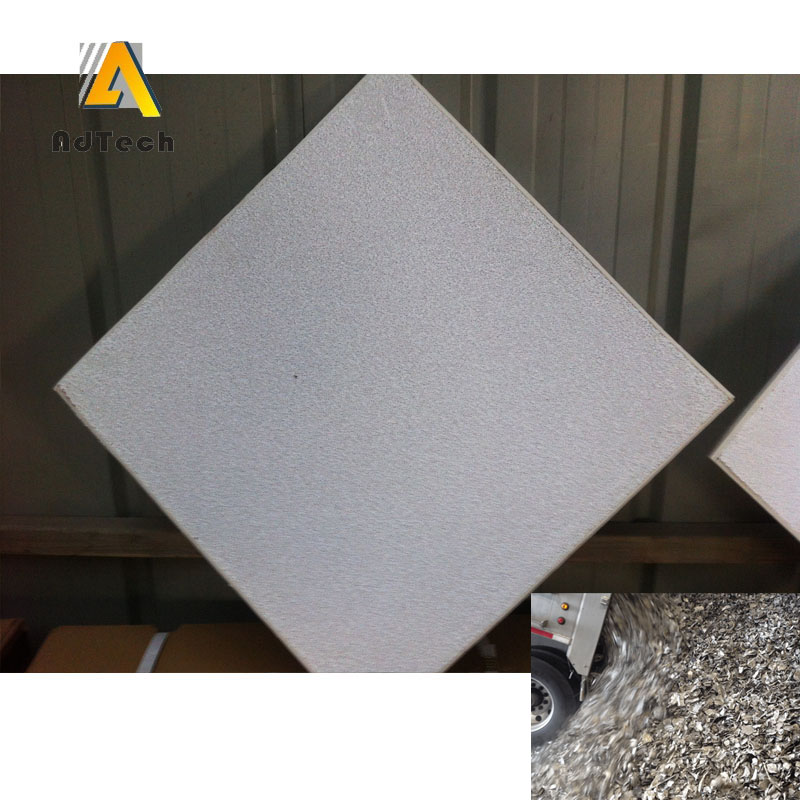 Alumina ceramic foam filter for aluminium casting
Sorry, the comment form is closed at this time.