
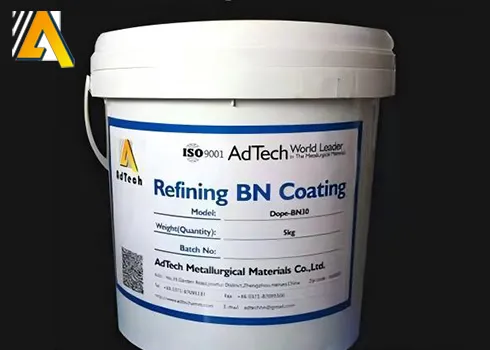
09 Mar Boron Nitride Coating: Non-Stick Molten Aluminum Lubricant Specs
Hexagonal boron nitride coatings form the most reliable, temperature-tolerant, and truly non-wettable barrier available to protect refractory, ceramic, graphite and metal surfaces from molten aluminum and its dross; when correctly chosen, diluted and applied, these coatings provide repeatable release, minimal contamination risk, long in-service life and straightforward repair options. For production casting lines and distribution troughs, a suitably formulated aqueous BN suspension yields the best balance of coverage, safety and operational convenience versus dry powders, and achieves consistent non-wetting behavior that reduces melt adhesion, improves metal cleanliness, and lowers maintenance downtime.
1. Background: role of boron nitride coatings in aluminum handling
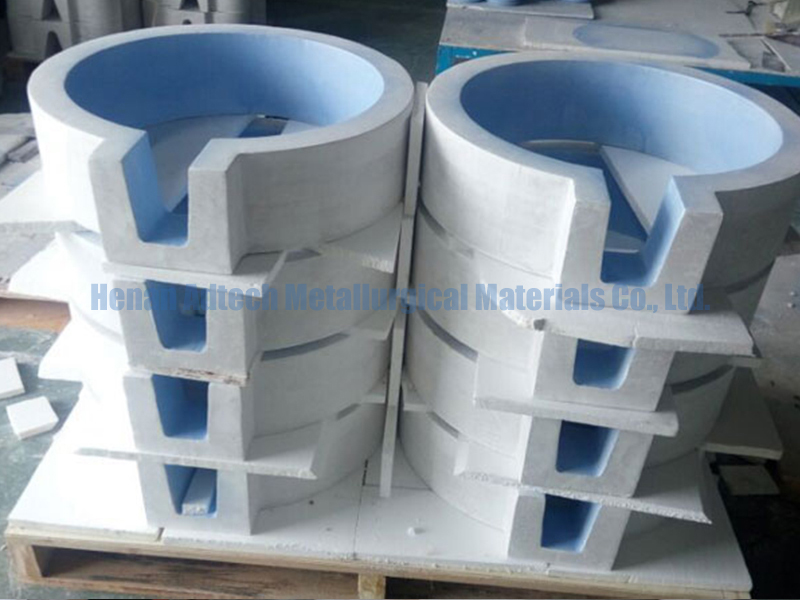
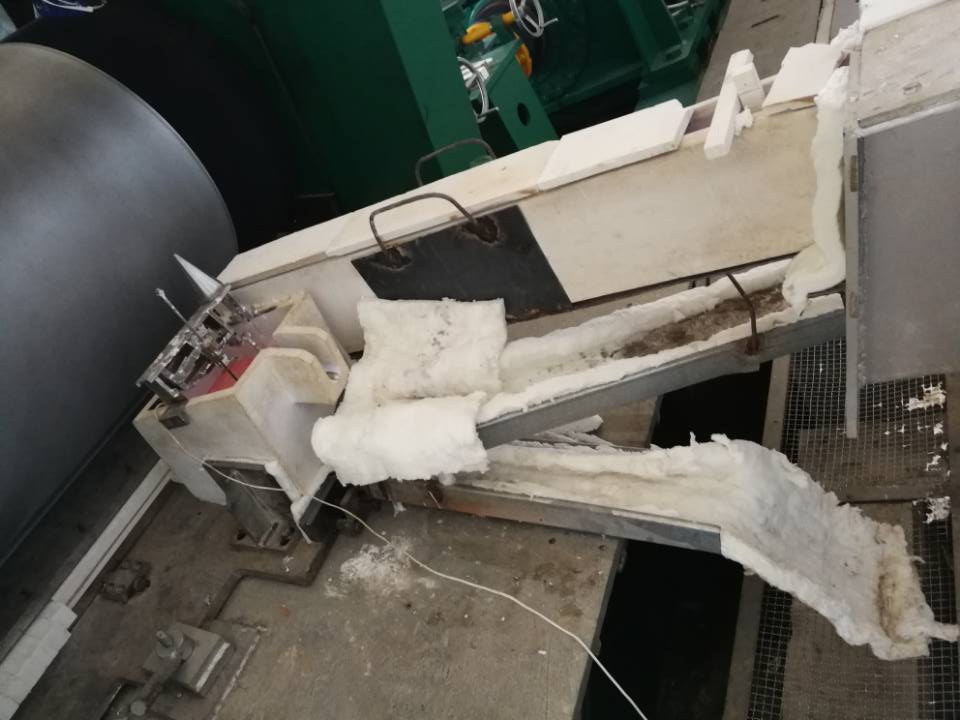
Hexagonal boron nitride (h-BN) behaves like a solid, inert, plate-structured lubricant with very low surface free energy toward liquid aluminum. Engineers use BN coatings as release layers on ladles, nozzle faces, hot-top components, distribution troughs and permanent molds to prevent aluminum from sticking, reduce dross formation at contact points, and protect instrument surfaces. Unlike organic release agents, BN is ceramic-class, so it survives high thermal loads and does not produce the large volumes of volatile by-products that can contaminate metal quality. Leading BN aqueous suspensions are engineered to be sprayable or brushable, to dry into thin adherent films, and to resist chemical attack during casting cycles.
Boron Nitride Coating
2. Core physicochemical parameters (engineer’s reference table)
| Parameter | Typical value or range | Why it matters |
|---|---|---|
| Boron nitride form | Hexagonal (h-BN) preferred | Platelets give low surface energy and good slip |
| Solids content (suspension) | 20–45 wt% (product dependent) | Affects coverage, viscosity, drying time |
| BN fraction in solids | 20–40 wt% of total product (varies) | Determines ultimate non-wetting layer mass |
| Density (liquid product) | 1.1–1.4 g/cm³ | Useful for mass → volume conversions |
| pH (aqueous suspensions) | ~3–7 (product dependent) | Affects shelf stability and surface wetting |
| Max continuous temp (in air) | ~800–900 °C (some grades) | Safety limit in oxidizing atmospheres |
| Max continuous temp (in inert/reducing) | up to 1370 °C reported for some grades | Important for high-temp vacuum or reducing atmospheres. Manufacturer values differ. |
| Non-wetting behavior | Contact angle with molten Al >120° (high quality BN) | High contact angle means aluminum will bead and release |
| Typical coverage (manufacturer guidance) | 10–30 m² per kg at common dilutions | Highly formulation dependent; see coverage math section. |
| Binder types | inorganic binders (e.g., alumina), proprietary organics, or binder-free | Binders improve adhesion on non-porous substrates |
| Recommended substrates | ceramics, fired refractories, graphite, steel (prepped) | Surface prep matters; porous substrates require different approaches |
| Safety note | DO NOT expose surfaces to molten metal while coating is wet | Wet coatings trap gases and cause splatter—always dry fully before contact. |
(Numbers above summarize public technical sheets and peer-reviewed reports; exact performance should be validated on your alloys and equipment.)
3. Mechanism of “non-wetting” — surface physics explained
Surface energy and contact angle: Non-wetting is a thermodynamic expression of surface interactions. If a coating lowers the chemical potential between liquid aluminum and the substrate surface, the molten metal will prefer cohesion over spreading. Practically this shows up as a large static contact angle. Hexagonal BN has low surface free energy and lamellar platelets that create a micro-rugged surface where pockets of gas and the platelet geometry both reduce wetting. High contact angles (>120°) are commonly reported for BN surfaces interacting with Al at temperature in lab measurements.
Non-reactivity at casting temperatures: BN is chemically stable and does not alloy with aluminum under typical casting temperatures and exposure times; therefore the coating’s integrity is preserved and it does not introduce soluble contamination that harms mechanical properties. This contrasts with some organics or carbonaceous coatings that can form carbides, residues, or gaseous decomposition by-products.
Mechanical release action: Besides true thermodynamic non-wetting, thin BN films act as a solid lubricating interlayer: they reduce shear adhesion forces and provide a sacrificial layer that sheds small particles rather than allowing bulk stuck metal. This helps in ladle tapping, nozzle withdrawal and ingot release in a permanent mold.
4. Typical formulation types and tradeoffs
Manufacturers supply BN in several forms:
-
Aqueous BN suspensions (spray/brush/dip): Most common in foundries. Pros: easy to handle, low VOCs, adjustable dilution, quick recoat. Cons: require full drying before use, potential for flaking if applied too thickly.
-
Solvent-based BN paints: Faster drying in some cases and better penetration on hydrophobic surfaces, but higher flammability and regulatory handling concerns.
-
Powdered BN (dusting): Useful for quick touch-ups; limited adhesion and higher loss to blow-off.
-
Composite binders (BN + inorganic binder): Contain alumina or silica binders to improve mechanical adhesion to porous refractories. These are good where BN alone peels. Manufacturer datasheets list specific binder blends.
Selection rules: For ladles, distribution troughs and nozzles that see frequent thermal cycling, choose an aqueous suspension with a small amount of inorganic binder and particle sizes limited to submicron–few micron range. For vacuum or inert environments, binder-free ultraclean grades are often used.
5. Coverage and dilution math — how to estimate m²/kg
Manufacturers often state coverage as a range (for example, 15–25 m²/kg at a 1:2 dilution). The number depends on product solids content, applied wet film thickness, substrate porosity and technique (spray vs brush). Below is a practical method to estimate coverage.
Basic relationships and formula
Let:
-
SS = solids mass fraction of the concentrate (kg solids per kg concentrate)
-
DD = dilution ratio expressed as concentrate : diluent (e.g., 1:2 means 1 part concentrate + 2 parts water → total 3 parts)
-
mcm_c = mass of concentrate used (kg)
-
mt=mc×(1+diluent fraction) = total mass of working suspension (kg)
-
Stotal=mc×S = total solids mass applied (kg)
-
Twet = target wet film mass per unit area (kg/m²) from process requirements (this is chosen based on desired dry film mass)
-
Coverage A=mt/Twet (m² covered per kg of working suspension) — but manufacturers quote coverage per kg of delivered product; below we convert to the usual units.
A more useful practical formula for coverage per kg of concentrate (m²/kg concentrate):
Where dry film mass per kg concentrate = mc×S. Rearranged:
Because reporting conventions vary, use manufacturer guidance as baseline and compute relative changes when you change dilution.
Worked example using a manufacturer statement
Manufacturer: HeBoCoat® PL-W 250 reports: Solids content ~37%, BN 25% of product, coverage 15–25 m²/kg at dilution 1:2.
Interpretation and simple check:
-
A 1:2 dilution means 1 kg concentrate + 2 kg water = 3 kg working suspension.
-
If coverage 15–25 m² per kg of working suspension, that would translate into 45–75 m² per kg of concentrate (because 1 kg concentrate makes 3 kg total). If instead the quoted coverage is per kg of concentrate, the numbers would be 15–25 m² per kg concentrate. Vendor conventions differ—always confirm the basis in the datasheet.
Because of this ambiguity, buyers should request explicit units: “coverage stated as X m² per kg of concentrate at dilution Y, measured on a smooth ceramic substrate using HVLP spray to a dry film of Z g/m².” When vendors supply solids fraction and density, you can convert.
Coverage conversion table (illustrative)
| Dilution (conc : water) | Total mass produced per 1 kg conc (kg) | If vendor quotes 15–25 m²/kg working suspension → implied m² per kg conc |
|---|---|---|
| 1:0 (neat) | 1.0 | 15–25 m²/kg conc |
| 1:1 | 2.0 | 30–50 m²/kg conc |
| 1:2 | 3.0 | 45–75 m²/kg conc (manufacturer example). |
| 1:4 | 5.0 | 75–125 m²/kg conc |
Practical takeaway: For estimation, treat manufacturer’s coverage number as a baseline and scale by total mass of working suspension produced from concentrate. Validate on your substrate: measure mass of product used over a known area after drying to get empirical m²/kg for your equipment and technique.
6. Application and drying procedures (shop floor workflow)
Goal: create a thin, uniform, fully dry BN film that will survive initial contact with molten aluminum without producing spatter or delamination.
Recommended stepwise procedure
-
Surface preparation
-
Remove loose scale, oils and particulate contamination using mechanical cleaning and suitable solvent or alkaline wash. Porous refractories should be dry and free of trapped moisture.
-
For steel surfaces, roughen lightly to promote mechanical bonding if binder is minimal.
-
-
Mixing and dilution
-
Stir concentrate gently to re-suspend settled BN; avoid air entrapment. Dilute with clean water to the supplier’s suggested ratio for spray or brush application. For HVLP spraying a thinner mix is common; for brushing use slightly heavier mix.
-
Strain working suspension through a 100–150 micron filter when using spray equipment.
-
-
Application
-
Apply thin coats. For spray: two light, overlapping passes are better than one heavy pass. For brush/dip: allow even flow and avoid sagging.
-
Target dry film thickness of order 5–30 micrometers depending on part function (nozzles require thinner films than ladle internal surfaces).
-
-
Drying
-
Air-dry at ambient until tack-free, then bake or elevate temperature at 100–150 °C if the product datasheet recommends to accelerate binder curing. Make sure the part is fully dry before introducing molten metal.
-
DO NOT contact molten aluminum while coating is wet. Wet films generate steam and can cause violent reactions.
-
-
Inspection
-
Visual check for pinholes, runs or high-build ridges. If defects exist, remove and reapply.
-
Optional non-destructive check: blowtorch or oven stability test on sacrificial part to validate binder.
-
-
Recoat interval
-
Small touch-ups can be applied between casts when the surface has cooled and been cleaned of crust. Full recoats should follow manufacturer timelines.
-
Important operational tips:
-
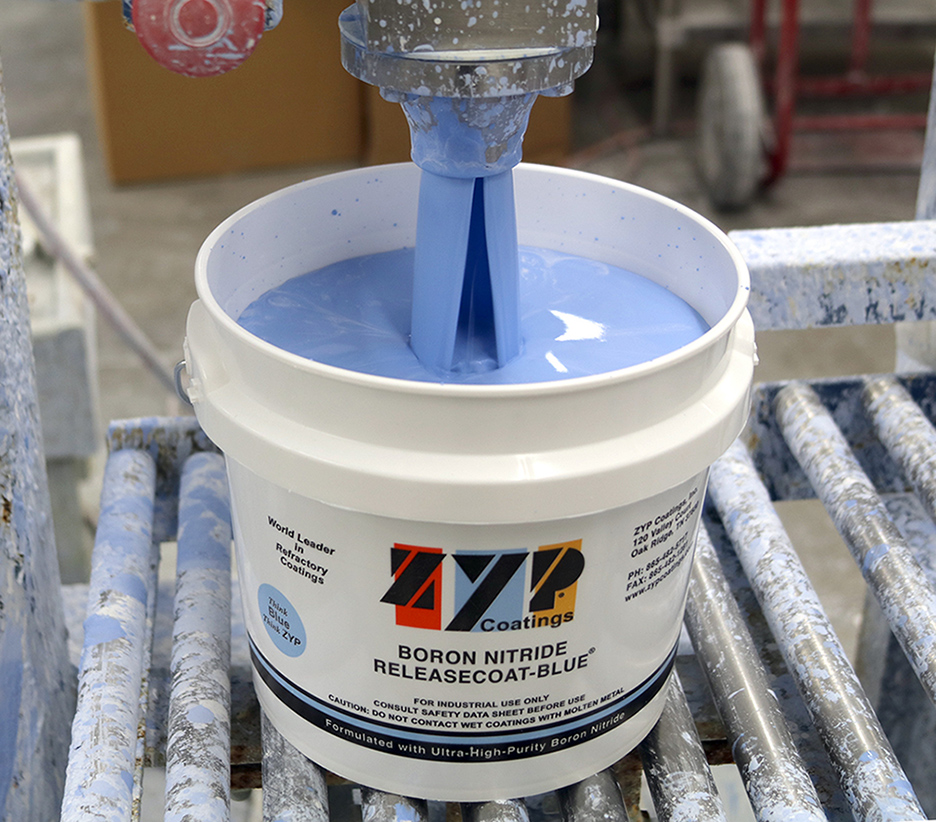
Use colored tracer grades when marking coverage area; this helps operators see sprayed coverage and avoid gaps.
-
Clean spray guns and brushes immediately in water to avoid hard residues that block nozzles.
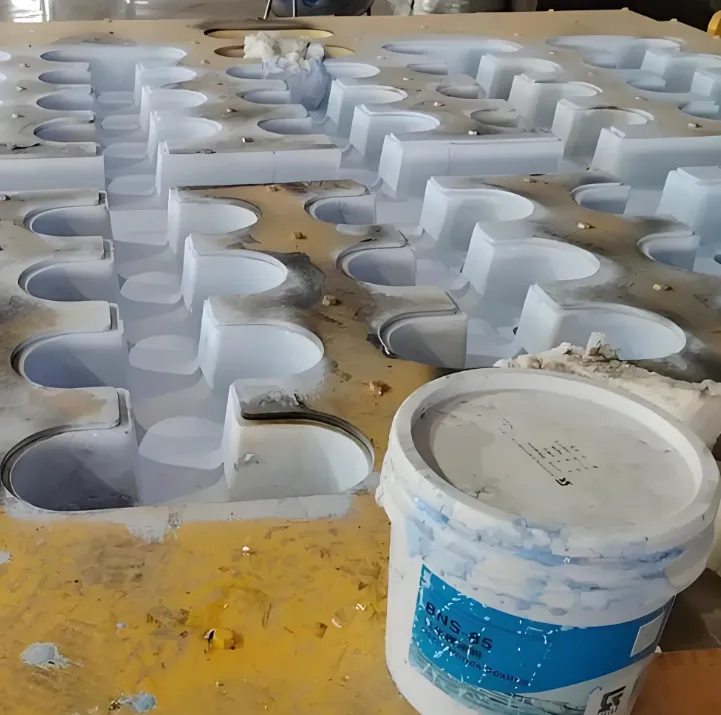
Application Case of Boron Nitride Coating
7. Common failures and troubleshooting
The most frequent complaints are flaking (delamination), powdering under thermal cycling, and inadequate non-wetting (metal sticks). Below is a prioritized troubleshooting table.
Troubleshooting table
| Symptom | Most likely causes | Stepwise remediation |
|---|---|---|
| Flaking / peeling after first heat cycle | Coating applied too thick; inadequate substrate prep; incompatible binder | 1. Remove loose coating; 2. mechanically abrade surface; 3. thin down dilution; 4. add or switch to an inorganic binder grade; 5. reapply thin, evenly; 6. cure per datasheet. |
| Pinholes or cratered surface after contact with molten metal | Entrapped moisture in porous substrate or wet coating contacted melt too early | 1. Strip coating; 2. dry substrate thoroughly (oven bake if possible); 3. allow longer drying time; 4. reapply thin. |
| Incomplete release or partial wetting | Wrong BN grade, too thin a coating, or surface contaminated with organics | 1. Clean surface of contamination; 2. increase solids fraction slightly; 3. if still poor, test high-purity h-BN product. |
| Dusting / powdering off during handling | Weak binder or insufficient binder concentration | 1. Switch to binder-containing product; 2. consider a sintered or fused BN layer for high abrasion zones. |
| Reduced life under oxidizing atmosphere | Choose grade with higher temperature stability in air or alter process to reduce exposure | 1. Select BN grade rated to required air-temperature; 2. consider protective overcoat or lower cycle temperatures. |
8. BN versus graphite and bone char — operational comparison
| Property | Hexagonal BN (typical) | Graphite (suspension) | Bone char / bone black |
|---|---|---|---|
| Non-wetting vs molten Al | Excellent; true non-wetting; high contact angle | Good in inert or reducing conditions; oxidizes in air at moderate temps | Moderate; sometimes used historically but can introduce organics |
| Oxidation resistance in air | Good to ~800–900 °C | Poor; begins to oxidize at relatively low temps in air (400–600 °C) | Organic residues; limited thermal durability |
| Contamination risk for alloy | Extremely low; BN is refractory and inert | Carbon pickup possible if graphite is incorporated | Organic contamination and ash possible |
| Temperature limits in vacuum | Up to very high temps in vacuum | Very high in vacuum | Limited |
| Ease of cleaning / residue | Inorganic residue; easily swept off | Carbonaceous residue, can be more adherent | Can leave ash and organics |
| Typical use cases | Permanent molds, distribution troughs, nozzle faces, thermocouple protection | Vacuum furnaces, inert processes where graphite remains stable | Low-cost temporary release in low-precision work |
Key message: BN is the preferred choice for oxidizing environments and for production foundries seeking long life and minimal contamination risk. Graphite remains relevant in controlled inert or vacuum processes where its lubricity at extreme temperatures qualifies it. Bone char or animal-derived materials are not recommended where alloy chemistry and cleanliness are important.
9. Quality control checklist and acceptance tests
When qualifying a BN product and approving a vendor shipment, use the following checks:
-
Supplier datasheet with solids fraction, BN fraction, density and dilution instructions.
-
Certificate of analysis: particle size distribution and BN purity (wt%).
-
Coverage test: spray 1 L of working suspension on a 1 m² mock substrate, dry and weigh to derive empirical m²/kg.
-
Thermal stability test: heat a coated coupon to intended maximum process temperature and inspect for adhesion loss and chemical change.
-
Melt contact test: pour a small volume of molten alloy onto coated coupon under controlled conditions and inspect contact angle and release performance.
-
Gassing test: perform a TOC (total organic carbon) or evolved gas analysis if the supplier uses organic binders and process cleanliness is critical.
Request from vendors: explicit coverage basis (per kg concentrate or per kg working suspension), solids fraction, binder chemistry and storage life.
10. Procurement specification (what to demand in purchase orders)
Include the following minimum contractual items:
-
Product name and grade, batch number.
-
Solids content (wt%), BN content in solids (wt%), density (g/cm³).
-
Suggested dilutions for spray, brush, dip and resulting coverage (m²/kg basis clearly stated).
-
Recommended drying/curing parameters and shelf life.
-
Safety data sheet and handling limits (VOC if solvent-based).
-
Maximum recommended temperature in air and in inert atmosphere.
-
Acceptance tests: coating adhesion after one thermal cycle, coverage test, lab melt contact test.
-
Packaging type and net weight.
This level of specificity prevents confusion about coverage units and application expectations.
11. Boron Nitride (BN) Coatings: 10/10 Casting FAQ
1. What is the right BN grade for casting aluminum?
Choose a hexagonal BN (h-BN) suspension formulated specifically for molten aluminum release. If you require adhesion to smooth metal or low-porosity substrates, prefer a grade with an inorganic binder. Always validate the selection with a melt contact test on your specific alloy.
2. How thin should the BN film be on a nozzle?
Target Thickness: 5–15 microns (μm)
The dry film should be thin and uniform. Thicker films (over 25 μm) risk flaking or “spalling” under thermal shock, while a film that is too thin may fail to provide continuous non-wetting coverage.
3. Can I apply BN to hot surfaces?
4. What causes BN to flake?
Flaking is typically caused by:
- Excessive wet film thickness.
- Inadequate drying time before contact with molten metal.
- Poor surface preparation (residual oils or oxides).
- Incompatible binder for the substrate material.
5. How often should I recoat ladle interiors?
6. Is BN safe for alloy cleanliness?
Yes. High-purity h-BN is chemically inert and does not alloy with aluminum. To minimize hydrogen pick-up or inclusions, choose low-organic formulations that limit carbonaceous decomposition at casting temperatures.
7. Can BN coatings be used in vacuum furnaces?
8. How to measure empirical coverage?
Spray or brush a known mass of suspension onto a measured area. Once dry, weigh the dried deposit. Compute coverage using the formula:
Coverage (m2/kg) = Area / Mass of Dried Deposit
This helps in predicting consumption rates for high-volume foundry lines.
9. What to do if molten metal still wets the BN?
If wetting occurs, check for substrate contamination (oils/salts). Validate that the BN grade and concentration are correct for your alloy’s chemistry. Confirm that the coating is 100% dry; moisture can drastically alter surface tension and cause localized wetting.
10. Can BN coatings be shipped and stored easily?
12. Practical examples and purchase sample language
Example lab test protocol (short):
-
Prepare three 25 mm × 25 mm coupons of your refractory or metal substrate.
-
Apply BN at intended shop dilution and method. Dry per datasheet.
-
Heat one coupon to 700 °C, one to 850 °C, one to process temperature for 30 minutes.
-
Pour 100 g of molten alloy onto each coupon and observe contact angle and ease of removal after cooling. Record any residues, pinholes, or flaking.
-
Accept product if contact angle remains >110° and no adhesion damage occurs.
Sample phrase for PO: “Supply BN aqueous suspension, grade suitable for molten aluminum release, solids 30–40 wt%, recommended dilution 1:2 for spray, coverage 15–25 m²/kg working suspension (state basis), binder type: inorganic alumina, packaging: 10 kg PE pail, COS and SDS required.”
Related posts:
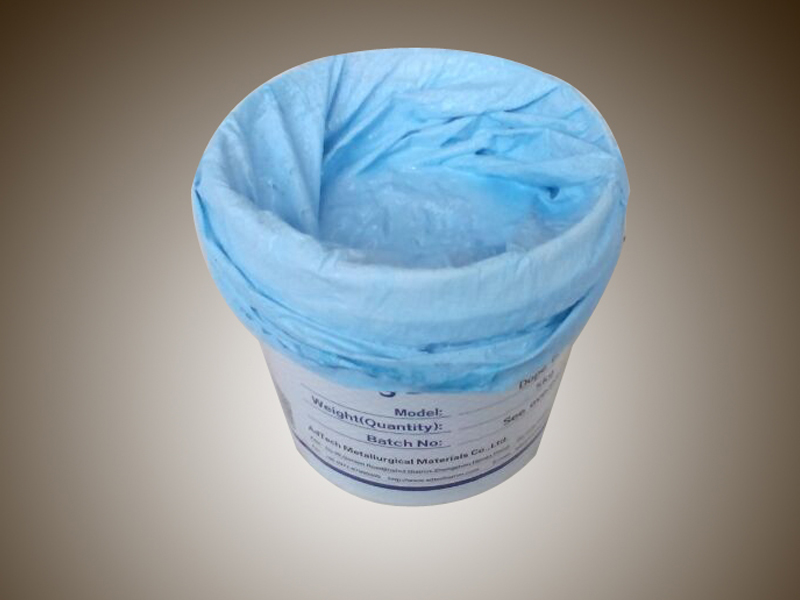 Boron Nitride Lubricant
 Boron Nitride Coating
 Boron Nitride Coating-Casting Technology
 Cubic Boron Nitride Coating
 Boron Nitride Paste
 Boron Nitride Alumina Ceramic Porcelain Rod Control Pin
 Boron Nitride Ceramic
Boron Nitride Properties
Boron Nitride Ceramic
Boron Nitride Properties
 Hexagonal Boron Nitride
 Boron Nitride
 Non stick aluminum Flow Box
 Boron Nitrogen
 Activated Alumina Ceramic Balls: High Adsorption Desiccant, Filtration Specs
 Filtration of Molten Aluminum
No Comments