
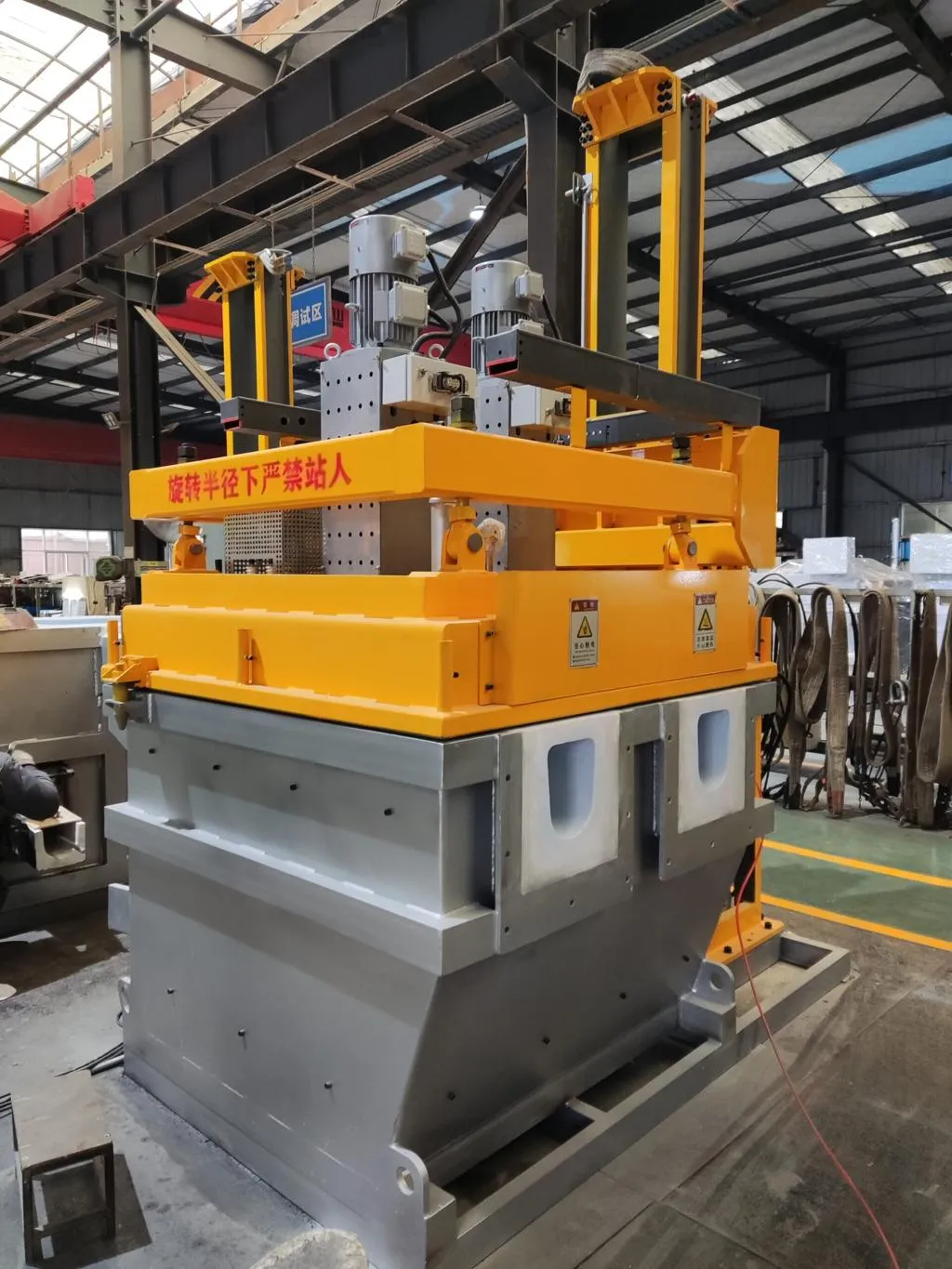
14 Şubat Gaz Giderme Süreci
The rotary degassing process removes dissolved hydrogen from molten aluminum by dispersing an inert gas into fine bubbles through a rotating impeller. Its performance depends on rotor geometry, gas flow rate, rotational speed, bubble distribution, and contact time between the gas and the melt. In an online degassing unit, these factors must be coordinated with metal throughput and operating temperature to maintain consistent melt quality. Selecting the right rotor and controlling the process parameters are therefore essential for reliable aluminum degassing.
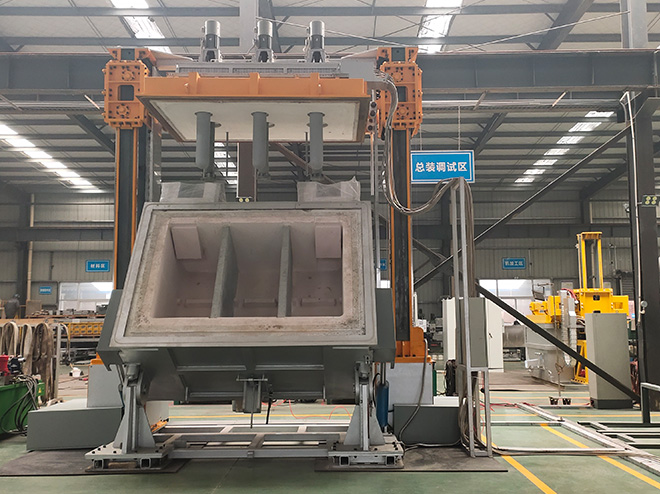
Metal Degassing Equipment
How Does a Rotary Degassing Rotor Improve Hydrogen Removal?
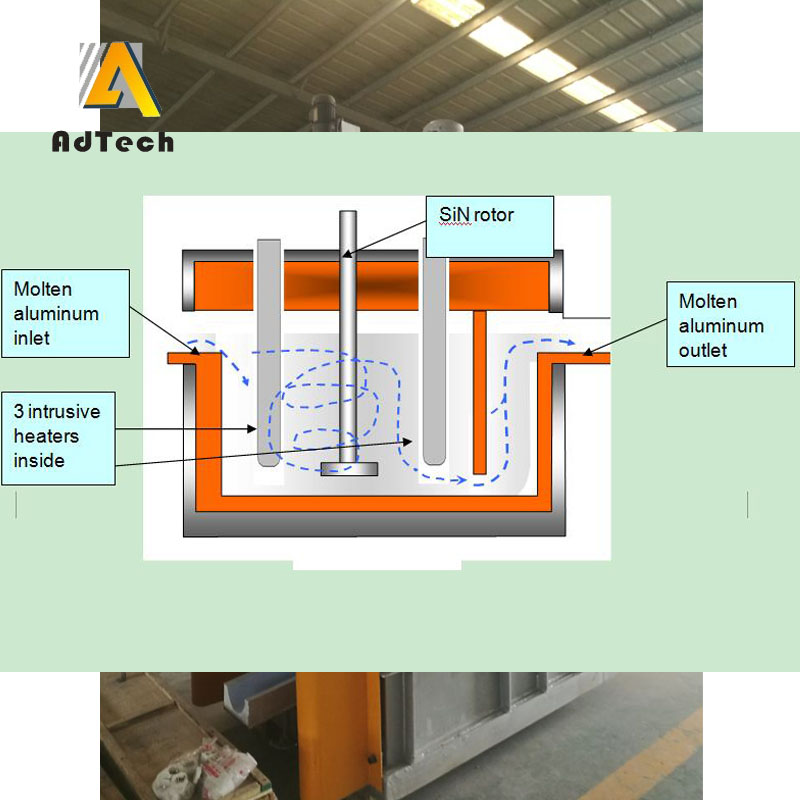
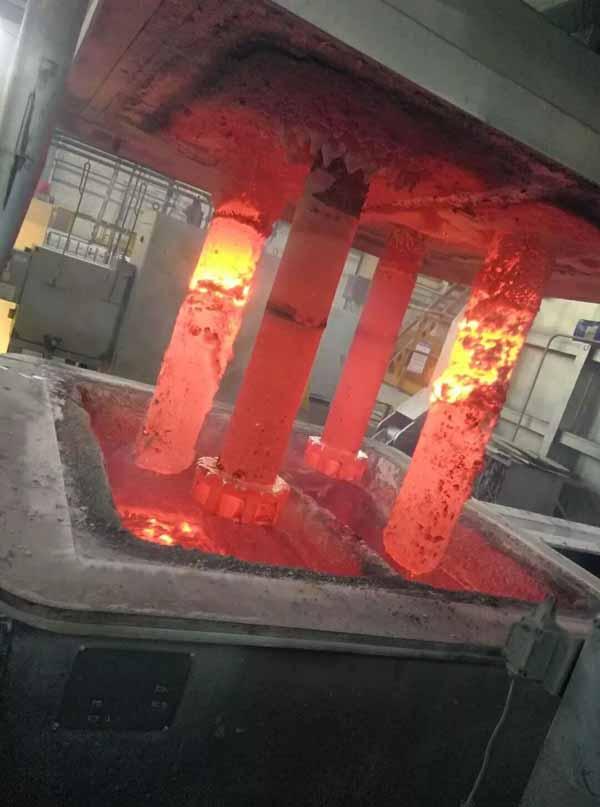
In rotary degassing, purge gas passes through a hollow shaft and enters the molten aluminum through the rotor. As the rotor turns, it breaks the gas into bubbles and disperses them throughout the melt.
Hydrogen transfers from the liquid aluminum into the bubbles because of the difference in hydrogen partial pressure between the melt and the purge gas. The bubbles then rise to the surface, carrying the transferred hydrogen out of the metal.
The effectiveness of the process depends on two important factors: the available gas–metal interfacial area and the time the bubbles remain in contact with the melt.
Smaller bubbles generally provide more interfacial area for a given gas volume. However, bubble size alone does not determine performance. The rotor must distribute the bubbles effectively throughout the treatment chamber without creating excessive surface turbulence.
| Process factor | Effect on degassing | Operating consideration |
|---|---|---|
| Bubble size | Smaller bubbles generally provide greater gas–metal interfacial area | Rotor geometry and operating conditions |
| Bubble distribution | Determines how much of the melt participates in treatment | Rotor design and melt circulation |
| Bubble residence time | Influences the time available for hydrogen transfer | Gas flow, bubble behavior, and chamber geometry |
| Gas flow rate | Determines the quantity of purge gas introduced | Match the flow rate to rotor design and treatment requirements |
| Surface turbulence | Can promote oxidation and hydrogen reabsorption | Avoid excessive gas flow or rotor speed |
The objective is to create effective gas dispersion and sufficient contact time while maintaining a stable melt surface. Simply increasing rotor speed does not guarantee better degassing.
Why Does Rotor Geometry Matter in Aluminum Degassing?
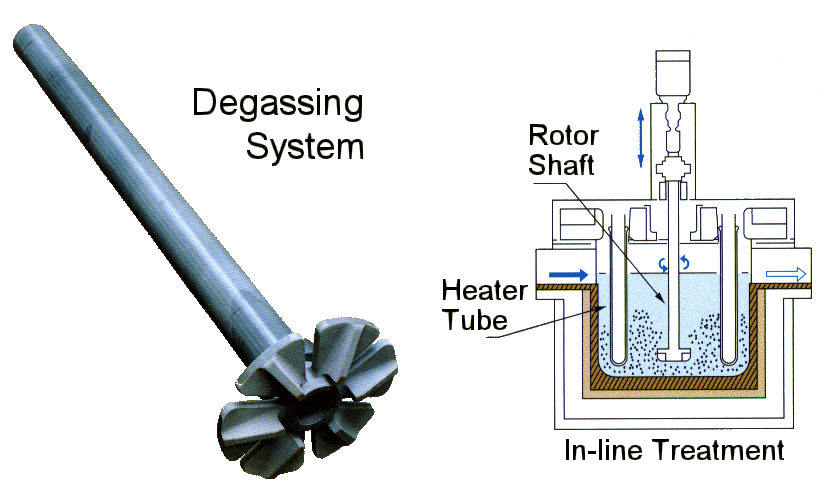
Rotor geometry determines how the injected gas is broken into bubbles, how those bubbles move through the melt, and how the surrounding aluminum circulates.
A rotor that creates intense local mixing but leaves other areas poorly circulated may not use the available treatment volume efficiently. Conversely, a suitable design can promote more uniform bubble dispersion and reduce poorly treated regions within the chamber.
Research published in Scientific Reports in 2025 examined how rotor geometry and rotor wear influence aluminum melt refining performance. The study supports the importance of both rotor design and the condition of the rotor during operation. The results also illustrate why rotor selection should be evaluated in the context of the complete degassing system rather than in isolation.
| Rotor design consideration | Neden önemli? | What to evaluate |
|---|---|---|
| Impeller shape | Influences gas breakup and flow patterns | Bubble dispersion and melt circulation |
| Gas outlet design | Affects how gas enters the liquid metal | Distribution across the rotor’s operating region |
| Rotor diameter | Influences the mixing region | Compatibility with the treatment chamber |
| Operating speed | Changes bubble dispersion and local turbulence | Stable operating range for the rotor |
| Surface condition | Wear can alter the rotor’s original geometry | Inspection frequency and replacement criteria |
The best rotor design is therefore not necessarily the one operating at the highest speed. It is the one that produces suitable gas dispersion and circulation for the alloy, chamber dimensions, and required metal throughput.
Which Rotor Material Is Suitable for an Online Degassing Unit?
The rotor and shaft operate in a demanding environment involving high temperatures, oxidation, erosion, and repeated thermal exposure. Material selection affects component durability, maintenance frequency, and consistency of degassing performance.
Graphite has traditionally been used for aluminum degassing rotors because it can be machined into the required geometry and provides useful thermal properties. Ceramic-based rotor designs are also available for applications where their material characteristics suit the operating conditions.
No material should be assumed universally superior. Performance depends on the specific formulation, rotor construction, exposure conditions, and maintenance practices.
| Material or design approach | Potential advantages | Considerations |
|---|---|---|
| Grafit rotor | Established use in rotary degassing and flexibility in machining rotor geometries | Oxidation and wear can gradually change the rotor’s dimensions |
| Ceramic-based rotor | Can offer useful resistance to wear and oxidation, depending on the material | Thermal shock resistance and compatibility must be confirmed for the application |
| Protected or reinforced rotor assembly | May improve durability in specific operating environments | Performance depends on the protective design and manufacturing quality |
AdTech’s published online degassing unit specifications describe ceramic manufacturing technology for its degassing rotor and protective components. The suitability of a particular rotor configuration should be confirmed against the intended alloy, operating temperature, and service requirements.
Thermal shock resistance also deserves particular attention. Whether a rotor requires preheating depends on its material, construction, and the manufacturer’s operating instructions. A procedure suitable for one rotor should not automatically be applied to another.
How Should Gas Flow and Rotor Speed Be Controlled?
Gas flow and rotor speed need to be considered together. Gas flow determines how much purge gas enters the melt, while rotor speed influences how the gas is dispersed and how the surrounding metal circulates.
Increasing both parameters indiscriminately can create problems. Excessive rotor speed may cause stronger surface disturbance, while excessive gas flow can produce inefficient bubble behavior or increase turbulence. Hydrogen may also be reintroduced when the melt is exposed to humid air, so more vigorous mixing does not necessarily translate into a lower final hydrogen concentration.
A suitable operating window should be established using the rotor manufacturer’s guidance, the treatment chamber design, and measured melt-quality results.
| Parametre | What it controls | Potential issue if poorly controlled |
|---|---|---|
| Rotor speed | Bubble breakup and circulation | Insufficient mixing or excessive turbulence |
| Purge gas flow | Gas volume entering the melt | Poor dispersion or unnecessary gas consumption |
| Treatment duration | Available time for hydrogen transfer | Inadequate treatment or unnecessary processing time |
| Metal temperature | Melt condition during treatment | Process instability if outside the specified range |
| Initial hydrogen concentration | Starting point for treatment | Different treatment requirements between batches |
| Atmospheric exposure | Potential for re-oxidation and hydrogen pickup | Reduced net benefit from degassing |
Actual settings depend on the alloy, initial hydrogen level, rotor design, chamber dimensions, and required production rate. Where possible, hydrogen measurements before and after treatment should be used to establish whether the operating settings are effective.
The goal is not to minimize purge-gas consumption at any cost. It is to use gas efficiently while achieving the specified melt quality.
How Can Rotor Wear Affect Degassing Performance?
Rotor wear is more than a maintenance issue. As the impeller erodes or oxidizes, its geometry may change, affecting gas breakup and melt circulation. A rotor that initially provides suitable bubble dispersion may perform differently after prolonged service.
Changes in the gas outlet, impeller profile, or shaft condition can also affect operating stability. In severe cases, excessive wear may compromise mechanical integrity and increase the risk of component failure.
Routine inspection should therefore consider both the physical condition of the rotor and its treatment performance.
| Inspection item | What to look for | Neden önemli? |
|---|---|---|
| Rotor profile | Erosion, rounding, or dimensional change | Can affect bubble dispersion |
| Gas passage | Blockage or restricted flow | May cause unstable gas delivery |
| Shaft condition | Wear, cracking, or damage | Affects mechanical reliability |
| Rotor surface | Oxidation, deposits, and deterioration | Can influence durability and cleaning |
| Hydrogen results | Changes in achieved melt quality | Helps identify possible process deterioration |
Replacement intervals should be based on the rotor material, operating hours, inspection findings, and performance history rather than a universal service-life estimate.
How Does an Online Degassing Unit Integrate Rotor Treatment into Production?
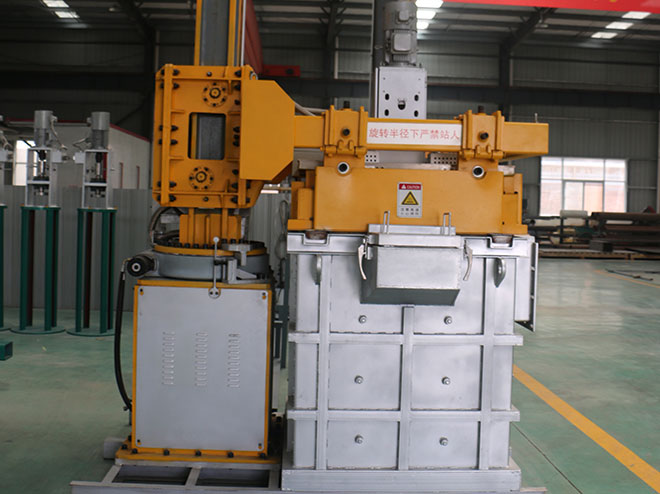
çevrimiçi gaz giderme ekipmanı
An online degassing unit places rotary degassing within the molten aluminum transfer route, commonly between the holding furnace and downstream casting equipment.
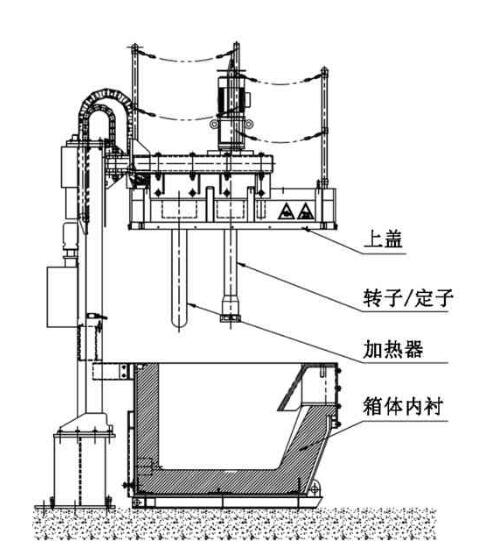
Instead of treating the rotor as a standalone component, the system coordinates the treatment chamber, mechanical drive, gas supply, temperature management, and metal inlet and outlet arrangements.
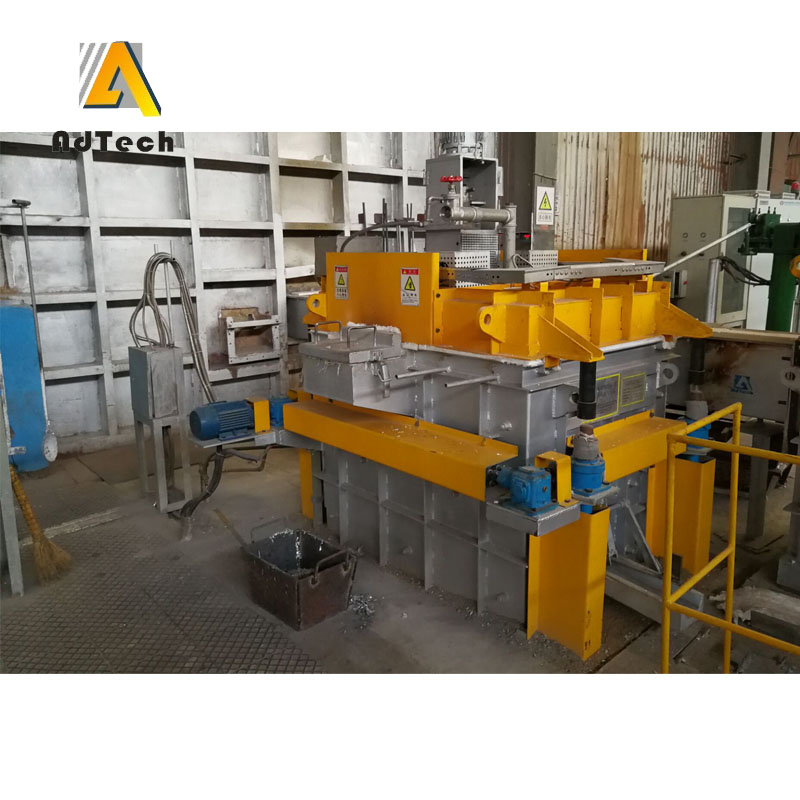
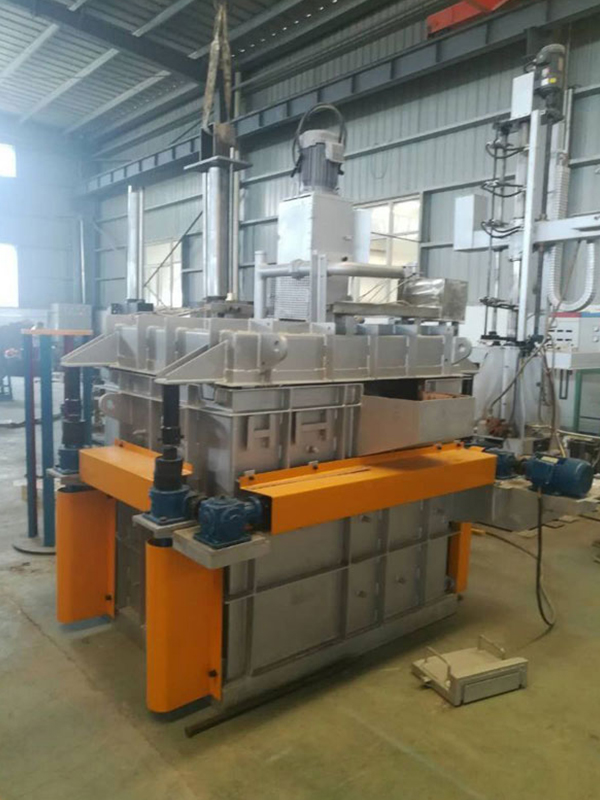
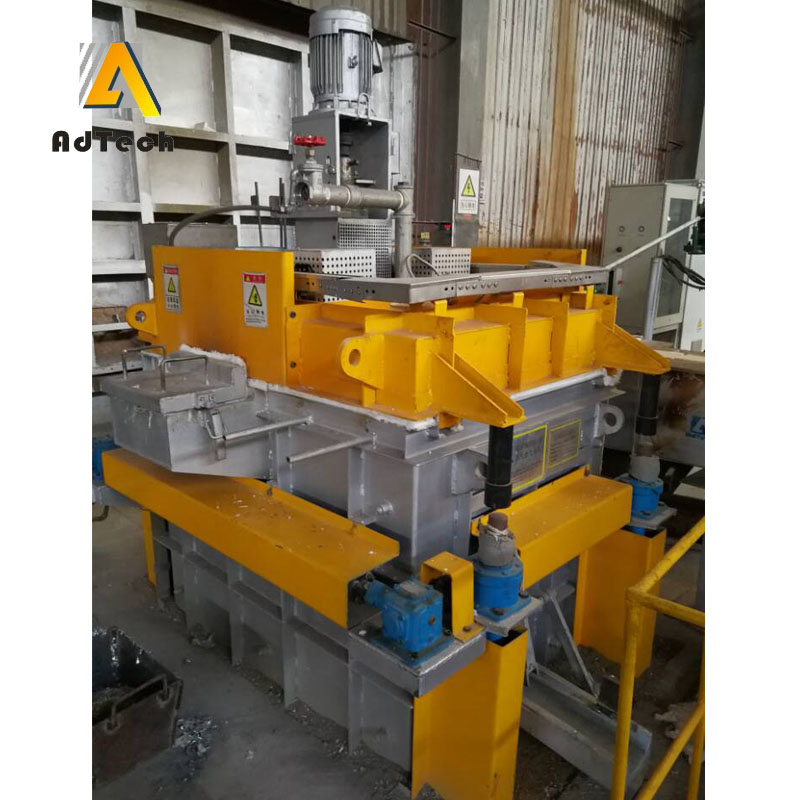
AdTech’s online degassing unit includes a degassing box, mechanical drive, rotor assembly, heating components, and electrical control. Its published equipment range includes different chamber and rotor configurations, allowing capacity and layout to be considered according to the production requirements.
The exact configuration should be selected based on metal throughput, alloy requirements, the target hydrogen concentration, and the available installation space.
For production lines requiring both hydrogen control and inclusion removal, the online degassing unit can be integrated with suitable ceramic foam filtration equipment. The two systems serve complementary functions: the rotor-based treatment reduces dissolved hydrogen, while the ceramic filter retains solid non-metallic inclusions.
A successful installation therefore depends on coordinated equipment sizing, suitable operating conditions, and verification of melt quality at the relevant stages of production.
How Can You Evaluate the Performance of a Rotary Degassing System?
Visible bubbling is not a reliable measure of hydrogen removal. A more useful evaluation combines process parameters with measured melt-quality results.
For equipment trials or process optimization, record the operating conditions and compare the melt condition before and after treatment. This helps determine whether a change in rotor speed, gas flow, or treatment duration actually improves performance.
Important evaluation criteria include:
- Hydrogen concentration before and after degassing.
- Metal throughput and treatment duration.
- Rotor speed and purge-gas flow rate.
- Rotor condition and maintenance history.
- Stability of the melt temperature and surface.
- Downstream casting quality and relevant defect results.
Comparisons are most meaningful when sampling methods and production conditions remain consistent. A lower hydrogen reading should also be interpreted alongside the alloy specification and the required acceptance criteria.
For aluminum producers, the ultimate purpose of rotary degassing is not simply to generate fine bubbles. It is to maintain the required melt quality reliably, with a rotor design and operating window suited to the production line.
Sık Sorulan Sorular
1. What is the main purpose of a rotary degassing rotor?
A rotary degassing rotor disperses inert gas into molten aluminum, allowing dissolved hydrogen to transfer into gas bubbles and escape from the melt.
2. How does rotor geometry affect aluminum degassing efficiency?
Rotor geometry influences bubble size, gas distribution, and molten metal circulation. A suitable design promotes effective gas–metal contact without creating excessive surface turbulence.
3. Why are smaller gas bubbles beneficial during rotary degassing?
Smaller bubbles generally provide a greater total gas–metal interfacial area for the same gas volume, which can improve hydrogen transfer when the process is properly controlled.
4. Which materials are used to manufacture aluminum degassing rotors?
Graphite is widely used, while ceramic-based rotors are also available. The appropriate material depends on oxidation resistance, wear, thermal shock resistance, and operating conditions.
5. Can a degassing rotor operate without preheating?
Some specially designed rotors may allow insertion into molten aluminum without preheating. This depends on the rotor material and construction, so the manufacturer’s operating instructions must be followed.
6. How do rotor speed and gas flow rate affect degassing?
Rotor speed affects bubble dispersion and melt circulation, while gas flow determines the amount of purge gas introduced. Both must be optimized because excessive speed or gas flow can increase turbulence without improving hydrogen removal.
7. How often should an aluminum degassing rotor be replaced?
Replacement frequency depends on rotor material, operating hours, temperature, alloy conditions, and wear. Regular inspections and monitoring of degassing performance help establish an appropriate replacement interval.
8. Does rotary degassing remove oxide inclusions from molten aluminum?
Its primary function is hydrogen removal. It may assist with the flotation of some inclusions, but ceramic foam filtration is generally used for dedicated removal of solid non-metallic particles.
9. How can you tell whether a rotary degassing process is working effectively?
Measure hydrogen concentration before and after treatment and monitor gas flow, rotor speed, treatment time, and melt temperature. Visual bubbling alone cannot confirm degassing effectiveness.
10. What should be considered when selecting an online degassing unit?
Consider alloy type, required metal throughput, target hydrogen level, rotor design, purge-gas supply, temperature control, installation layout, and compatibility with downstream filtration equipment.
İlgili yazılar:
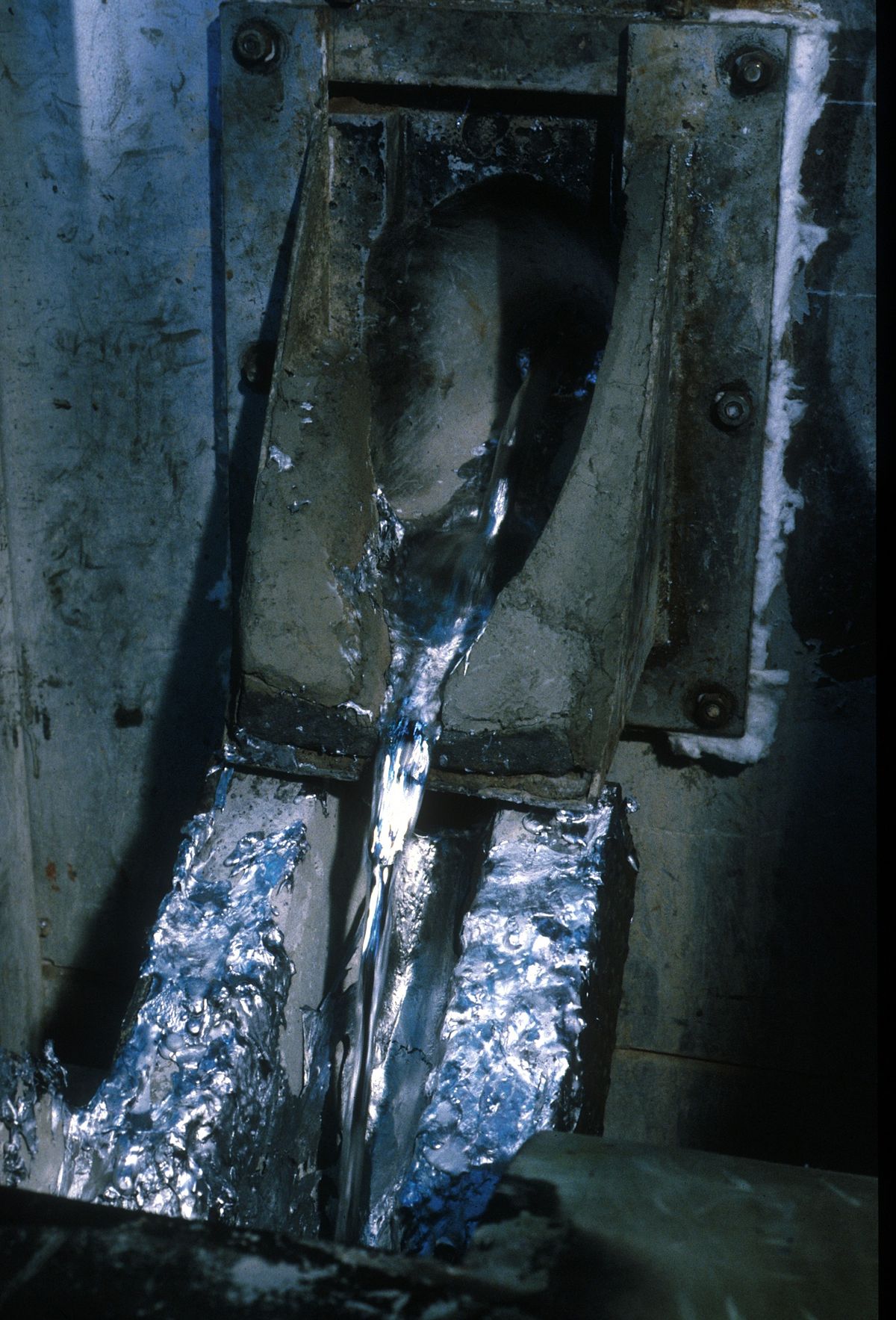 Endonezya’da Alüminyum Gaz Giderme Süreci
 Dökümde Gaz Giderme Süreci
 Çift Rotorlu Gaz Giderme Ekipmanı
 Alüminyum Gaz Giderme Süreci
 Alüminyum Hidrojen Gaz Giderme Ekipmanı
 Gaz Giderme Kutusu
 Azotla Alüminyum Gaz Giderme
 Metal Metalurjisi Döküm Dökümhane Alüminyum Gaz Giderme İşlemi
 Coimbatore Gaz Giderme Makinesi
 Alüminyumda Gaz Giderme Süreci
 Alüminyum Dökümde Gaz Giderme
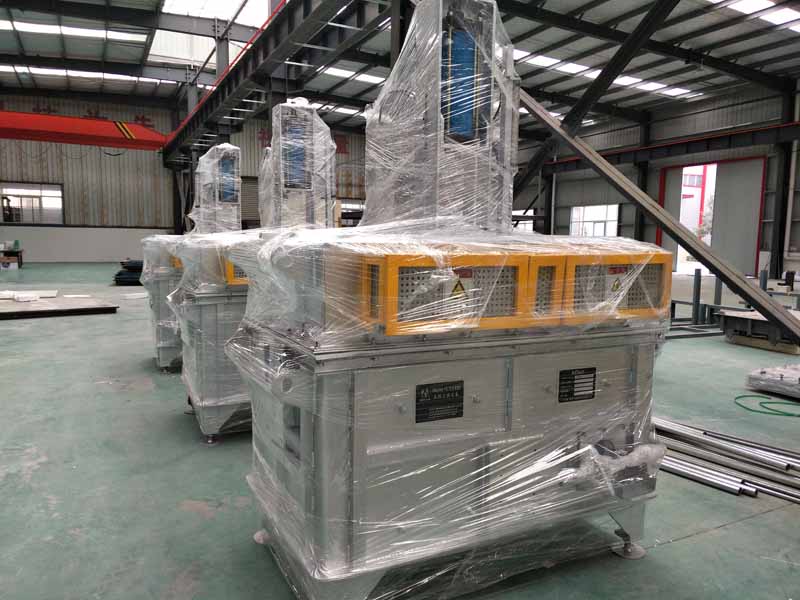 Döner Gaz Giderme Makineleri
 Dökümhane Gaz Giderme Süreci
Yüksek Saflıkta Alüminyum için Çevrimiçi Gaz Giderme Ünitesi
No Comments