
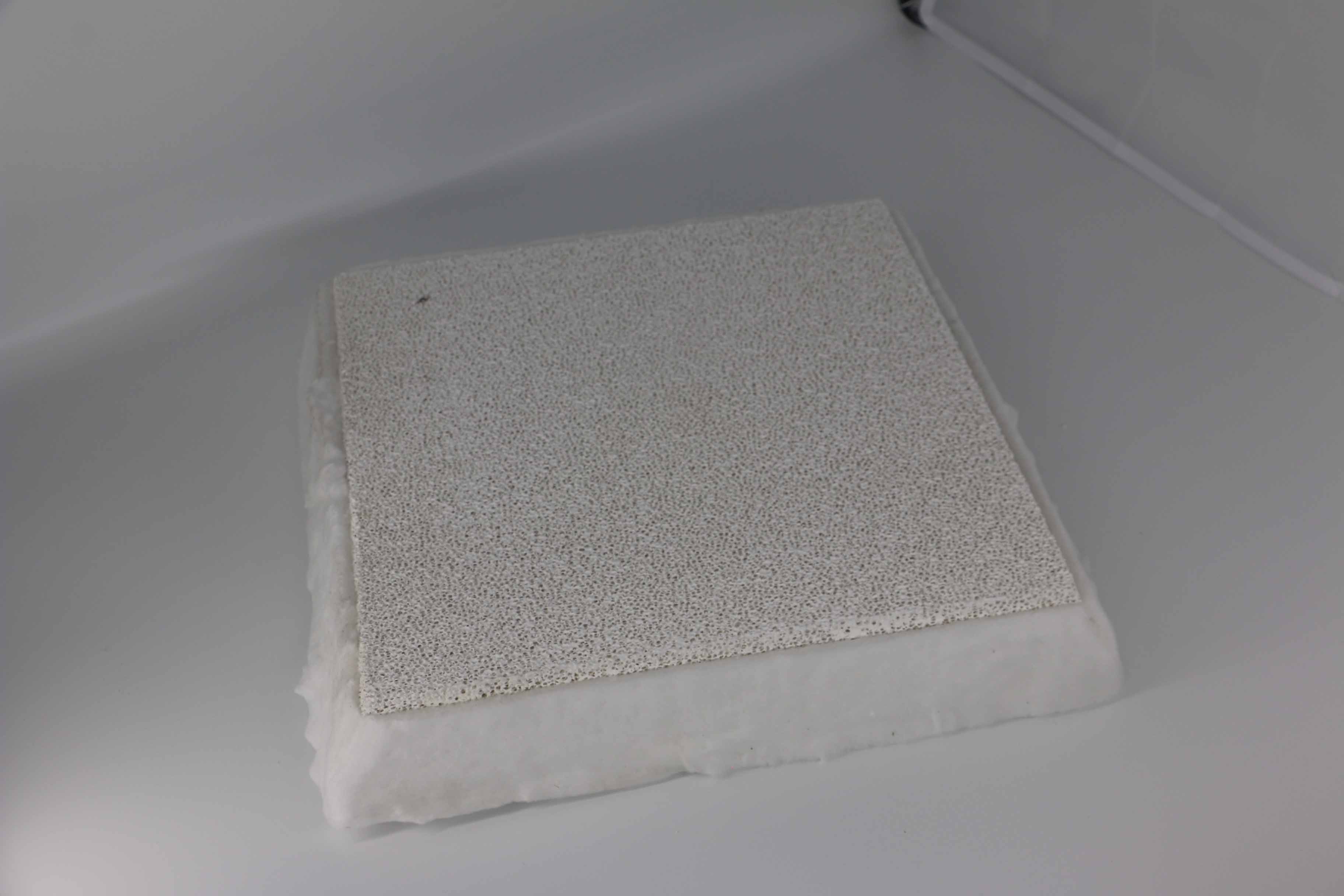
27 de julio Filtros cerámicos para fundición
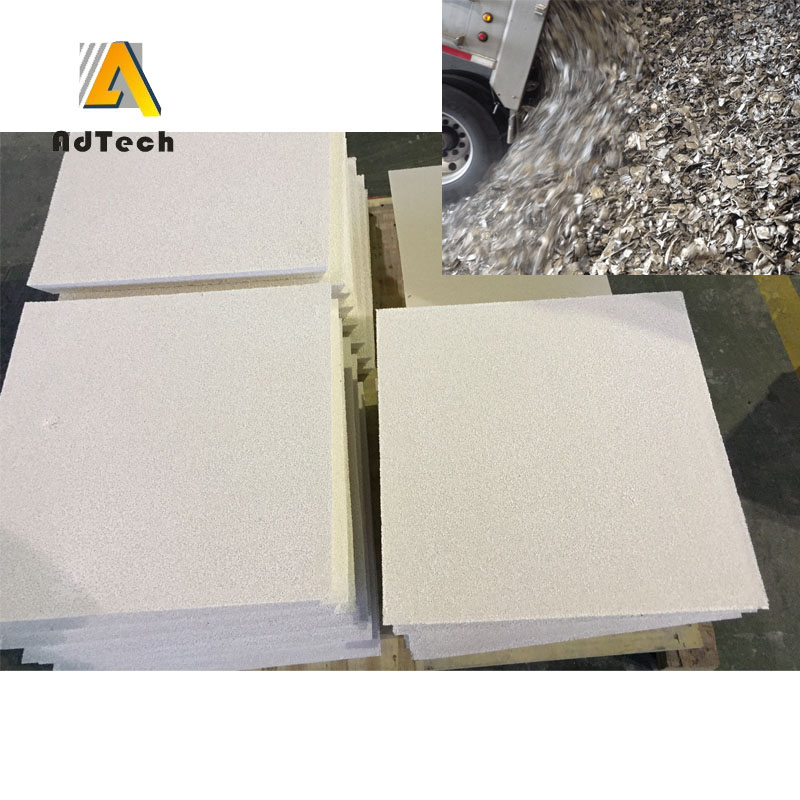
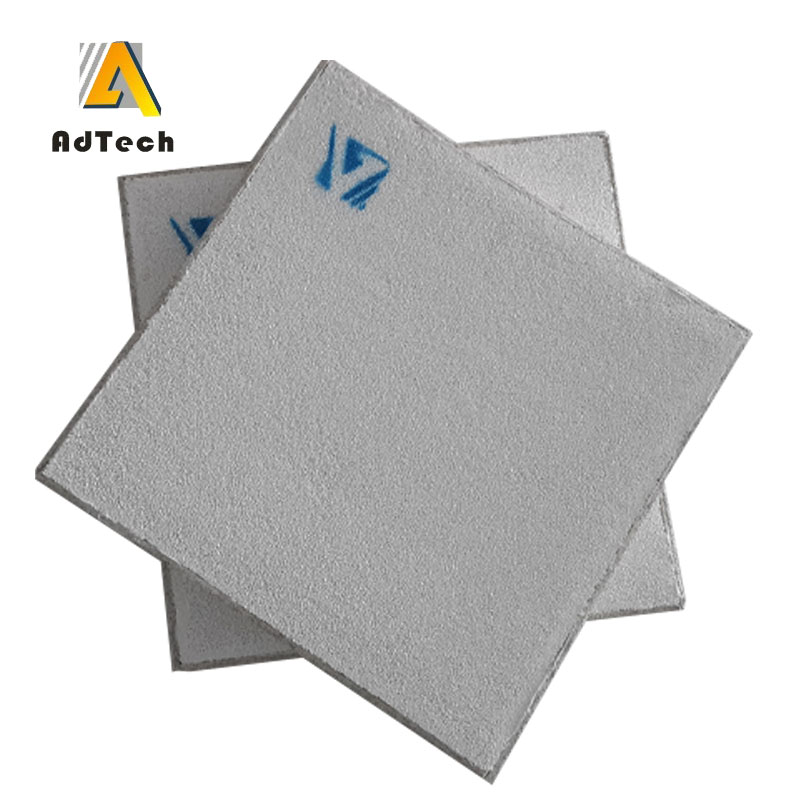
Ceramic Foundry Filters are widely used in aluminum and its alloy casting industry.
At present, with the continuous improvement of the performance requirements of aluminum and aluminum alloy products, new requirements are also put forward for the filtration of aluminum liquid.
The molten aluminum is required to have good casting characteristics such as high purity, less floating impurities, and a gentle flow rate of the molten aluminum, so that the cast aluminum products have excellent physical and chemical properties and machining properties, so as to meet more demanding conditions of use and extend the aluminum products Life.
Features of Ceramic Foundry Filters
1. La malla tridimensional superior, central e inferior no presenta agujeros muertos ni agujeros ciegos.
2. Temperatura de sinterización > 1450 ℃.
3. La fase cristalina principal es la a-A1203 (mullita); no hay fase de vidrio de cuarzo.
4. Alta resistencia (más del triple que la de la primera generación), excelente resistencia al choque térmico y ausencia de escoria.
5. There are microscopic gaps and strong adsorption of slag.
6. The three-dimensional network high-temperature ion sputtering activation treatment improves the affinity for inclusions in aluminum.
7. Cribado, sedimentación por colisión, adsorción, acumulación y purificación más profunda.
8. El efecto purificador de la filtración y la adsorción iniciales es significativo.
9. Todos los indicadores de rendimiento han alcanzado los valores propios de la cerámica sinterizada a 1200 grados.
10. Lograr una economía con bajas emisiones de carbono y reducir las emisiones en más de 60%.
With the development of modern technology and the demand of modern industry, materials science, as the three pillar industries of the 21st century, is developing in the direction of high specific strength, high strength, high toughness and other comprehensive properties.
Durante mucho tiempo, las aleaciones de aluminio fundido han experimentado un gran desarrollo en aplicaciones industriales gracias a su bajo precio, su ligereza y su rendimiento fiable.
Especially with the increasing demand for lightweight rail transit materials in recent years.
As the most widely used A356 aluminum alloy in cast aluminum alloys, it has good casting fluidity, good air tightness, small shrinkage rate and small hot cracking tendency. After modification and heat treatment, it has good mechanical properties, physical properties, and corrosion resistance. With better machining performance, aluminum alloy wheels are lighter in weight, safer, more comfortable, and energy-saving compared with steel wheels and valleys. They are increasingly used in the automotive and aviation industries.
During the casting process, due to incomplete slag removal and improper crystallization and cooling conditions during the solidification process, inclusions, shrinkage porosity and shrinkage cavities are easily generated17.
The plate-like eutectic between the secondary dendrite arms of the a-AI dendrite is the weakest area in the material, and the largest Si particles in this area fracture first to form the source of cracks.
Due to the above factors, A356 aluminum alloy is prone to fracture, which affects its strength, plastic toughness and mechanical properties.
If the eutectic Si is gray needle-like and flake-like, distributed disorderly on the a-Al aluminum matrix, the casting shrinkage cavity, casting porosity, oxide film and other defects can be seen in the casting process with an optical microscope. If you need metallurgical material Filtro de fundición cerámico, contact sales@adtechamm.com
6082 is a heat-treatable alloy with good formability, weldability, and machinability.
De resistencia media, sigue conservando una buena capacidad de mecanizado tras el recocido. Se utiliza principalmente en estructuras mecánicas, como barras, chapas, tubos y perfiles.
Esta aleación tiene propiedades mecánicas similares, aunque no exactamente iguales, a las de la aleación 6061, y su estado T6 presenta propiedades mecánicas superiores.
La aleación 6082 es un producto muy habitual en Europa y también tiene un amplio uso en Estados Unidos. Es adecuada para el procesamiento de materias primas, tubos de aluminio sin costura, perfiles estructurales y perfiles a medida.
La aleación 6082 suele presentar buenas características de procesamiento y un buen rendimiento en la reacción anódica.
Entre los métodos de reacción anódica más utilizados se encuentran la eliminación de impurezas, el teñido y el recubrimiento, entre otros.
Ponte en contacto con sales@adtechamm.com para comprar filtros cerámicos para fundición.
Heat treatment process.
1. Smelting
6082 alloy is characterized by containing Mn, which is a refractory metal, and the melting temperature should be controlled at 740-760℃.
Stir evenly for more than two times before sampling to ensure that the metal is completely melted, the temperature is accurate, and the composition is uniform.
After stirring, take a sample in the middle of the molten aluminum depth and on the left and right sides of the furnace for analysis, and the converter can be converted after the analysis is qualified.
2. Purification
After the casting melt is transferred to the static furnace, it is sprayed with nitrogen and refining agent and refining by air jet. The refining temperature is 735-745℃ for 15 minutes. After refining, it is allowed to stand for 30 minutes.
Through this process, gas removal, slag removal, and melt purification. There are two filtering devices between the mold and the furnace mouth during casting. The furnace mouth is filtered by a foam ceramic filter plate (30PPI). Before casting, it is filtered with 14 mesh glass fiber cloth to fully filter out the oxides and slag inclusions in the melt.
Artículos relacionados:
 Filtros de espuma cerámica
 Filtros cerámicos para fundición
 Filtros cerámicos para fundición
 Utiliza filtros cerámicos Foundry
filtros de espuma cerámica en la fundición
Utiliza filtros cerámicos Foundry
filtros de espuma cerámica en la fundición
 Comprar filtros cerámicos Foundry
 Fabricantes de filtros cerámicos para fundición
 Industria metalúrgica. Fundición de aluminio. Filtros cerámicos.
 Filtros cerámicos de Malasia
 Filtros utilizados en la fundición
 Utilizar los filtros de Foundry
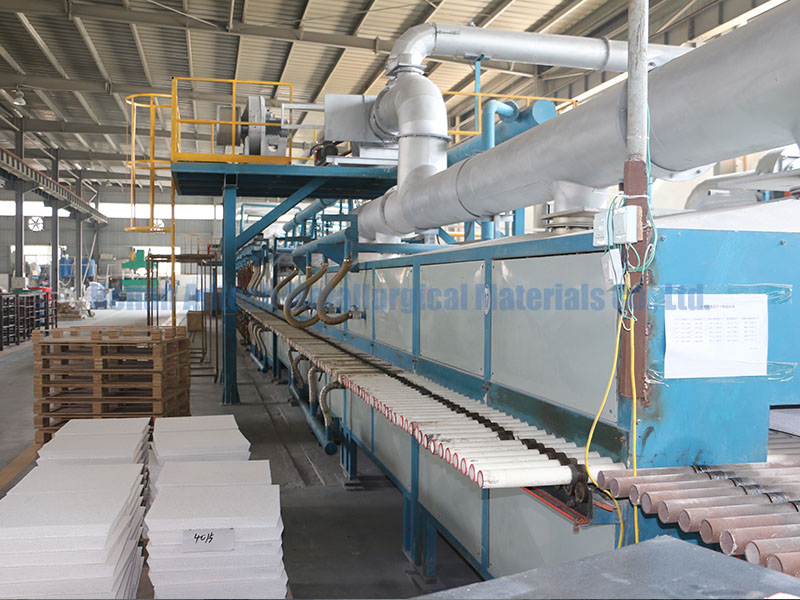 Proveedores de filtros para fundición
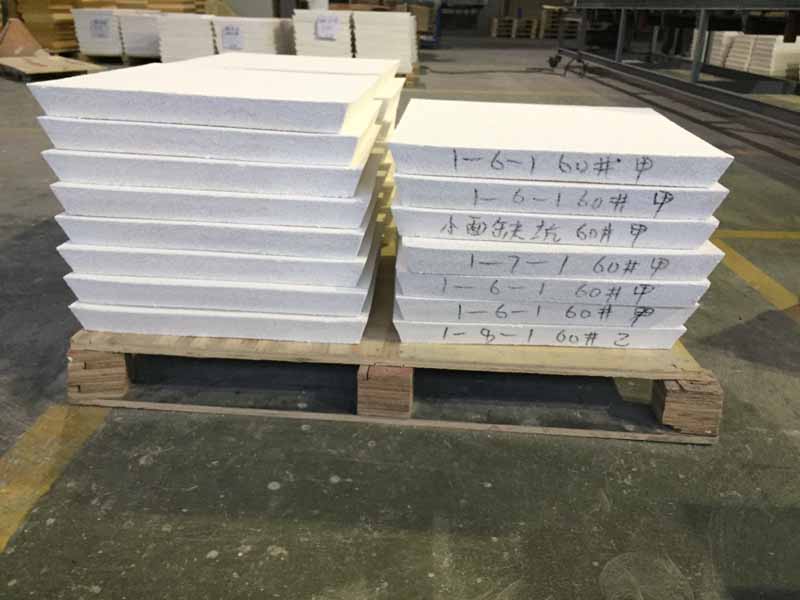 Filtros de espuma para fundición
 Utilizar los filtros de Asian Foundry
Sorry, the comment form is closed at this time.