
2 de abril Conocimientos sobre placas filtrantes cerámicas
Conocimientos sobre placas filtrantes cerámicas
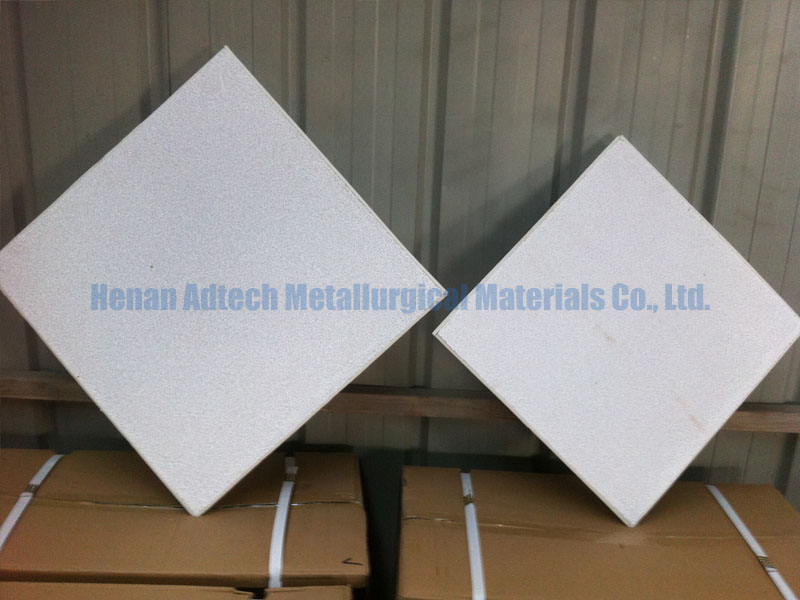
La placa filtrante cerámica (para aluminio) se divide en la placa filtrante cerámica PZr y filtro de espuma cerámica-PAL. Estos modelos también se conocen como filtros cerámicos, placas cerámicas, placas de filtro, filtro de cerámica de alúminay así sucesivamente.
Aplicaciones de la tecnología de placas filtrantes cerámicas
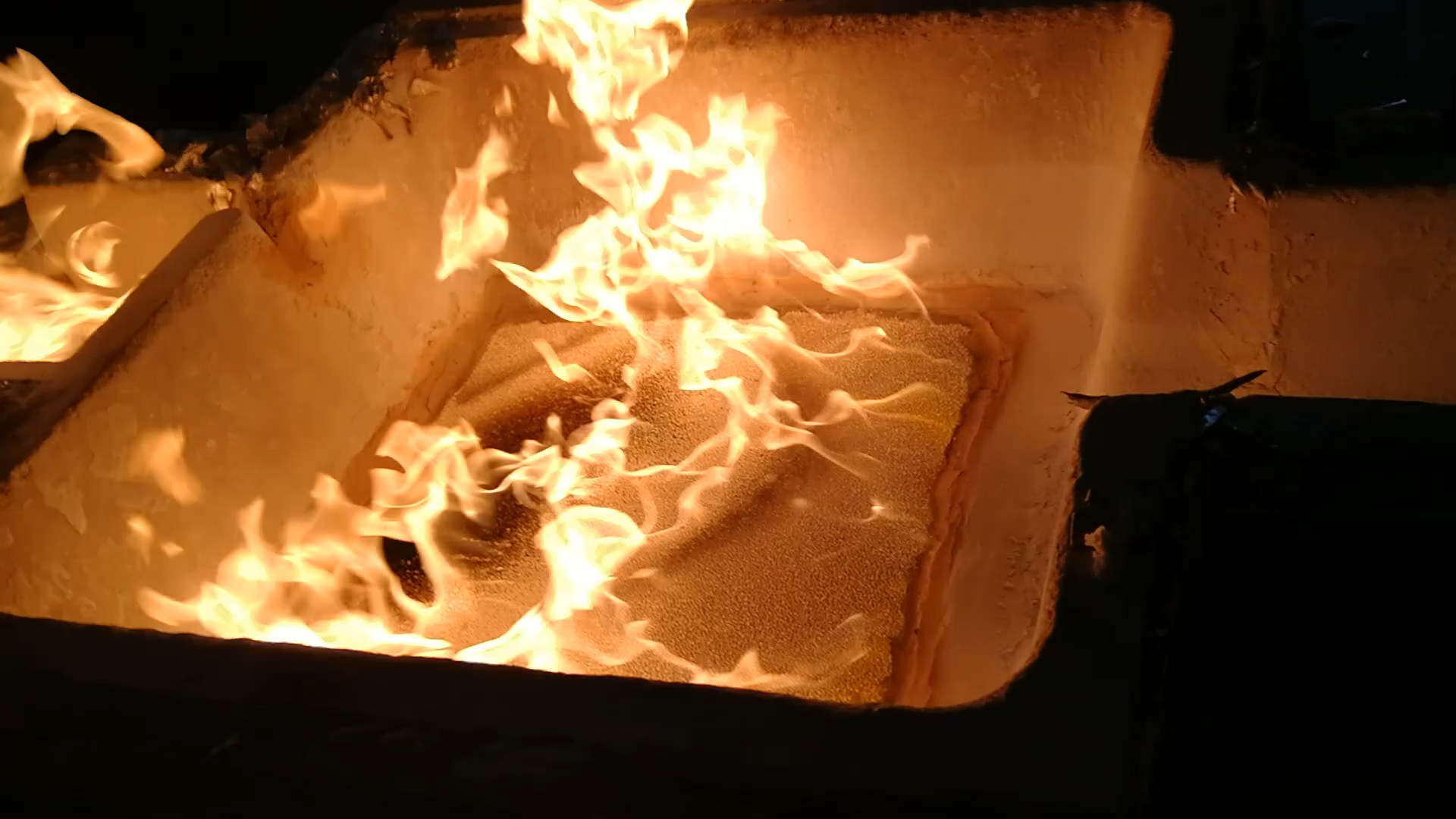
La placa filtrante cerámica presenta una estructura de malla tridimensional y está conectada a los poros de la espuma orgánica que actúa como soporte; se impregna con la pasta tixotrópica de alúmina, mediante el uso de la tecnología de extrusión automática con cuatro centros de corrección cuadrados equidistantes, La suspensión se aplicó de manera uniforme sobre el esqueleto de espuma del soporte y se horneó y curó a una temperatura elevada de 1180 °C.
Se instala en la caja de filtrado para la filtración de impurezas en el líquido de aleaciones de aluminio, con el fin de satisfacer las necesidades de producción de piezas de fundición de precisión de aleaciones de aluminio de alto valor añadido y alto rendimiento tecnológico para los sectores de la aviación, el transporte y otros. Entre estos productos se incluyen discos duros de ordenador, bases de PS para impresión, materiales para la fabricación de latas, álabes de ventilador para motores de turbina a reacción y otros productos.
Estructura básica de una placa filtrante cerámica: Una placa filtrante cerámica se compone de una base, un asiento de posicionamiento, una salida y una película superficial.
Una placa filtrante cerámica (para aluminio y aleaciones de aluminio) es uno de los componentes fundamentales del filtro cerámico. Se trata de un nuevo tipo de material cerámico funcional poroso, cuyo interior está recubierto de poros capilares entrecruzados (de entre 1 y 10 micras de diámetro aproximadamente). Estos poros constituyen el canal por el que circula el filtrado. Este componente se denomina «capa base de la placa». 2. Los componentes de la placa filtrante cerámica son el carburo de silicio, el corindón y otros materiales. Los componentes principales de la salida y la base de posicionamiento de la placa filtrante cerámica están fabricados en acero inoxidable o material polimérico.
Las principales características de las placas filtrantes de cerámica son las siguientes:
1. La precisión de filtración abarca la filtración fina, la microfiltración, la ultrafiltración, la nanofiltración y la ósmosis inversa, con buenos resultados;
2. Alta resistencia mecánica, propiedades químicas estables, buena resistencia al desgaste, baja resistencia, antiblocaje, fácil retroceso, fácil de limpiar;
3, alta eficiencia, alto rendimiento, una disposición estética de las aberturas del filtro, uniforme y ordenada;
Ventajas de las placas filtrantes de cerámica
1. Aprovechando el principio de adsorción, es capaz de eliminar eficazmente las inclusiones de gran tamaño presentes en el aluminio fundido y de adsorber eficazmente las inclusiones finas de pequeño tamaño;
2. No arrojar escoria, lo que reduce de forma efectiva la contaminación del aluminio fundido;
3. Buena resistencia al choque térmico y mayor resistencia a la corrosión por metal fundido;
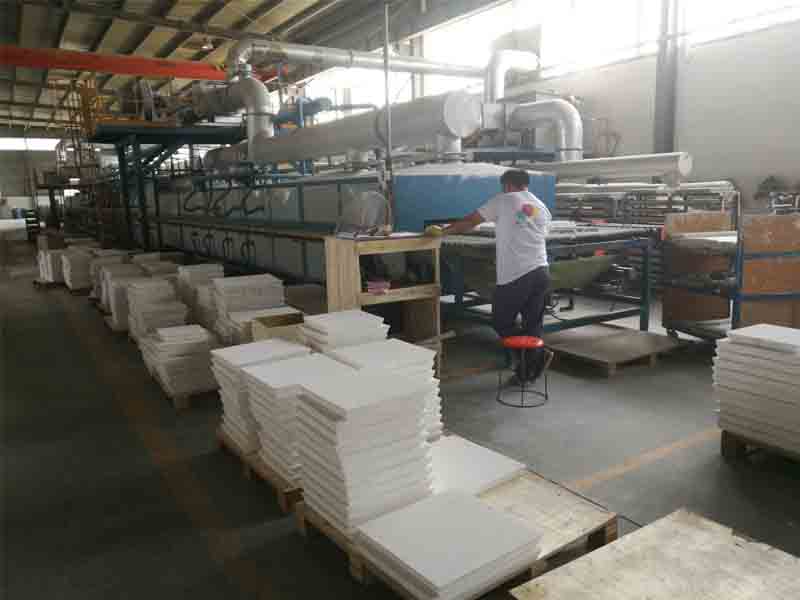
4. Producción en cadena de montaje automatizada, tres procedimientos de calibración, dimensiones precisas y mayor compatibilidad con la caja del filtro;
5. Mejorar la calidad de la superficie, el rendimiento del producto y la microestructura.
Es capaz de eliminar eficazmente las inclusiones de gran tamaño presentes en el aluminio fundido y de adsorber partículas finas de tamaño micrométrico, lo que permite mejorar la calidad de la superficie, el rendimiento del producto y la microestructura, además de aumentar el rendimiento de la producción. Se utiliza ampliamente en la producción de aluminio, papel de aluminio, aleaciones de aluminio y otros ámbitos.
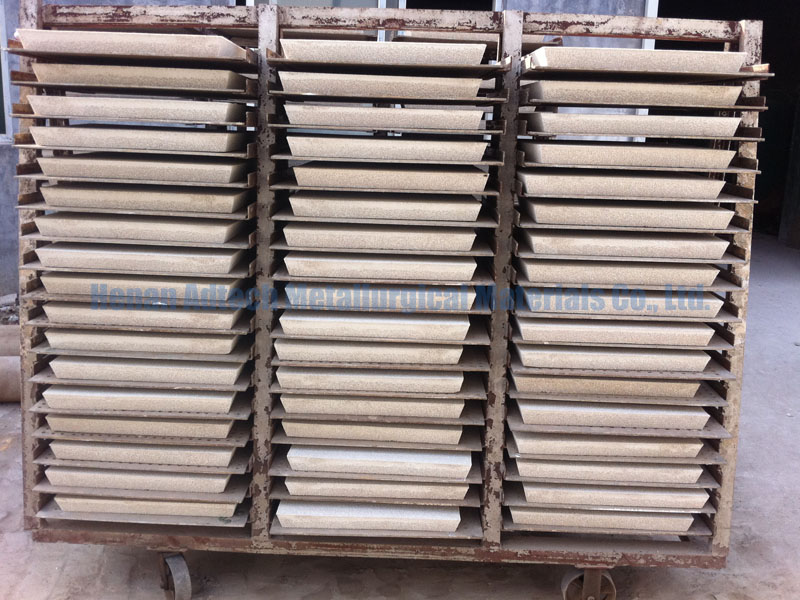
Instrucciones de uso de la placa filtrante de cerámica
Revisa y limpia el caja de filtro los residuos de la superficie para mantener la caja del filtro limpia y en buen estado.
Coloca con cuidado la placa filtrante en la caja del filtro y presiona manualmente la junta de estanqueidad alrededor de la placa filtrante para evitar que el aluminio líquido se derrame o flote.
Precalienta la caja del filtro y la placa filtrante de manera uniforme, de modo que alcancen una temperatura cercana a la del aluminio fundido. La temperatura de precalentamiento de la placa filtrante no debe ser inferior a 260 °C. El precalentamiento para eliminar el agua adsorbida ayuda a facilitar la apertura del tamaño inicial de los poros del filtro en ese momento y evita que el calor provoque una dilatación y contracción que bloquee algunos orificios de la placa filtrante. El precalentamiento puede realizarse mediante calefacción eléctrica o de gas, con un tiempo de calentamiento normal de entre 15 y 30 minutos.
Durante la fundición, hay que vigilar la variación de la altura hidráulica del aluminio y mantener los parámetros normales de control del caudal del aluminio fundido.
La altura manométrica inicial normal es de 100-150 mm. Cuando el líquido empieza a pasar, la altura manométrica desciende por debajo de 75-100 mm y, a continuación, vuelve a aumentar lentamente.
Durante el proceso normal de filtración, evite golpear o hacer vibrar la placa filtrante. Al mismo tiempo, el depósito de flujo debe llenarse con agua de aluminio para evitar que la fluctuación del nivel del líquido de aluminio sea demasiado grande o demasiado pequeña.
Una vez finalizada la filtración, retira la placa filtrante a la mayor brevedad posible y limpia la caja del filtro.
Resistencia a la compresión
Durante el transporte y el uso de la placa filtrante cerámica, esta debe soportar un cierto impacto de presión procedente del exterior, por lo que este índice también se incluye en la norma como indicador de la calidad de la placa filtrante. Cuanto mayor sea la resistencia a la compresión, más duradero será el producto y mejor será su calidad, y viceversa.
La norma establece que la resistencia a la compresión debe ser igual o superior a 0,5 MPa.
Resistencia al choque térmico
La resistencia al choque térmico se refiere a la capacidad de las placas filtrantes cerámicas para resistir los daños causados por cambios bruscos de temperatura.
En el uso de placas filtrantes cerámicas, exigimos a los usuarios que, antes de utilizarlas, las calienten gradualmente hasta alcanzar la temperatura del aluminio fundido que se va a filtrar; sin embargo, algunos usuarios no respetan esta indicación, por lo que comienzan a filtrar antes de tiempo. Según una disposición, una vez que la placa filtrante está correctamente colocada, el metal fundido se filtra sin precalentamiento, por lo que la placa filtrante debe tener una cierta resistencia al choque térmico.
Cuanto mayor sea la resistencia al choque térmico, más duradera será la placa filtrante y mejor será su calidad.
La determinación de la resistencia al choque térmico de la placa filtrante se basa en la norma industrial de la República Popular China “Método de ensayo para la resistencia al choque térmico de productos refractarios” (YB4018-91) y en la norma de la industria metalúrgica ferrosa de la República Popular China “Ensayo de la resistencia al choque térmico de los productos refractarios». El método (método de enfriamiento rápido al aire) (YB/T376.2-1995) se basó en las características de las placas filtrantes cerámicas. El proceso básico de este método de ensayo consiste en precalentar el horno a 740 ± 10 °C (la temperatura de filtración del aluminio y de las aleaciones de aluminio fundidas es, por lo general, de 720 ± 10 °C) y mantenerlo a esa temperatura durante 15 minutos. A continuación, la muestra que se va a someter a ensayo se introduce rápidamente en el horno y se mantiene en su interior durante 30 minutos. Después, se abre la puerta del horno, se retira rápidamente la muestra del horno y se deja enfriar al aire de forma natural; Este proceso se repite seis veces; se observa si la muestra presenta defectos aparentes, como fracturas, daños o esquinas faltantes. Si la muestra presenta cualquiera de estos defectos, ello indica que la resistencia al choque térmico del producto no es buena, y viceversa.
Artículos relacionados:
 Alcan Products Corporation: información sobre las placas filtrantes cerámicas
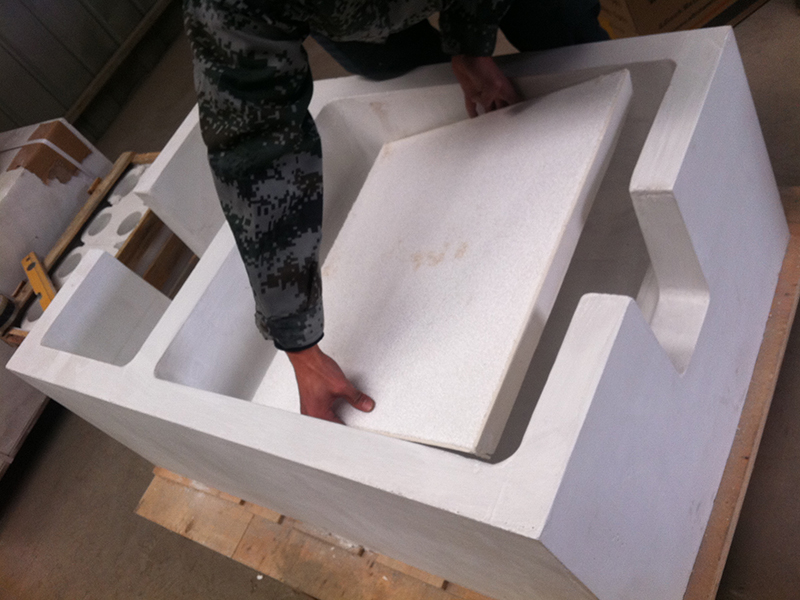 Placa filtrante de cerámica celular
 Presentación de la placa filtrante cerámica PAL
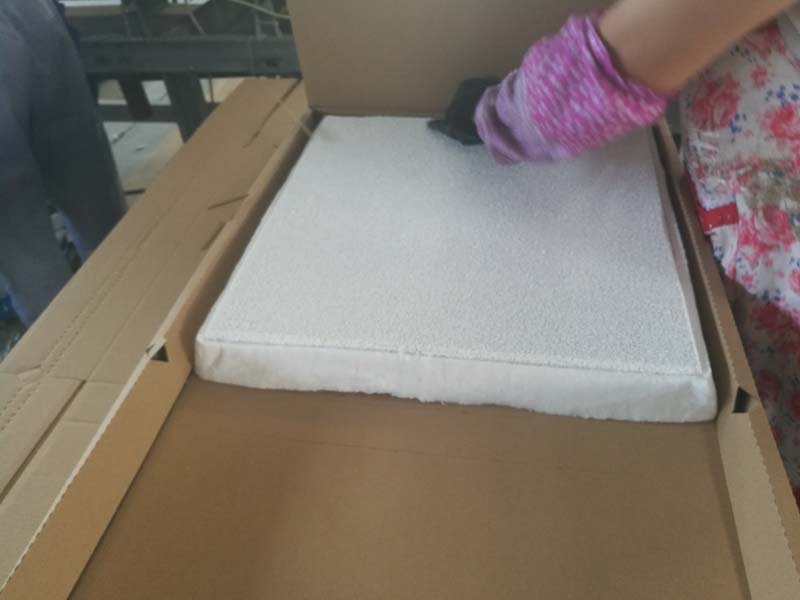 Placa filtrante cerámica PAL
Método de uso de la placa filtrante de cerámica celular
Placa filtrante cerámica PAL
Método de uso de la placa filtrante de cerámica celular
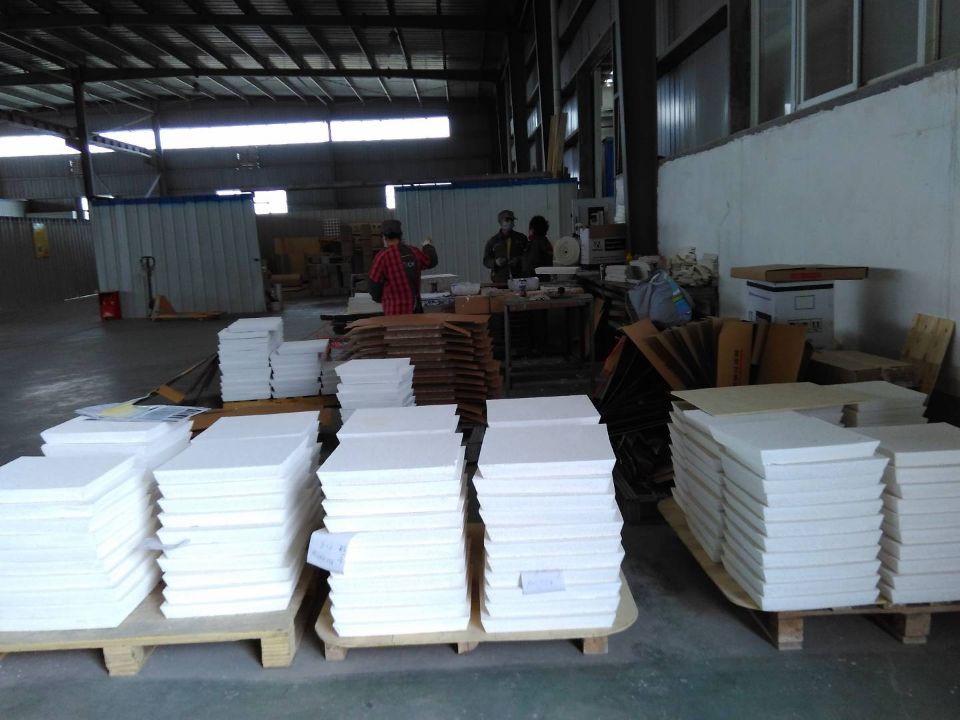 Placa filtrante de espuma cerámica porosa de alúmina
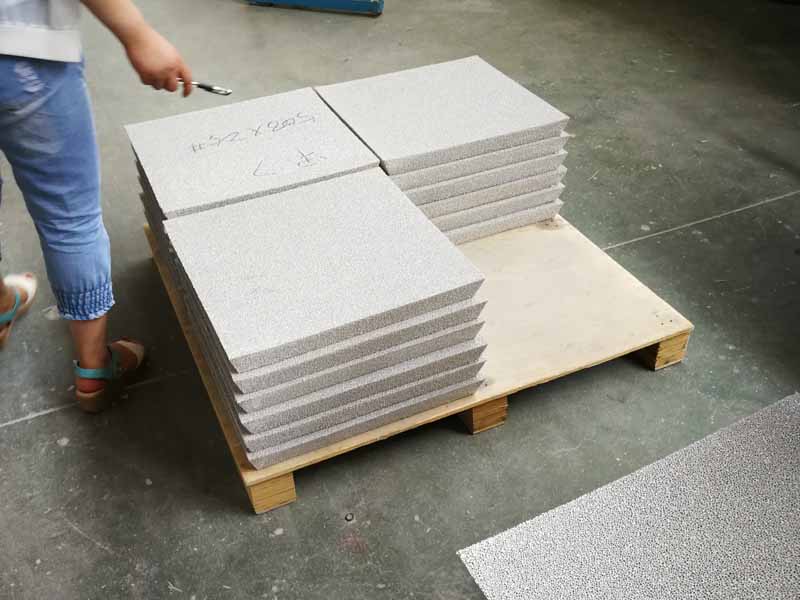 Placa filtrante de cerámica porosa
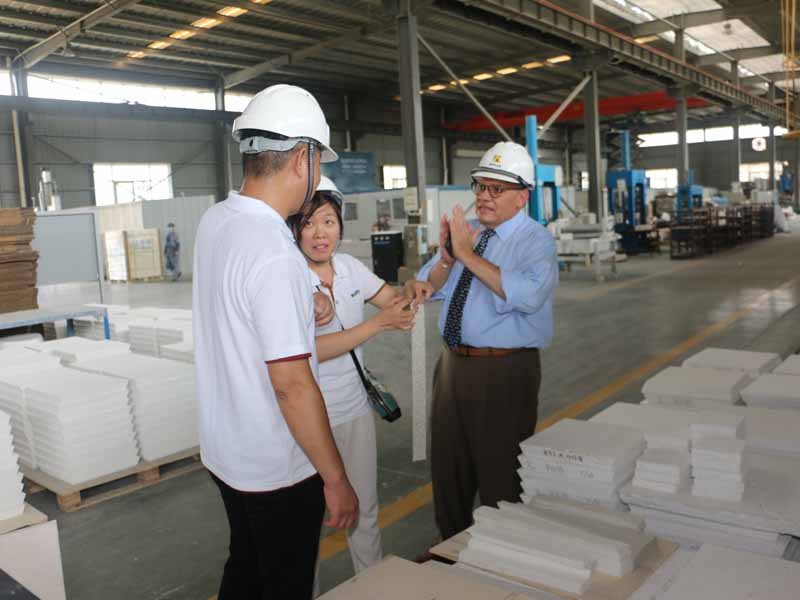 Placa filtrante de cerámica
 Utiliza un filtro de espuma para la caldera
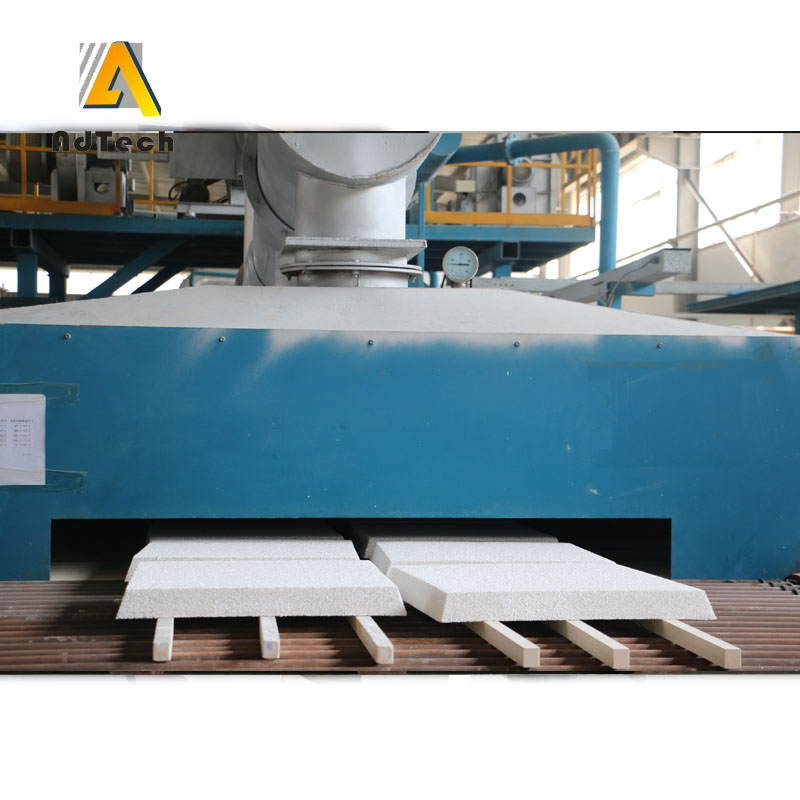 Parámetros del filtro cerámico de estructura alveolar de fundición de aluminio
Conocimientos sobre fundición: filtro de espuma cerámica Adtech PAL
Parámetros del filtro cerámico de estructura alveolar de fundición de aluminio
Conocimientos sobre fundición: filtro de espuma cerámica Adtech PAL
 Filtro de espuma cerámica de Vietnam
 Filtro cerámico de espuma de aluminio para plantas
 Placa filtrante de espuma cerámica porosa para fundición
No Comments