
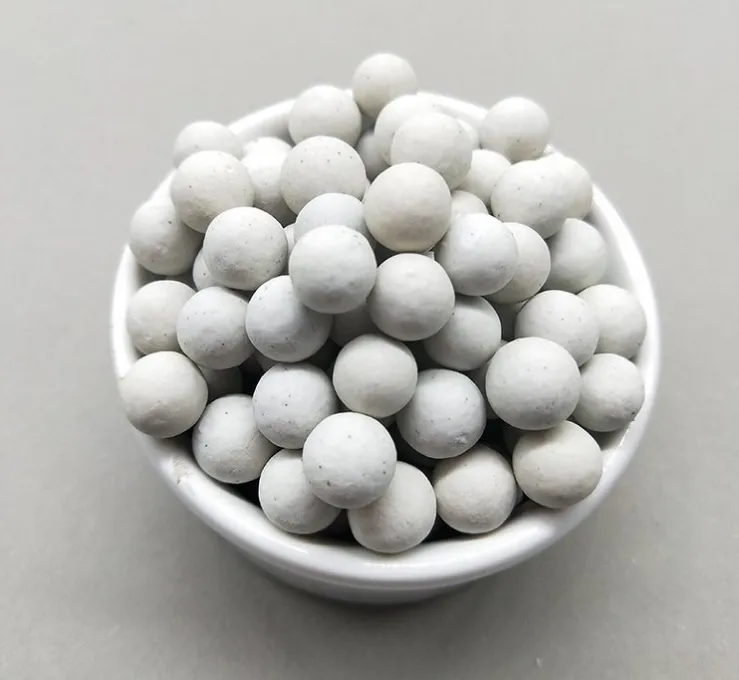
25 Mart İnert Alümina Seramik Bilye: Katalizör Yatağı Destek Malzemesi, 99% Al₂O₃
İnert alümina seramik bilyeler katalizör yatağı desteği için endüstri standardı malzemelerdir ve yüksek basınçlı ortamlarda kimyasal reaksiyonlar için kararlı, reaktif olmayan bir temel sağlarlar. Yüksek saflıkta alümina kullanılarak üretilen, AdTech’in seramik bilyeleri—şu dillerde mevcuttur: 92% ...'ye 99,5% Al₂O₃—aşırı termal şoka, yüksek mekanik yüklere ve agresif kimyasal korozyona dayanacak şekilde özel olarak tasarlanmıştır.
Uzman bir üretici olarak, AdTech üretir inert seramik bilyeler Reaktörlerde, emicilerde ve hidrokrakerlerde katalizörler için destek ve kaplama malzemesi görevi gören ürünlerimiz, altta yatan katalizörü yer değiştirme veya kirlenmeye karşı korurken gaz ve sıvının optimum dağılımını sağlar ve küresel petrokimya ve gübre endüstrilerinin en katı standartlarını karşılar.
Teknik Özellikler ve Tedarik Kapasiteleri:
-
Alümina İçeriği: Şu dillerde mevcuttur: 92%, 95%, ve ultra-yüksek 99% Al₂O₃ notlar.
-
Mekanik Mukavemet: Ağır katalizör yüklerini kırılma olmadan destekleyecek olağanüstü ezilme mukavemeti.
-
Kimyasal Dayanıklılık: Güçlü asitlere, alkalilere ve organik çözücülere karşı olağanüstü direnç.
-
Termal Kararlılık: Yüksek sıcaklıklı ortamlarda, en fazla 1650 ℃.
-
Boyut Aralığı: Geniş çap seçenekleri: 3 mm ...'ye 50 mm (1/8 inç” ...'ye 2”) stokta mevcut.
-
Kalite Standartları: Reaktör iç bileşenlerine ilişkin endüstriyel teknik şartnamelere tam olarak uygundur ve eksiksiz MTC belgesi sunulmaktadır.
İnert Alümina Seramik Bilye
İnert alümina seramik bilye nedir ve 99% Al₂O₃ katalizör yatağı destek malzemesi neden bu kadar yaygın olarak kullanılmaktadır?
İnert alümina seramik bilye, esas olarak alüminadan üretilen ve yoğun, kimyasal olarak kararlı bir destek malzemesi haline sinterlenmiş, yüksek sıcaklığa dayanıklı bir seramik küredir. Proses tesislerinde bu bilyeler, katalizör, adsorban, moleküler elek veya kurutucu tabakalarının altında bulunur. Ana işlevleri katalitik reaksiyon değildir. Görevleri, mekanik destek sağlamak, akışı düzenlemek ve tesisat iç parçalarını korumaktır.
"Şu terim" inert önemlidir. Bu, topun nemi aktif olarak emmek veya proses kimyasına dahil olmak yerine, çalışma koşulları altında kimyasal olarak pasif kalacak şekilde tasarlandığı anlamına gelir. Bu, şundan yapılan çok önemli bir ayrımdır: aktif alümina, gözenekli bir yapıya sahip olup adsorban olarak kullanılır.
99% Al₂O₃ sınıfı, aşağıdakileri sunduğu için değerlidir:
- Daha yüksek kimyasal saflık.
- Silika taşınma riskinin azalması.
- Daha iyi yüksek sıcaklık kararlılığı.
- Birçok aşındırıcı ortamda daha yüksek direnç.
- Hassas katalizör sistemlerinde daha düşük kirlenme riski.
- Uzun vadede daha iyi boyutsal bütünlük.
Hızlı tanım tablosu
| Dönem | Bitki yetiştiriciliğinde önemi | Neden önemli? |
|---|---|---|
| İnert alümina seramik bilye | Destek malzemesi olarak kullanılan yoğun seramik küre | Izgarayı korur ve katalizör katmanlarını destekler |
| 99% Al₂O₃ | Çok yüksek alümina içeriği, düşük kirlilik derecesi | Kirlenmeyi azaltır ve termal kararlılığı artırır |
| Katalizör yatağı destek malzemesi | Aktif katalizörün altına yerleştirilen tabaka | Yükü taşır ve akış dağılımını iyileştirir |
| Yatak sınıflandırması | Katmanlarda farklı boyutlarda topların kullanılması | Göçü önler ve basınç düşüşünü yönetir |
| Üst kaplama tabakası | Katalizör yatağının yakınındaki küçük üst destek bilyeleri | Katalizörü tutar ve alt katmanları korur |
Rafineri ve kimyasal proses literatüründe aynı seçim mantığı defalarca karşımıza çıkmaktadır: Katalizörün değeri yükseldikçe ve kirlenmeye karşı duyarlılık arttıkça, daha yüksek saflıkta alümina destek malzemesinin kullanılmasının gerekçesi daha kolay ortaya çıkmaktadır.
Bir reaktörün içindeki katalizör yatağı destek malzemesi tabakası aslında nasıl çalışır?
Bir destek ortamı tabakası, sadece “katalizörü yerinde tutmaktan” çok daha fazlasını yapar. Çalışır durumdaki bir reaktörde, seramik bilye tabakası aynı anda birbiriyle etkileşim halinde olan çeşitli görevleri yerine getirir.
Temel mekanik ve hidrolik işlevler
- Katalizörün ağırlığını destek ızgarasına güvenli bir şekilde aktarır.
- Reaktör iç parçalarına zarar verebilecek nokta yüklemesini azaltır.
- Büyük destek açıklıkları ile çok daha küçük katalizör parçacıkları arasında kademeli bir geçiş oluşturur.
- Reaktör kesiti boyunca sıvı ve gazın dağılmasına yardımcı olur.
- Destek plakası üzerinden katalizör kaybını sınırlar.
- Bu, damar tabanının yakınındaki bölgesel kanal oluşumunu azaltır.
- Çalıştırma, kapatma ve proses geçiş durumları sırasında bazı termal ve mekanik gerilimleri emer.
Toplar neden pahalı katalizör yüklerini korur?
Katalizör yatakları nadiren ucuzdur. Hidroişleme, reforming, kükürt geri kazanımı, sentetik gaz ve özel kimyasal ünitelerinde katalizör stoğu, tesisin kapatılmasından kaynaklanan maliyetlerin önemli bir kısmını oluşturabilir. Destek sistemi zayıfsa, bunun sonuçları arasında şunlar yer alabilir:
- Yatağın oturması
- Ekran deformasyonu
- Katalizörün alt plenuma sızması.
- Dengesiz dağılım
- Basınç düşüşünden kaynaklanan sapma.
- Önemli noktalar
- Ünitenin erken kapanması.
Düzgün bir şekilde tasarlanmış bir destek ortamı tabakası bu riskleri azaltır.
Destek fonksiyon tablosu
| İşlev | Alümina bilyelerinin işlevi nedir? | Pratik fayda |
|---|---|---|
| Yük aktarımı | Yatağın ağırlığını daha geniş bir alana dağıtın | Şebeke ve kapların iç kısımlarını korur |
| Parçacık tutma | Katalizör ile destek plakası açıklıkları arasındaki boyut farkını giderin | Katalizörün kaçmasını önler |
| Akış düzenleme | Alt kısımda gaz veya sıvının sorunsuz girişi | Yatak kullanım oranını artırır |
| Termal tamponlama | Proses ısısına ve döngüsel değişimlere dayanıklı | Çalıştırma ve olağan dışı durumlar sırasında güvenilirliği artırır |
| Mekanik stabilizasyon | Akış yönünün değişmesi veya ani akış dalgalanmaları sırasında yatak hareketini azaltın | Katalizörün geometrisinin korunmasına yardımcı olur |
Neden alt yatak bölgesi genellikle reaktörün güvenilirliğini belirler?
“Katalizörle ilgili” gibi görünen birçok işletme sorunu, aslında destek bölgesinde başlar. Yatağa giren akış dağılımı dengesizse, üstündeki aktif katalizör eşit bir performans gösteremez. Bu nedenle deneyimli reaktör tasarımcıları, yalnızca aktif katalizörün teknik özelliklerine değil, destek malzemesi katmanına da büyük önem verirler.
99% alümina bilyelerinin zorlu kimya ve petrokimya tesislerinde üstün olmasını sağlayan malzeme özellikleri nelerdir?
Tesis ekipleri destek bilyelerini karşılaştırırken, genellikle en çok dikkat çeken rakam alümina içeriğidir. Bu, yararlı bir başlangıç noktasıdır; ancak mühendislik açısından daha kapsamlı bir değerlendirme, saflık, faz yapısı, yoğunluk, ezilme mukavemeti, termal şok direnci ve kimyasal kararlılığı da içermektedir.
En önemli temel özellikler
| Mülk | Mühendisler neden önem veriyor? | Alıcılar neden buna önem vermeli? |
|---|---|---|
| Al₂O₃ içeriği | Saflığı ve refrakter kararlılığını gösterir | Daha yüksek saflık genellikle daha düşük kontaminasyon riski anlamına gelir |
| Ezilme mukavemeti | Yük taşıma kapasitesini gösterir | Kırılma ve değiştirme sıklığını azaltır |
| Yığın yoğunluğu | Yatağın ağırlığını ve sıkıştırma davranışını etkiler | Nakliye, yükleme ve gemi hesaplamalarını etkiler |
| Su emme | Düşük değerler genellikle yoğun sinterlemeyi gösterir | Zayıflama ve kontaminasyon riskinin daha düşük olması |
| Asit direnci | Birçok kimya ünitesinde önemlidir | Kullanım ömrünü korur |
| Alkali direnci | Seçilen proses akışlarında geçerlidir | Erken bozulmayı önlemeye yardımcı olur |
| Termal şok direnci | Sistem başlatma ve kapatma sırasında önemlidir | Geçici durumlar sırasında çatlamayı sınırlar |
| Boyutsal tolerans | Yatağın düzgün bir şekilde doldurulmasını sağlar | Kurulum kalitesini artırır |
Yüksek saflıkta destek bilyelerinde tipik kimyasal bileşim aralığı
Kesin kimyasal bileşim, kalite sınıfına ve üreticiye göre değişiklik gösterir. Aşağıdaki tablo, birinci sınıf 99% alümina destek malzemesi için piyasadaki genel beklentileri yansıtmaktadır.
| Bileşen | Tipik üst sınıf ürün yelpazesi |
|---|---|
| Al₂O₃ | 99,01 TP3T dakika |
| SiO₂ | 0,2% ile 0,8% arası |
| Fe₂O₃ | 0,05% ile 0,3% arası |
| Na₂O ve diğer alkaliler | Çok düşük |
| CaO, MgO, TiO₂, diğerleri | Esas düzey |
Düşük silika ve düşük demir içeriği, kirlenmeye duyarlı olan veya uzun süreli yüksek sıcaklıkta çalıştırılan katalizör sistemlerinde özellikle önemlidir.
Faz kararlılığı ve sinterleme kalitesi neden önemlidir?
Bir 99% alümina bilyesinin değeri, sadece kimyasal bileşiminde yazıyor olmasıyla sınırlı değildir. Aynı zamanda yoğun ve iyi kontrol edilmiş bir sinterleme işlemi de gerektirir. Yetersiz sinterleme, bilyeyi aşağıdaki durumlara karşı savunmasız hale getirebilir:
- Yüzeyde pul pul dökülme
- Yük altında ezilme hasarı.
- Daha fazla toz oluşumu.
- Termal kırılma.
- Depolama sırasında nem kaynaklı zayıflama.
Başka bir deyişle, uygun seramik işleme uygulanmadan elde edilen kimyasal saflık tek başına yeterli değildir.
Neden 92%, 95% veya daha düşük saflıkta seramik destek bilyeleri yerine genellikle 99% Al₂O₃ tercih edilmektedir?
Her ünitede 99% alümina kullanılması gerekmez. Birçok genel uygulamada 92% veya 95% kaliteleri başarıyla kullanılmaktadır. 99% malzemenin hâlâ popüler olmasının nedeni, hassas, yüksek değerli veya agresif çalışma koşullarında daha yüksek bir güvenlik marjı sunmasıdır.
Saflık düzeyine göre karşılaştırma tablosu
| Sınıf | Tipik güçlü yönler | Tipik sınırlamalar | Yaygın kullanım mantığı |
|---|---|---|---|
| 92% alümina | Makul kullanım koşullarında uygun maliyetli ve iyi mekanik destek | Zorlu koşullarda kirlilik içeriği ne kadar yüksekse, kimyasal rezerv o kadar az olur | Bütçeye duyarlı genel destek katmanları |
| 95% alümina | Maliyet ve performans dengesi | Kirlenmeye karşı son derece hassas görevlerde hâlâ ideal değildir | Çok sayıda standart reaktör destek uygulaması |
| 99% alümina | Son derece yüksek saflık, daha yüksek kimyasal kararlılık, daha düşük silika kontaminasyon riski | Daha yüksek başlangıç maliyeti | Yüksek kaliteli katalizör yatakları, kritik proses üniteleri, zorlu çalışma koşulları |
| 99,5% ve üzeri | Ultra yüksek saflıkta niş kullanım | Maliyet önemli ölçüde artıyor | Aşırı düzeyde kontaminasyon kontrolü gerektiren özel sistemler |
Prim genellikle ne zaman haklı görülür?
99% sınıfı genellikle şu durumlarda tercih edilir:
- Katalizör stoğu pahalıdır.
- Reaktör, uzun süreli çalışma dönemleri boyunca yüksek sıcaklıkta çalışır.
- Kirlenme sınırları oldukça katıdır.
- Asidik veya kimyasal olarak agresif koşullar mevcuttur.
- Kapatma maliyeti, destekleyici medya maliyetini çok aşıyor.
- Bu süreç, uzun bir döngü boyunca istikrarlı bir akış dağılımına dayanmaktadır.
Neden daha düşük safsızlık içeriği katalizör sistemini korur?
Silika, alkaliler ve diğer az miktarda bulunan oksitler, özellikle yüksek sıcaklık, buhar, reaktif beslemeler veya zehirlenmeye ya da istenmeyen yan reaksiyonlara duyarlı katalizör formülasyonlarının bulunduğu ünitelerde, uzun süreler boyunca önemli hale gelebilir. Bu durumlarda, destek malzemesi gizli bir kirlenme kaynağı haline gelmemelidir.
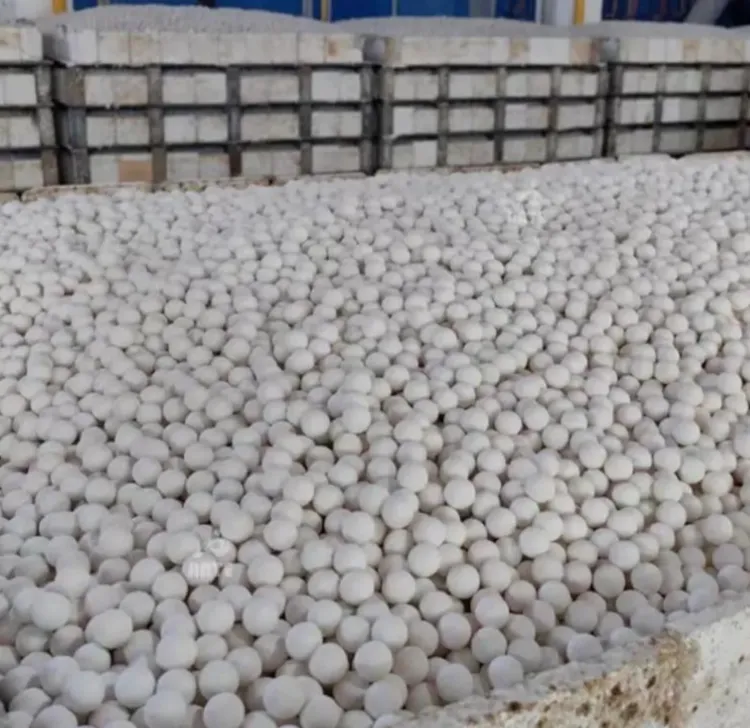
Endüstriyel filtreleme ve katalizör taşıyıcısı olarak kullanılmak üzere depolanan inert alümina seramik bilye stoğu
Mühendisler, inert alümina seramik bilyeleri seçmeden önce hangi teknik özellikleri kontrol etmelidir?
Teknik tedarik sürecinin başarısı ya da başarısızlığı genellikle bu noktada belirlenir. Bir teknik özellik belgesi eksiksiz görünebilir, ancak kullanım sırasında en önemli olan değerler yine de eksik olabilir. Mühendisler, sadece kimyasal analizi değil, aynı zamanda boyutsal, mekanik ve işletimle ilgili ayrıntıları da doğrulamalıdır.
Temel teknik özellik kontrol listesi
| Teknik özellik kalemi | Neleri doğrulamak gerekir? | Neden önemli? |
|---|---|---|
| Alümina saflığı | 99% asgari veya proje gerekliliği | Kontaminasyon riskini ve kimyasal stabiliteyi kontrol eder |
| Top çapı | Kesin nominal boyut ve tolerans | Derecelendirme, tutma ve basınç düşüşünü etkiler |
| Ezilme mukavemeti | Boyuta göre test edilen değer | Yatak yükü koşullarında hayatta kalma olasılığını tahmin eder |
| Su emme | Düşük, kontrollü değer | Yoğunlaşma kalitesini gösterir |
| Yığın yoğunluğu | Lot ile tutarlı | Yatak ağırlığı hesaplamalarında önemli olan hususlar |
| Küresellik | Düzgün küresel şekil | Yükün dengeli bir şekilde yerleştirilmesine ve yük dağılımına yardımcı olur |
| Yüzey kalitesi | Az toz, az talaş | Daha temiz yükleme ve daha az ince parçacık |
| Kimyasal direnç | Asit ve alkali davranışları | Proses uyumu açısından önemlidir |
| Maksimum çalışma sıcaklığı | Tedarikçi tarafından belirtilen değer | Reaktör tasarım incelemesini destekler |
| Ambalaj | Nem koruması, parti izlenebilirliği | Taşıma ve depolamada hayati önem taşır |
Üst sınıf 99% alümina bilyelerde görülen tipik fiziksel özellik aralıkları
Bu aralıklar, piyasa değerlerinin genel bir göstergesidir. Kesin rakamlar, çapa ve üretim yöntemine bağlıdır.
| Mülk | Tipik menzil |
|---|---|
| Su emme | 1,0%'nin altında, genellikle 0,5%'nin altında |
| Yığın yoğunluğu | Yaklaşık 1,8 ila 2,0 g/cm³ |
| Gerçek özgül ağırlık | Yaklaşık 3,5 ila 3,9 g/cm³ |
| Mohs sertliği | Yaklaşık 9 |
| Asit direnci | Çok yüksek |
| Termal kararlılık | Zorlu proses koşulları için uygundur |
| Aşınma kaynaklı kayıp | Uygun şekilde sinterlendiğinde düşük |
Neden ezilme mukavemeti tek bir genel değerle değil, boyutlara göre kontrol edilmelidir?
Basınç dayanımı, bilye çapı arttıkça önemli ölçüde artar. Yalnızca tek bir dayanım değeri veren bir tedarikçi, yeterli ayrıntı sunmamaktadır. Mühendisler, her bir boyut için ayrı ayrı ezilme verilerini içeren bir tablo talep etmelidir.
Boyuta göre yaklaşık ezilme mukavemeti
Aşağıdaki değerler, seçim mantığına yönelik genel sektör örnekleridir. Nihai tedarik, sipariş edilen çapa ilişkin tedarikçi test raporuna dayandırılmalıdır.
| Topun boyutu | Örnek ezilme mukavemeti aralığı |
|---|---|
| 3 mm | 0,2 ila 0,6 kN |
| 6 mm | 0,5 ila 1,5 kN |
| 10 mm | 1,5 ila 4 kN |
| 13 mm | 3 ila 8 kN |
| 19 mm | 6 ila 15 kN |
| 25 mm | 10 to 25 kN |
| 38 mm | 25 to 50 kN |
| 50 mm | 40 to 80 kN |
This table should not be used as a universal acceptance standard. It is a practical comparison reference.
How should ball size and grading be chosen in a catalyst support bed?
This is one of the most searched questions around catalyst bed support media, and it is also one of the least well explained on generic product pages.
A reactor support bed usually does not contain one single ball size from bottom to top. It contains a graded arrangement. Large balls sit lower in the bed, then smaller sizes are layered upward, ending with a top support layer near the catalyst.
Why graded support beds work better than a single-size fill
A graded bed gives several advantages:
- Better load transfer to the support plate.
- Lower chance of small particles falling through large openings.
- Improved flow transition from lower plenum to catalyst bed.
- Reduced local pressure peaks on support internals.
- Better retention of catalyst pellets or extrudates.
Typical grading logic
| Layer position | Typical ball size choice | Temel amaç |
|---|---|---|
| Bottom layer | Larger balls, such as 25 mm to 50 mm | Span support plate openings and carry heavy load |
| Middle layer | Medium balls, such as 10 mm to 19 mm | Transition load and reduce void size |
| Upper layer | Smaller balls, such as 3 mm to 10 mm | Support catalyst and limit migration |
| Optional top retention layer | Selected size matched to catalyst geometry | Fine-tune interface with active bed |
What controls the top layer size?
The top support layer should be chosen with these factors in mind:
- Catalyst pellet or sphere size.
- Support grid opening or slot width.
- Expected flow direction.
- Risk of catalyst migration.
- Pressure drop allowance.
- Bed loading method.
Many engineers use a practical rule: the top ball size must be large enough to remain stable and not pass through the support system, yet small enough to prevent catalyst intrusion into the deeper support layers.
Why incorrect grading causes expensive problems
If the top balls are too large, catalyst can settle into the support bed, creating:
- Uneven flow
- Catalyst breakage.
- Increased pressure drop.
- Difficult unloading during turnaround.
- Lower active bed utilization.
If the balls are too small, pressure drop may rise or the support grid may not be protected adequately.
Where are 99% inert alumina ceramic balls used in real process industries?
The application range is much broader than many buyers expect. These ceramic balls are standard in catalyst support beds, yet they also appear in other vessel internals and packed systems where inert, high-purity ceramic media is needed.
Main industry applications
| Sanayi | Typical use | Why 99% alumina helps |
|---|---|---|
| Oil refining | Hydrotreater, hydrocracker, reformer support beds | High purity and strong thermal stability |
| Petrochemical | Reactor support media under catalysts | Long campaigns and contamination control |
| Fertilizer | Ammonia, methanol, synthesis gas systems | Reliable mechanical support under severe service |
| Sulfuric acid and specialty chemicals | Tower or reactor ceramic media | Acid resistance and durability |
| Gas processing | Adsorber and molecular sieve bed support | Stable geometry and low dust |
| Environmental systems | Catalyst supports in treatment units | Low contamination and mechanical integrity |
| Desiccant and adsorption units | Support under active media | Prevents media loss and helps distribution |
Reactor and vessel types where these balls are common
- Fixed-bed reactors
- Axial flow catalyst vessels
- Radial flow support zones
- Desiccant towers
- Molecular sieve dryers
- Packed columns
- Adsorption beds
- Guard bed systems
Why adsorption units also use inert alumina balls
In adsorption towers, the support media stabilizes molecular sieve or activated alumina layers and protects bottom internals from dynamic load changes during switching cycles. This is especially important in pressure swing and thermal swing applications.
How do inert alumina balls compare with activated alumina, porcelain balls, and packing media?
This is a common confusion point in industrial purchasing. Many buyers see “alumina ball” and assume all ball-shaped alumina products behave the same. They do not.
Comparison table of similar-looking products
| Product type | Main structure | Main job | Not suitable if you need |
|---|---|---|---|
| İnert alümina seramik bilye | Dense, low-porosity ceramic | Support media and inert packing | Moisture adsorption |
| Activated alumina ball | Highly porous adsorbent | Drying, fluoride removal, adsorption | Heavy structural support layer |
| Porcelain ceramic ball | Lower alumina traditional ceramic | General packing and moderate support | High-purity severe process service |
| Catalyst carrier pellet | Engineered support with controlled pore structure | Carry active catalytic phase | Purely inert load-bearing support bed |
| Tower packing ball | Mass transfer packing in some columns | Liquid-gas contact enhancement | High-load catalyst bed support |
Why inert alumina is not the same as activated alumina
Activated alumina is porous and intentionally designed to adsorb water and certain contaminants. Inert alumina support media is dense and structurally focused. Swapping one for the other is a serious specification error.
Why porcelain balls may not fit premium catalyst systems
Porcelain products may be cost-effective in selected applications, yet their lower alumina content and impurity profile can make them unsuitable in units that need high chemical purity, stronger crush resistance, or better thermal reserve.
Which operating conditions can damage catalyst support media, even when the balls are high purity?
A 99% alumina ball is robust, but not indestructible. Field damage usually comes from mechanical mishandling, poor loading practice, extreme thermal shock, or process conditions outside the intended range.
Common failure modes
| Failure symptom | Likely cause | Result in the unit |
|---|---|---|
| Ball breakage during loading | Dropping from excessive height, poor handling | Dust, fines, uneven bed |
| Surface chipping | Rough transport or unloading | More fines and contamination |
| Crushing in service | Inadequate strength or poor bed design | Settling, pressure drop change |
| Cracking after startup | Severe thermal shock | Fragmentation and unstable support layer |
| Chemical attack | Process incompatibility, strong alkali at high temperature | Loss of integrity |
| Catalyst migration into support bed | Wrong top layer size | Maldistribution and difficult turnaround |
| Grid damage | Improper support bed design | Major unit reliability risk |
Why thermal shock still matters with alumina
High-purity alumina handles heat very well, yet rapid temperature cycling can still create stress if the thermal gradient is severe enough. This risk rises during:
- Fast startup
- Water ingress events.
- Emergency quench situations.
- Uneven local heating.
- Poor refractory dry-out nearby.
Why fines are more dangerous than they look
A small amount of ceramic dust can create outsized problems in sensitive units:
- Pressure drop increase.
- Plugging of lower internals.
- Contamination of catalyst.
- More difficult unloading.
- Poor flow distribution near the support plate.
That is why dust level and packaging deserve far more attention than they usually receive in purchasing discussions.
How should inert alumina ceramic balls be loaded, layered, and inspected during shutdown?
Good media can perform badly if loaded poorly. Turnaround crews should treat support media installation as precision work, not bulk dumping.
Recommended loading principles
- Confirm support grid condition before any media enters the vessel.
- Check size sequence against the loading drawing.
- Keep each size fraction clearly segregated.
- Lower balls gently rather than dropping from height.
- Spread each layer evenly across the full cross section.
- Verify final layer thickness at multiple points.
- Remove obvious broken pieces and dust before catalyst loading.
- Protect the top support layer from damage during catalyst charging.
Layer loading checklist
| Check point | Neleri doğrulamak gerekir? |
|---|---|
| Support plate integrity | No bent, corroded, or damaged sections |
| Layer size order | Matches reactor design sheet |
| Bed thickness | Within design tolerance |
| Surface levelness | No mounds, cones, or low spots |
| Dust level | Minimal before catalyst loading |
| Top layer finish | Even surface with no obvious segregation |
| Documentation | Lot number and quantity recorded |
Why controlled loading reduces future maintenance
A carefully loaded support bed helps maintain:
- Stable pressure drop.
- Better flow distribution.
- Lower catalyst breakage.
- Easier unloading at next turnaround.
- Reduced risk of localized hot spots or cold spots.
Should the balls be washed before loading?
Most modern premium media is supplied ready to use. Washing is rarely preferred because it can introduce moisture, handling damage, and recontamination unless the procedure is tightly controlled. If a unit requires an extra-clean loading protocol, the method should be agreed in advance with process engineering and the supplier.
What should procurement teams include in an RFQ or purchase specification?
One of the strongest ways to avoid future trouble is a better RFQ. Many support media purchase orders still say little more than “99% alumina balls, 25 mm.” That is not enough in a serious plant.
Recommended RFQ content
| RFQ item | Why it should be specified |
|---|---|
| Product type | Confirms inert support media, not activated alumina |
| Al2O3 minimum | Protects purity requirement |
| Size range and tolerance | Critical in graded bed design |
| Crush strength by size | Confirms load-bearing ability |
| Water absorption maximum | Yoğunlaşma kalitesini gösterir |
| Yığın yoğunluğu | Supports bed weight calculation |
| Chemical impurities limits | Important in sensitive catalysts |
| Packing method | Prevents transit damage and moisture pickup |
| Lot traceability | Helps root-cause analysis if issues arise |
| Certificate requirements | Supports QA and regulatory systems |
Sample specification wording
AdTech Inert Alumina Ceramic Ball, catalyst bed support media, 99% Al2O3 minimum, nominal size ___ mm, low-dust dense sintered grade, suitable for reactor support service, with certified chemical analysis, crush strength data by size, water absorption value, bulk density data, and lot traceability on each package.
Why packaging details are not trivial
Strong media can still arrive damaged if packaging is weak. Buyers should verify:
- Bag type and liner quality.
- Pallet stability.
- Moisture protection.
- Net weight per bag.
- Export marking.
- Lot identification.
International transport and multiple handling points can generate more damage than the plant itself.
How should engineers evaluate supplier quality beyond the basic datasheet?
Search results often list similar-looking property tables, which can make every supplier appear equal. In real procurement, they are not.
Supplier evaluation matrix
| Category | What to ask | Neden önemli? |
|---|---|---|
| Manufacturing consistency | Is the product made from stable raw material and controlled firing? | Reduces lot-to-lot variation |
| Test method transparency | How are crush strength and absorption tested? | Makes comparisons meaningful |
| Dimensional control | What is the size tolerance and sphericity control? | Affects bed stability |
| Dust management | What screening or cleaning step is used before packing? | Cleaner loading and lower plugging risk |
| Field references | Has the media been used in similar reactors? | Supports practical confidence |
| Change notification | Will the supplier notify process changes? | Important in critical units |
| Teknik destek | Can the supplier review layer design and loading plan? | Valuable during shutdown planning |
| Emergency supply capacity | Can replacement lots be shipped quickly? | Important during turnaround pressure |
Why the cheapest quote can become the most expensive order
Lower upfront price may be erased quickly by:
- More breakage during loading.
- Daha fazla toz oluşumu.
- Shorter service life.
- Catalyst contamination risk.
- Longer shutdown duration.
- Increased troubleshooting cost.
In many units, the support media cost is small compared with the cost of catalyst, outage time, and lost production. That makes technical reliability the more important metric.
What common design and operating mistakes should be avoided in catalyst support media systems?
Several repeat mistakes appear across industry case histories and maintenance reports. Most are preventable.
Frequent errors
| Mistake | Short-term effect | Long-term consequence |
|---|---|---|
| Choosing size by habit instead of vessel drawing | Poor fit with support plate | Catalyst migration or unstable bed |
| Mixing size fractions during loading | Segregation and uneven transition | Channeling and pressure drop issues |
| Ignoring dust in packages | Fines enter lower plenum | Plugging and contamination |
| Using lower purity media in sensitive service | Hidden contamination source | Catalyst performance loss |
| Dropping media from excessive height | Chipping and breakage | Weak support zone |
| Skipping top layer verification | Irregular catalyst interface | Uneven flow distribution |
| No lot traceability | Root cause becomes difficult after failure | More downtime during investigation |
Why bed design should be reviewed whenever catalyst changes
A catalyst replacement project sometimes changes pellet size, shape, density, or bed depth. If the support media design stays unchanged without review, the new catalyst may interact differently with the top support layer. This is a common source of avoidable migration problems.
Why radial-flow and axial-flow systems need different attention
Both use support media, but the hydraulic behavior and load path differ. The support layer in a radial-flow system may have different retention and distribution priorities than a simple axial bed. Engineers should resist copying a support media stack from one vessel type to another without checking the internal layout.
How can plants troubleshoot pressure drop, catalyst leakage, or support bed instability?
Support media problems rarely remain hidden. They show up through process symptoms, maintenance findings, or shutdown inspection. A structured troubleshooting method helps identify the real cause quickly.
Sorun Giderme Tablosu
| Belirti | Possible root cause | Corrective action |
|---|---|---|
| Rising pressure drop early in run | Excess dust, broken balls, fines migration | Review media cleanliness, loading practice, and top layer protection |
| Catalyst found below support plate | Wrong top layer size or grid issue | Redesign top layer and inspect internals |
| Uneven reactor temperature profile | Poor lower-bed distribution or settled support layer | Inspect grading, bed levelness, and support integrity |
| Broken support balls during turnaround | Inadequate crush strength or loading damage | Upgrade media quality and loading procedure |
| Unexpected contamination of catalyst | Impurity carryover from lower-grade media | Shift to higher-purity 99% Al2O3 support balls |
| Bed settling after startup | Poor layering or internal deformation | Inspect support plate and reload with proper grading |
What evidence should be collected during inspection?
- Photographs of bed layers.
- Samples of broken or intact balls.
- Dust quantity and appearance.
- Support plate condition.
- Catalyst intrusion depth into top support layer.
- Temperature and pressure data before shutdown.
- Lot numbers of support media used.
This evidence turns a vague maintenance discussion into a real engineering diagnosis.
What role do inert alumina balls play in flow distribution and pressure drop control?
Many product listings mention “support” but give little attention to hydraulic behavior. In reality, the ball bed also affects gas and liquid entry into the catalyst zone.
Hydraulic contribution of support media
A properly graded support layer can:
- Reduce jetting from support openings.
- Spread incoming fluid more evenly.
- Smooth velocity transitions.
- Limit dead zones near the bed bottom.
- Support more stable contact between fluid and catalyst.
Pressure drop balance
Support media should be designed to give enough retention and stability without creating unnecessary pressure loss. This is a balancing act.
| If support balls are too large | If support balls are too small |
|---|---|
| Catalyst may intrude into the support zone | Pressure drop may rise |
| Flow transition may remain coarse | Loading may become more sensitive |
| Retention of fines may weaken | Dust and plugging risk may increase |
| Grid protection may still be adequate | Lower plenum may see higher restriction |
Why the support zone affects catalyst utilization
If fluid enters the catalyst bed unevenly, parts of the bed may do more work than others. That reduces effective bed usage, shortens cycle length, and can contribute to thermal maldistribution. A small improvement in the support zone can improve whole-reactor behavior.
What are the main advantages of AdTech 99% inert alumina ceramic balls in procurement and field service?
AdTech buyers usually look at the product from two viewpoints. Engineers look at reliability and compatibility. Procurement teams look at consistency, documents, and delivered value. A strong support media program should satisfy both.
Practical strengths valued by technical teams
- High alumina purity suitable for sensitive catalyst systems.
- Strong crush resistance over a broad size range.
- Stable spherical shape.
- Low dust and low chipping risk when well packed.
- Good thermal and chemical durability.
- Broad use across refinery, petrochemical, and adsorption vessels.
Practical strengths valued by procurement teams
- Clear material specification.
- Traceable lot control
- Repeatable packaging quality.
- Predictable lead time.
- Technical support during RFQ and shutdown planning.
- Easier comparison of certified property data.
Why AdTech-style positioning works well in this product category
Support media is often purchased during time-critical shutdowns. That means buyers want more than a commodity bag of ceramic balls. They want confidence that the media will arrive intact, match the drawing, and perform without creating hidden risks under an expensive catalyst charge.
FAQs about inert alumina ceramic ball catalyst bed support media
99% Inert Alumina Ceramic Balls: 10/10 FAQ
1. Main purpose of an inert alumina ball in a reactor?
Its primary role is to serve as support and cover media for catalyst beds. They protect the delicate catalyst from high-velocity gas/liquid entry, prevent the support plate from clogging, and ensure an even flow distribution across the entire bed to maximize reaction efficiency.
2. Why is 99% Al2O3 (High Purity) important?
3. Is an inert alumina ball the same as activated alumina?
4. Which ball size should be used under the catalyst?
GRADING RULE
You never use a single size. Engineers design a graded bed (e.g., 20mm at the bottom, 13mm in the middle, 6mm directly under the catalyst). This “inverted pyramid” structure prevents small catalyst particles from migrating downward while maintaining a low pressure drop.
5. Can 99% alumina balls be used with molecular sieves?
6. Do inert alumina balls create a high pressure drop?
7. Are these ceramic balls resistant to acid and alkali?
8. Can support media be reused after a shutdown?
MAINTENANCE TIP
It depends on the integrity inspection. If the balls are clean, unbroken, and haven’t been “poisoned” by process contaminants, they can be screened and reused. However, many plants prefer new media to avoid the risk of hidden stress fractures or leftover catalyst dust.
9. What causes ceramic support balls to break?
Failure is usually caused by improper loading (dropping balls from a great height), poor sintering during manufacturing (leading to low crush strength), or thermal shock (extremely rapid heating/cooling cycles that cause the ceramic to crack).
10. What documents should buyers request from suppliers?
Crucial documentation includes:
- Chemical Analysis Report: Confirming Al2O3 % and SiO2 limits.
- Crush Strength Data: Minimum and average values for each size.
- Leachable Silica Test: Specifically for high-temp steam service.
- Size Distribution: Verification of diameter tolerances.
- Water Absorption: To ensure the balls are fully dense.
Final technical summary
A high-performance catalyst support bed starts with the right support media, not only the right catalyst. AdTech Inert Alumina Ceramic Ball: Catalyst Bed Support Media, 99% Al2O3 is a strong choice when the process demands chemical purity, mechanical strength, thermal reliability, and bed stability over long campaign periods. The material protects reactor internals, supports costly catalysts, improves lower-bed flow behavior, and reduces operational risk in refining, petrochemical, adsorption, and gas processing service.
The most important selection lessons are straightforward:
- Purity matters, especially in contamination-sensitive units
- Ball size grading matters just as much as chemistry
- Crush strength should be checked by diameter, not by one generic figure
- Loading quality can make or break final bed performance
- Dust, chips, and weak packaging are serious hidden risks
- A better RFQ usually prevents expensive shutdown trouble later
In short, inert alumina ceramic balls should not be treated like a simple bulk ceramic filler. They are a load-bearing, flow-conditioning, catalyst-protecting component inside some of the most valuable process vessels in industry. When engineering, maintenance, and procurement teams specify them correctly, they create a more reliable reactor from the bottom up.
İlgili yazılar:
 İnert gaz dehidrojenasyon teorisi
 Erimiş Metal Filtre Malzemesi
 Seramik Köpük Filtre Al₂O₃
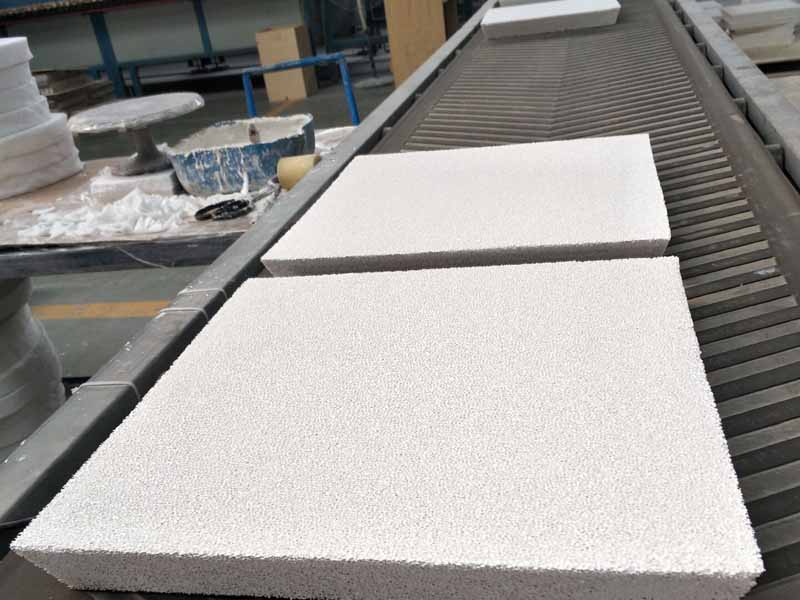 Alümina Gözenekli Filtre
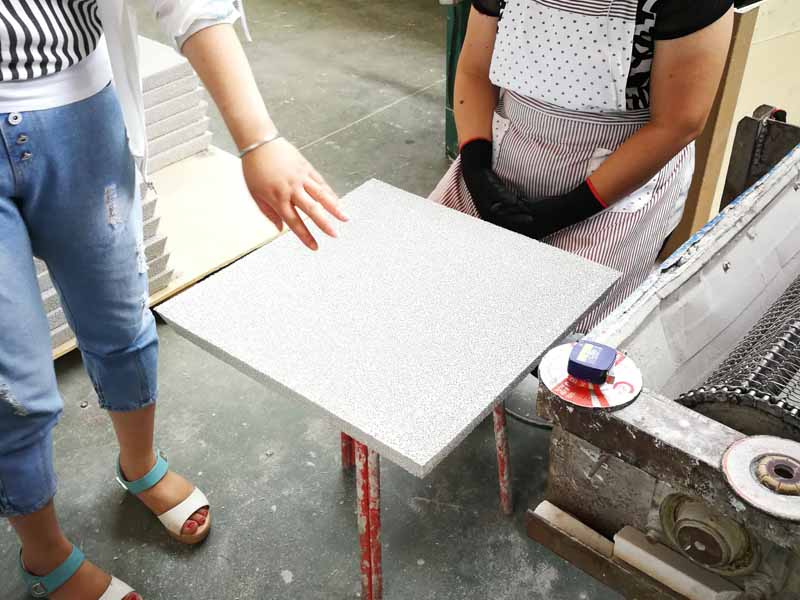 Al₂O₃ Seramik Köpük Filtre
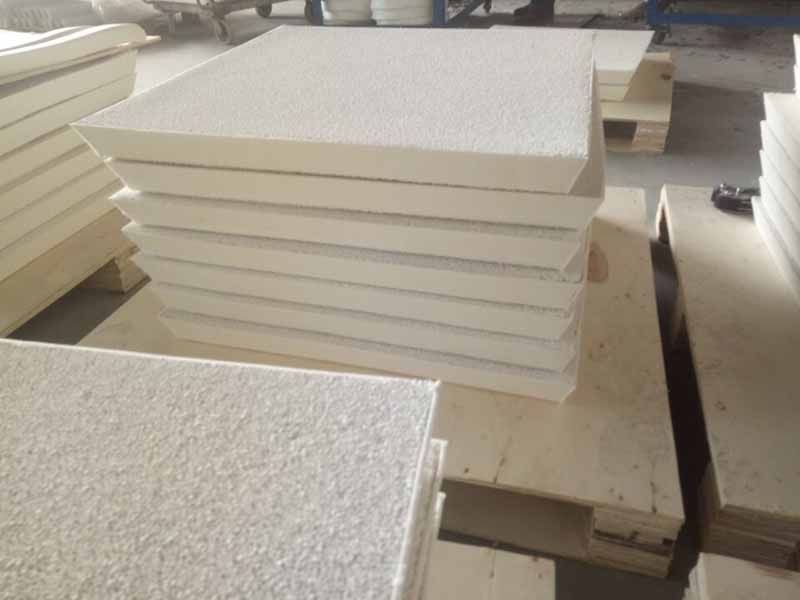 Al₂O₃ Köpük Seramik Filtre
 Aktif Alümina Seramik Toplar: Yüksek Adsorpsiyonlu Kurutucu, Filtrasyon Özellikleri
 Alüminyum Oksit Seramik Köpük Filtre
Farklı inert gazların kullanılmasıyla elde edilen farklı alüminyum gaz giderme etkileri
Alüminyum Oksit Seramik Köpük Filtre
Farklı inert gazların kullanılmasıyla elde edilen farklı alüminyum gaz giderme etkileri
 Alüminyum ve filtreleme: Al₂O₃ ve SiC seramik köpük filtrelerde ıslanma davranışı
 Al₂O₃ Köpük Döküm Filtresi
Farklı inert gazların alüminyumun gaz giderimi üzerindeki etkileri
Bor Nitrür-Alümina Seramik Porselen Çubuk Kontrol Pimi
Alümina Seramik Köpük Filtre Üreticileri
Al₂O₃ Köpük Döküm Filtresi
Farklı inert gazların alüminyumun gaz giderimi üzerindeki etkileri
Bor Nitrür-Alümina Seramik Porselen Çubuk Kontrol Pimi
Alümina Seramik Köpük Filtre Üreticileri
No Comments