
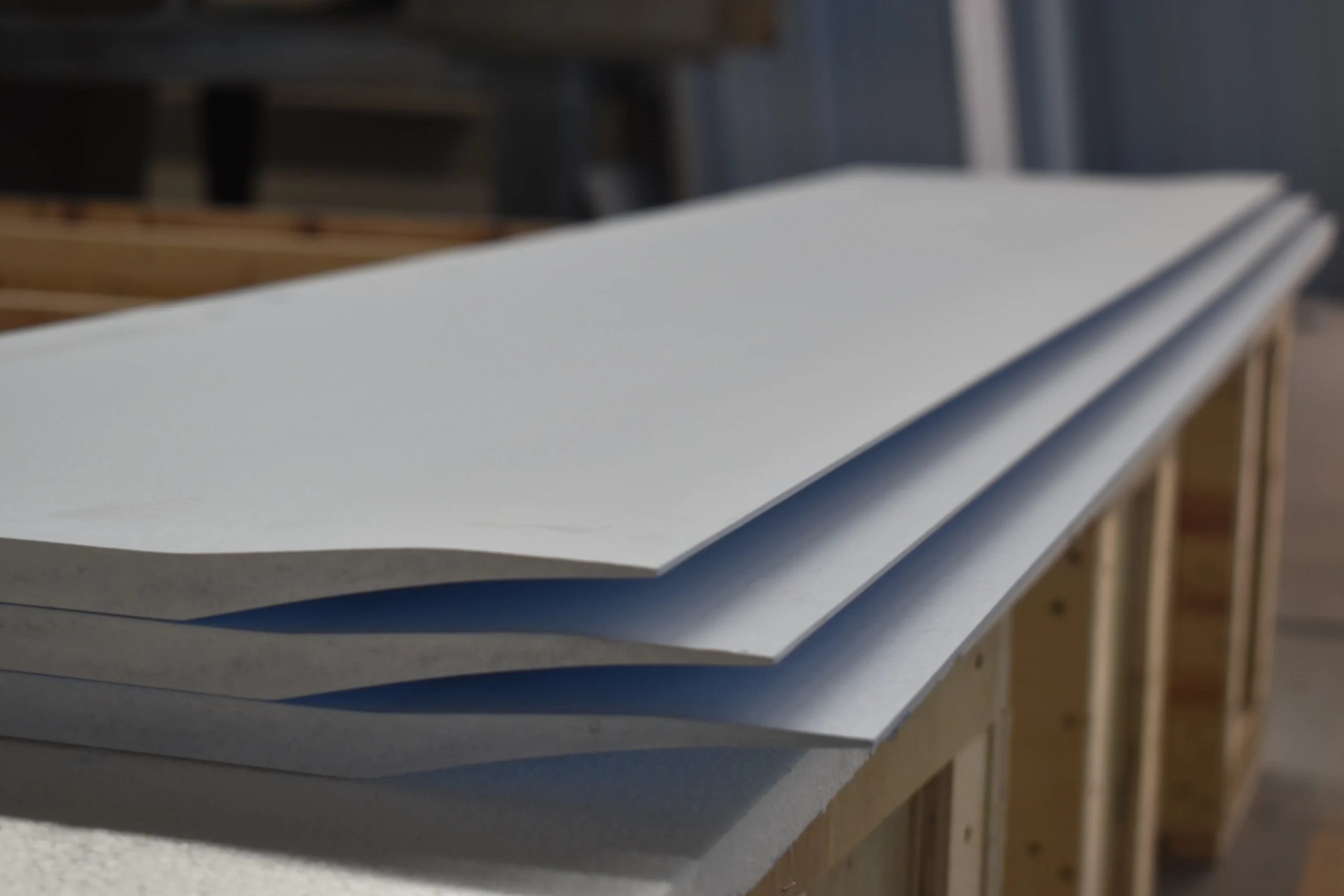
10 января Почему забиваются наконечники алюминиевых литейных колес? Распределение потока, термическая стабильность и дефекты полосы
Aluminum caster tip clogging can interrupt twin-roll casting, shorten production runs, and cause uneven strip quality. The underlying cause may be accumulated inclusions, local metal solidification, an unsuitable internal flow path, or deterioration of the caster tip surface. Identifying which mechanism is responsible is essential because changing the tip geometry will not solve contamination problems, and improving melt cleanliness will not correct every thermal or dimensional issue.
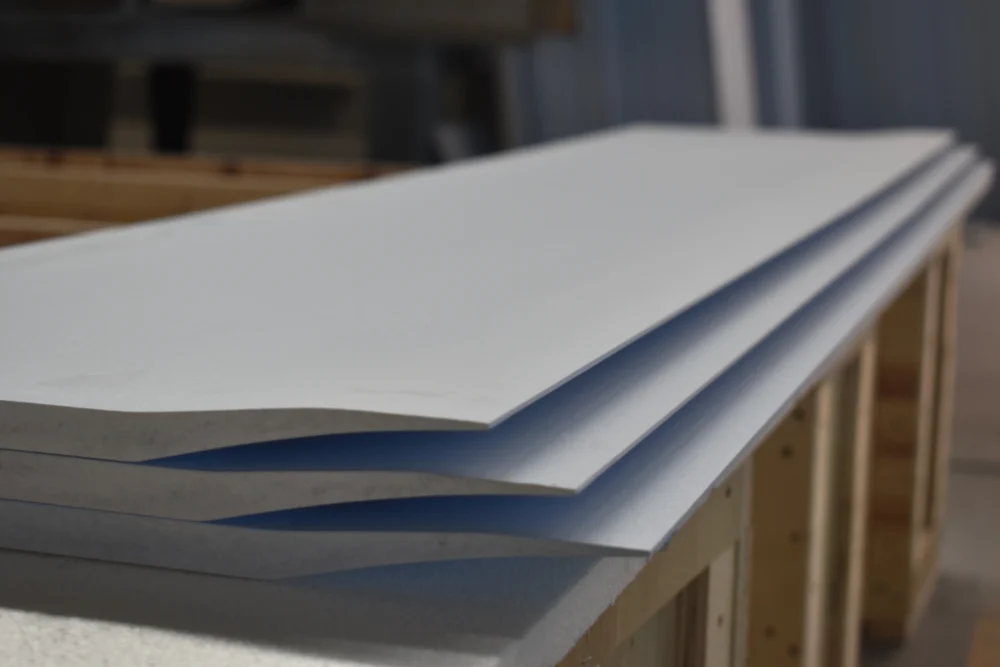
наконечник ролика
Why Is the Caster Tip So Important in Twin-Roll Aluminum Casting?
In twin-roll continuous casting, molten aluminum passes through an elongated caster tip and enters the pool between two counter-rotating, water-cooled rolls. The metal is then rapidly cooled and solidified into a continuous strip.
The caster tip does more than deliver metal to the rolls. Its internal channel, distribution structure, outlet geometry, and thermal properties influence how the melt is distributed across the casting width.
A well-designed tip helps maintain consistent delivery and temperature conditions. A poorly matched or deteriorating tip can create uneven flow, local accumulation, and variations in solidification behavior.
These effects may contribute to:
- Longitudinal streaks on the cast strip.
- Uneven strip appearance across the width.
- Localized aluminum buildup or sticking.
- Increasing flow restriction during a production run.
- Premature replacement of the caster tip.
- Unplanned production interruptions.
However, these symptoms are not unique to caster tip problems. Their origin should be confirmed by inspecting the tip and examining the upstream melt-treatment process.
Does an Aluminum Caster Tip Work Like a Stopper Rod?
No. Although both components influence molten-metal delivery, their operating principles are different.
A tundish stopper rod in steel continuous casting uses a movable stopper to regulate flow through an outlet nozzle. An aluminum caster tip for twin-roll casting generally controls delivery through its internal flow channel, baffle configuration, outlet geometry, and interaction with the casting rolls.
This distinction matters when investigating flow instability. A problem caused by a fixed internal passage cannot necessarily be corrected by adjusting the external metal supply alone.
| Особенность | Tundish stopper rod | Twin-roll aluminum caster tip |
|---|---|---|
| Main function | Adjusts flow through the tundish nozzle | Distributes molten aluminum across the roll gap |
| Primary control mechanism | Movable stopper position | Internal channel and outlet geometry |
| Main design concern | Accurate flow regulation and shutoff | Uniform distribution and stable thermal conditions |
| Typical process | Steel continuous casting | Aluminum strip cast-rolling |
For aluminum cast-rolling operations, the relevant engineering questions are whether the metal is distributed uniformly, whether the internal passage remains unobstructed, and whether temperature conditions remain suitable across the full casting width.
What Causes an Aluminum Caster Tip to Clog?
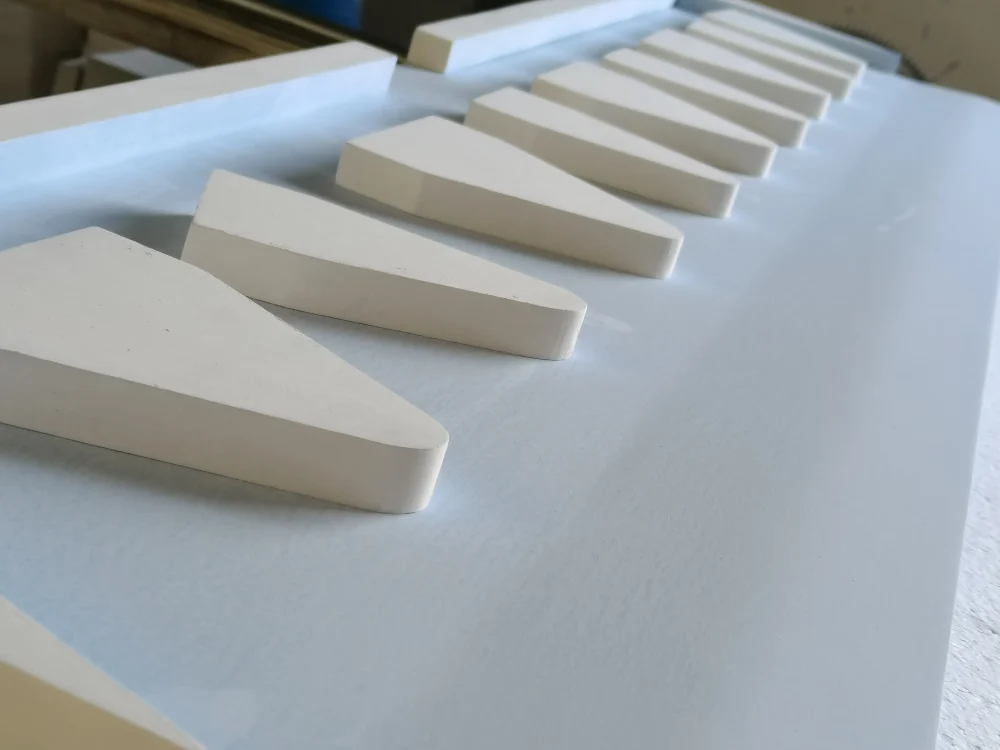
наконечник ролика
Caster tip clogging is not a single failure mechanism. Several different problems can reduce the effective flow area, and each requires a different corrective action.
1. Can Non-Metallic Inclusions Block the Caster Tip?
Yes. Solid particles and oxide-related inclusions carried into the caster tip can accumulate or become trapped in narrow passages, depending on their size, concentration, and the internal geometry.
Potential sources include oxide films formed during melt handling, dross particles, refractory fragments, and other contamination introduced during melting or transfer.
A high incoming inclusion load can shorten the operating life of the caster tip even when the tip material and dimensions are suitable.
How to investigate it
Compare melt-quality data before and after filtration where measurements are available. Inspect deposits or residues from the affected equipment and compare them with findings from the upstream filter or refractory system.
Check whether clogging occurs shortly after startup or gradually increases during a production campaign. Progressive blockage may indicate accumulation, although deposits should be examined before reaching a definite conclusion.
What can be done
Review charge preparation, skimming, melt transfer, and filtration performance. Where solid-inclusion loading is excessive, a properly selected ceramic foam filter for molten aluminum can help reduce the amount of non-metallic material reaching the casting tip.
The filter should be selected according to the required throughput, inclusion-control target, available filtration area, and sealing arrangement.
Increasing filtration fineness without evaluating flow capacity is not necessarily the right solution. A finer filter may itself create additional flow resistance if the system is not designed for it.
(放 CFF 过滤板与铸嘴板的对比照片,最好能体现过滤设备位于铸嘴板上游,而不是简单拼接两张产品图。)
2. Can Low Metal Temperature Cause Caster Tip Blockage?
Yes. If the local temperature falls too close to the alloy’s liquidus temperature, partial solidification can restrict flow through the caster tip.
The risk depends on the alloy composition, incoming metal temperature, heat loss, tip insulation, operating interruptions, and local thermal conditions.
The average metal temperature alone may not reveal the problem. A local cold region inside the tip can restrict the passage while other areas remain sufficiently hot.
Warning signs may include:
- Flow becomes increasingly restricted after an interruption.
- Restarting the line becomes more difficult.
- Metal distribution changes after prolonged idle periods.
- Local deposits or partial solidification are found during inspection.
What can be done
Follow the equipment manufacturer’s preheating and startup procedures. Check the temperature of incoming aluminum and review whether thermal losses occur during transfer or stoppages.
Avoid compensating for a suspected cold spot simply by raising the entire process temperature. Excessive heating may increase energy consumption and can contribute to refractory deterioration under unsuitable conditions.
The correct objective is to keep the metal and the caster tip within the operating window established for the alloy and process.
3. Can the Internal Caster Tip Design Create Uneven Flow?
Yes. The internal runner, baffles, splitter geometry, and outlet dimensions determine how molten aluminum travels through the tip and reaches the roll gap.
If the flow path contains poorly designed restrictions or creates uneven resistance across the width, metal may not be distributed uniformly.
Potential consequences include:
- Higher flow velocity in certain regions.
- Insufficient delivery to other regions.
- Uneven temperature distribution.
- Local stagnation or accumulation.
- Differences in solidification behavior across the strip.
Research on twin-roll casting has examined how internal baffle configuration affects flow distribution and solidification. One published study on aluminum twin-roll casting reported different performance between seven- and nine-baffle configurations in its modeled and tested setup. This is not a universal rule that seven baffles are always better; it demonstrates that internal geometry must be evaluated for the particular caster tip and operating conditions. Read the research on flow and heat transfer in twin-roll casting.
What can be done
Review the existing tip drawing, internal passage dimensions, baffle configuration, and observed defect pattern. If defects consistently appear in the same transverse region, compare their location with the internal channel and outlet arrangement.
Changing the baffle count or outlet geometry without investigating the flow path may simply move the problem rather than solve it.
(放铸嘴板内部流道或分流板结构图;如有剖面图,标注入口、内部流道、分流结构和出口位置。)
Why Do Some Aluminum Strips Develop Longitudinal Lines or Uneven Surface Quality?
A longitudinal line can be a useful diagnostic clue, but it should not automatically be attributed to the caster tip.
The location, direction, timing, and repeatability of the defect help distinguish a flow-distribution problem from surface adhesion, inclusion contamination, or other casting conditions.
How Does a Flow Distribution Problem Appear on the Strip?
If metal delivery varies across the width, local differences in the molten pool can affect the conditions under which the strip solidifies.
Where the problem repeatedly appears at a fixed transverse location, investigate whether the caster tip’s outlet, baffles, or local thermal conditions correspond to that position.
This is different from a defect that appears intermittently or moves as operating conditions change. Such variation may indicate an unstable process rather than a fixed geometric problem.
Can Aluminum Sticking to the Caster Tip Affect Strip Quality?
Yes. Aluminum buildup on working surfaces may interfere with normal metal delivery, depending on its location and severity.
Possible contributors include surface degradation, unsuitable operating conditions, coating damage, or contamination on the contact surface.
AdTech’s boron nitride coating for aluminum casting components can help reduce aluminum adhesion where the coating is suitable for the specific substrate and operating conditions.
Coating application, drying, preheating, and inspection should follow the relevant product instructions. A coating should not be used to compensate for incorrect tip geometry or an unsuitable casting temperature.
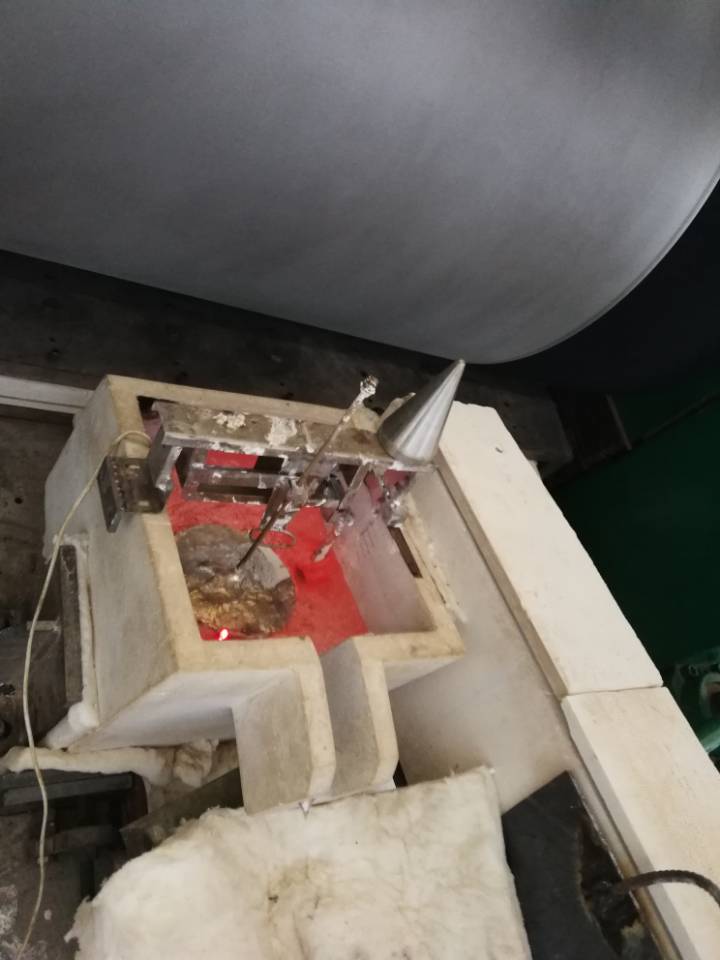
(放 BN Coating 涂覆在铸嘴板工作面上的照片,最好同时展示涂层均匀度和实际施工过程。)
How Can You Tell Whether the Problem Comes from the Caster Tip or the Upstream Process?
A caster tip should not be replaced automatically every time strip quality deteriorates. First, identify whether the defect follows the casting hardware, the melt condition, or the operating conditions.
| Observed symptom | Possible source | Recommended investigation |
|---|---|---|
| Flow restriction increases during operation | Deposits, inclusion accumulation, or local solidification | Inspect the internal passage and review metal temperature and incoming melt quality |
| Defect repeatedly appears at a fixed strip position | Uneven flow distribution, outlet geometry, or local thermal variation | Compare defect position with the tip drawing and temperature distribution |
| Quality changes after filter replacement | Changed flow resistance, filter installation, or melt conditions | Check filter grade, effective area, installation, and casting parameters |
| Aluminum buildup occurs on the working surface | Sticking, surface deterioration, or unsuitable coating conditions | Inspect the working face, coating condition, and operating procedure |
| Flow becomes unstable after a production interruption | Thermal changes, partial solidification, or restart conditions | Review the shutdown, preheating, and restart procedure |
| New defects appear alongside rising inclusion levels | Upstream contamination or inadequate filtration | Compare melt-quality results and inspect the upstream treatment system |
These observations are starting points rather than definitive diagnoses. For example, a defect appearing at a fixed position may also be related to roll condition or cooling distribution. A meaningful investigation should compare the caster tip with the other factors that determine strip formation.
Which Caster Tip Characteristics Matter Most When Selecting a Replacement?
A replacement should be compatible with the casting machine and the operating conditions, not simply match the external dimensions of the old part.
1. Length and Width
The caster tip must fit the intended casting width and installation arrangement. AdTech publishes caster tip dimensions covering lengths of 200–2300 mm, widths of 50–600 mm, and thicknesses of 1.6–10 mm. These are product dimensions rather than a guarantee that every size suits every machine.
2. Internal Geometry
The flow passage and baffle arrangement should be designed for the required metal distribution. A mechanically compatible tip may still produce unsatisfactory flow if its internal geometry is unsuitable for the casting setup.
3. Thermal Properties
The material must help maintain suitable thermal conditions during molten aluminum delivery. Excessive temperature variation can affect flow and strip formation, while inadequate thermal stability may shorten operating life.
4. Dimensional Stability
The tip must retain the required geometry during use. Excessive deformation can change the effective outlet condition and affect the uniformity of metal delivery.
5. Surface Protection
The suitability of the working surface and any specified protective coating should be evaluated for the intended operating conditions.
(放铸嘴板尺寸测量或质量检验照片,建议标注长度、宽度、厚度及出口结构;不要只放白底产品图。)
AdTech supplies ceramic fiber caster tips for aluminum cast-rolling. The product specification and internal geometry should be confirmed against the target machine, casting width, outlet requirements, and operating conditions before ordering.
What Information Should You Provide When Requesting a Caster Tip?
A supplier can provide more useful recommendations when the request includes both the mechanical specification and the casting problem.
Prepare the following information:
| Информация | Purpose |
|---|---|
| Casting machine type and model | Confirms equipment compatibility |
| Target strip width and thickness | Establishes the required tip and outlet configuration |
| Current tip dimensions and drawing | Provides a dimensional baseline |
| Alloy grade and operating temperature | Helps assess material and thermal requirements |
| Casting speed and metal throughput | Establishes the flow demand |
| Existing internal baffle or runner design | Helps evaluate flow distribution |
| Description of clogging or strip defects | Helps distinguish geometric, thermal, and contamination-related problems |
| Coating type and operating procedure | Helps assess surface protection and sticking |
| Service life of the current tip | Provides a reference for durability and maintenance |
If possible, include photographs showing the defect location, the tip before use, and the internal passage after removal. These details are often more helpful than a general statement that the tip is not performing well.
How Can AdTech Help Improve Caster Tip Performance?
A caster tip is a small component in the overall casting line, but its internal geometry and thermal behavior can influence the delivery of molten aluminum across the strip width.
The most effective corrective action depends on the actual failure mechanism. Inclusion accumulation requires attention to melt cleanliness and filtration. Local solidification calls for investigation of temperature conditions and operating procedures. Uneven flow distribution requires examination of the tip geometry, while aluminum buildup may require review of the working surface and protective coating.
AdTech предоставляет ceramic fiber caster tips и покрытие из нитрида бора for aluminum casting and cast-rolling applications.
For a technical recommendation, share the caster model, strip dimensions, alloy, operating temperature, current tip drawing, and the main defect or blockage problem. This allows the proposed product to be evaluated against the actual casting conditions rather than selected by dimensions alone.
Часто задаваемые вопросы
1.What causes aluminum caster tip clogging?
Aluminum caster tip clogging can result from accumulated non-metallic inclusions, local solidification caused by temperature loss, or deposits that restrict the internal flow channel. An unsuitable channel design or unstable operating conditions may also contribute to poor metal distribution. The correct solution depends on whether the primary problem is contamination, thermal control, or tip geometry.
2.Can low molten aluminum temperature cause caster tip blockage?
Yes. If the local temperature approaches the alloy’s liquidus temperature, partial solidification may restrict the flow passage. Check the incoming metal temperature, preheating procedure, insulation condition, and production interruptions. Raising the temperature without identifying the cause may increase energy consumption without resolving the underlying problem.
3.How do non-metallic inclusions affect aluminum caster tips?
Oxide films, dross particles, and refractory debris can accumulate in restricted flow passages, depending on their size, concentration, and the internal channel design. Inspect the deposits and review melt-cleanliness data to identify possible sources. An appropriately selected ceramic foam filter for molten aluminum can help reduce the inclusion load entering the caster tip.
4.Can caster tip design cause uneven aluminum flow across the strip width?
Yes. Internal channel geometry, baffle arrangement, outlet dimensions, and flow resistance affect how molten aluminum is distributed across the casting width. If defects repeatedly appear in the same transverse position, compare their location with the caster tip drawing and investigate local temperature and outlet conditions.
5.Why do longitudinal streaks appear on aluminum cast strips?
Longitudinal streaks can be associated with uneven metal distribution, localized aluminum buildup, surface contamination, or variations in solidification conditions. They are not unique to caster tip failure. Check whether the defect repeatedly occurs at the same position, inspect the tip’s working surface, and review casting temperature and flow conditions before deciding on corrective action.
6.How can I tell whether caster tip clogging is caused by inclusions or temperature loss?
Review the timing and pattern of the problem. Progressive restriction during a casting run may indicate inclusion accumulation, while problems following a prolonged interruption may warrant closer examination of thermal conditions. Neither symptom is conclusive. Inspect the internal passage and compare temperature records and available melt-quality measurements to determine the likely cause.
7.Can boron nitride coating prevent aluminum caster tip clogging?
Boron nitride coating can help reduce aluminum adhesion on compatible casting surfaces, which may limit buildup associated with sticking. However, it cannot prevent every type of blockage, particularly when the cause is internal solidification or excessive inclusion loading. Check coating compatibility, surface preparation, application thickness, and the recommended drying and preheating procedure. See AdTech’s boron nitride coating for aluminum casting components.
8.Can ceramic foam filtration eliminate caster tip blockage?
No. Ceramic foam filtration can reduce the amount of non-metallic inclusions reaching the caster tip, but it cannot prevent blockages caused by every mechanism. Local solidification, unsuitable flow-channel geometry, and operating problems can still restrict metal delivery. Filtration should be evaluated alongside temperature control and caster tip design.
9.What information should I provide when asking a supplier about caster tip clogging?
Match the replacement to the casting machine, strip width and thickness, internal flow-channel requirements, outlet geometry, and operating temperature. Dimensional compatibility alone does not guarantee uniform metal distribution. Provide the existing tip drawing, alloy grade, casting conditions, and a description of the defect when requesting a recommendation for an aluminum ceramic fiber caster tip.
10. What information should be provided before selecting a porous ceramic filter supplier?
Provide the casting machine model, caster tip dimensions or drawing, alloy grade, operating temperature, casting speed, strip dimensions, and the time at which clogging occurs. Photos of the defect and deposits inside the removed tip can also help. Include any available information about melt cleanliness, coating condition, and the service life of the current tip so the investigation can focus on the most likely causes.
Связанные публикации:
 Наконечник для литья из алюмосиликатной керамики, наконечники для литья и сопла
 Критерии выбора наконечников литейных колес от компании AdTech для литья алюминиевых листов
 Совет по выбору роликов
 Советы по использованию фидерного кастера
 Алюминиевый контейнер «Flow Box» с антипригарным покрытием
Фильтрация расплава алюминиевых листов и лент: как выбрать подходящую систему
 Совет по кастингу
 Сопло с поворотным механизмом
 ИССЛЕДОВАНИЕ ДЕФЕКТОВ ЗАКАЛКИ АЛЮМИНИЕВОГО СПЛАВА
 Наконечник ролика из алюмосиликатной керамики
 Литейная насадка с высоким содержанием алюминия
 Наконечник для алюминиевого ролика
 Советы по кастерам
 Литейный штифт
No Comments