
20 de septiembre Aluminum Melt Temperature Control: Why It Matters Before Casting
Aluminum melt temperature must be controlled within the appropriate process range before casting. There is no single temperature that suits every aluminum alloy or casting process. Alloy composition, casting method, casting speed, product size, and downstream equipment all affect the required temperature. Keeping the melt hot enough for stable flow, but avoiding unnecessary overheating, helps control hydrogen pickup, oxidation, refractory wear, energy consumption, and casting quality.
What Is the Correct Temperature for Molten Aluminum Before Casting?
The required temperature of molten aluminum before casting depends on the alloy and casting process.
Pure aluminum melts at about 660.3°C (1220.5°F), but most industrial aluminum alloys have a melting range rather than one fixed melting point. The actual temperature used for melting, holding, degassing, filtration, and casting is therefore normally higher than the alloy’s liquidus temperature.
Typical process temperatures may fall within different ranges depending on the application:
| Proceso | Typical Temperature Consideration |
|---|---|
| Aluminum melting | Must be above the alloy’s liquidus temperature |
| Holding | High enough to maintain complete melt and stable composition |
| Desgasificación | Must provide sufficient fluidity while limiting unnecessary overheating |
| Filtración | Must maintain stable flow through the filter system |
| Reparto | Determined by alloy, casting method, speed, and solidification requirements |
These values should be treated as process references rather than universal setpoints. The final casting temperature should follow the alloy specification, casting-machine requirements, and validated plant process.
Why Does Aluminum Melt Temperature Matter Before Casting?
Temperature affects almost every stage between the furnace and the casting machine.
1. Melt Fluidity
Molten aluminum must remain sufficiently fluid during transfer and casting. If the temperature is too low, the melt can become difficult to transfer and may begin to solidify prematurely in restricted passages.
2. Solidification
Casting temperature affects how and where solidification begins. Changes in melt temperature can influence solidification time, temperature gradients, grain structure, segregation, and surface quality.
3. Hydrogen Control
Hydrogen is more soluble in liquid aluminum than in solid aluminum. Temperature and melt exposure conditions therefore affect hydrogen behavior. Excessive heating or prolonged holding can contribute to hydrogen pickup when moisture is present.
This is one reason temperature control should be considered together with molten aluminum degassing rather than treated as a separate issue.
4. Oxidation
Molten aluminum readily forms an oxide film when exposed to air. Excessive temperature and unnecessary melt agitation can increase oxidation and dross formation.
5. Refractory Wear
Higher melt temperatures increase the thermal and chemical load on furnaces, launders, filter boxes, and other refractory components. Maintaining the required process temperature instead of unnecessarily overheating the melt can help reduce refractory stress and wear.
6. Energy Consumption
Every additional degree of overheating requires additional energy. Excessive superheat can therefore increase furnace energy consumption without necessarily improving casting quality.
What Happens If Molten Aluminum Is Too Hot?
Overheating molten aluminum can create several problems:
- Increased oxidation and dross formation
- Greater hydrogen pickup risk under moisture exposure
- Higher refractory and launder wear
- Greater energy consumption
- Longer cooling time before casting
- Changes in solidification conditions
- Increased thermal load on downstream equipment
This does not mean that the lowest possible temperature is always better. The melt still needs sufficient superheat to maintain stable flow and meet the requirements of the casting process.
The goal is controlled superheat, not simply lower temperature.
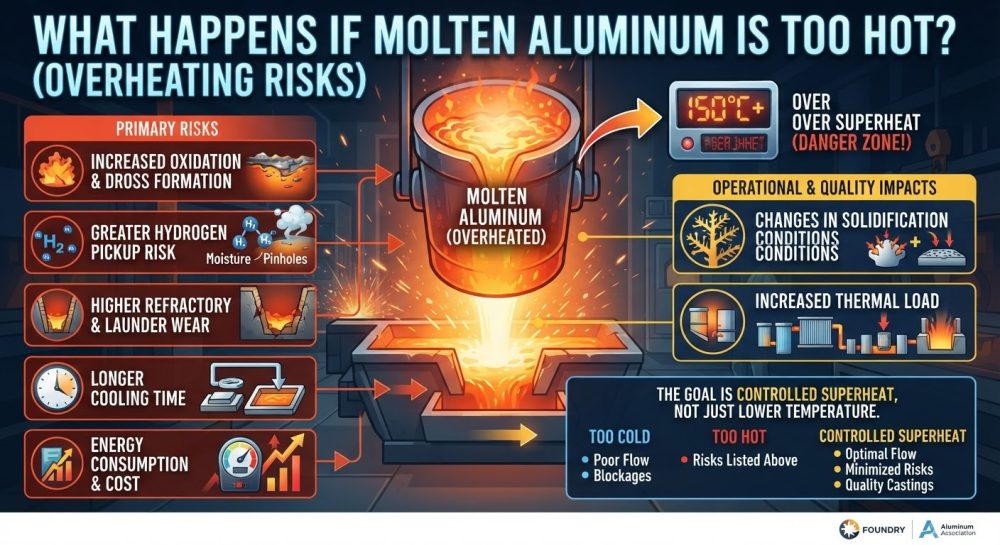
what happens if molten aluminum is too hot
What Happens If Molten Aluminum Is Too Cold?
A melt that is below the required process temperature may have insufficient fluidity for stable transfer and casting.
Potential problems include:
- Premature solidification
- Restricted flow through launders or filters
- Unstable casting conditions
- Poor surface quality
- Increased risk of casting interruption
- Difficulty maintaining the required casting speed
The appropriate temperature therefore needs to provide enough thermal margin for transfer, treatment, filtration, and casting without unnecessary overheating.
How Does Temperature Affect Hydrogen in Molten Aluminum?
Hydrogen control is closely related to aluminum melt temperature.
Molten aluminum can absorb hydrogen from moisture in the furnace atmosphere, charge materials, tools, refractories, and other sources. Because hydrogen solubility changes significantly between liquid and solid aluminum, excess dissolved hydrogen can later contribute to porosity during solidification.
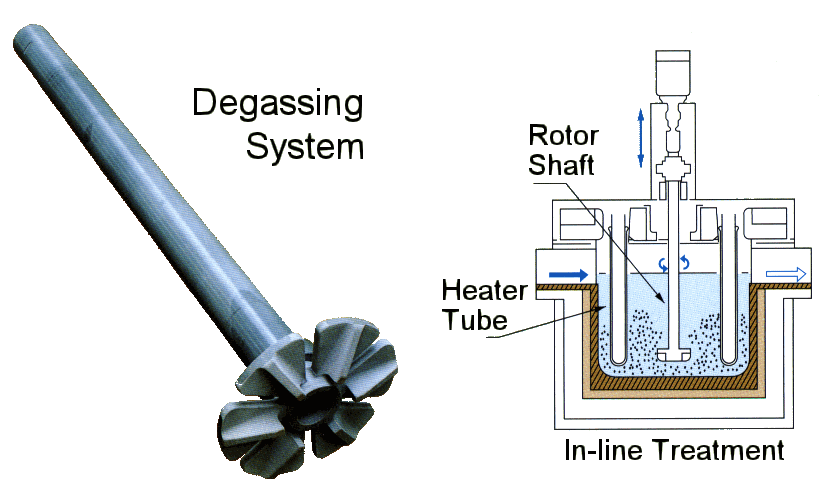
Temperature control alone does not remove dissolved hydrogen. When hydrogen levels are too high, rotary degassing or on-line degassing is normally used to transfer dissolved hydrogen into nitrogen or argon bubbles.
A practical melt-treatment sequence is therefore:
Temperature Control → Degassing → Filtration → Casting
Temperature management helps prevent unnecessary hydrogen pickup, while degassing actively reduces dissolved hydrogen.
How Is Molten Aluminum Temperature Controlled?
Industrial temperature control usually involves several stages rather than a single furnace setting.
Fusión
The charge is heated until the alloy is completely molten. The melt should reach the required temperature without excessive superheating.
Holding
The holding furnace maintains the required melt temperature before downstream treatment. Temperature should be monitored regularly because heat loss continues during holding.
Degassing and Filtration
Degassing and filtration can introduce additional heat loss. Process parameters should therefore account for the temperature before and after treatment.
Transfer Through Launders
Molten aluminum loses heat as it travels from the furnace to the casting machine. Launder length, insulation, refractory design, metal flow rate, and ambient conditions all affect temperature loss.
Final Temperature Check
A final temperature measurement before casting helps confirm that the melt remains within the required casting window.
How Does an Insulated Launder Reduce Temperature Loss?
A molten aluminum launder is not only a transfer channel. Its refractory and insulation design can affect how much heat the melt loses during transfer.
An insulated launder can help:
- Reduce heat loss during metal transfer
- Maintain a more stable melt temperature
- Reduce the need for additional furnace heating
- Improve thermal stability before casting
- Protect the surrounding equipment from excessive heat
Actual temperature loss depends on launder length, refractory construction, insulation, melt temperature, flow rate, ambient temperature, and operating conditions. Therefore, a value such as a specific temperature loss per meter should only be used when it has been measured under defined conditions.
Does Degassing Affect Aluminum Melt Temperature?
Yes. Degassing can cause some temperature loss because the molten metal is exposed to the treatment environment and moving gas.
The actual temperature change depends on equipment design, treatment time, gas flow, rotor operation, melt quantity, and surrounding conditions.
For continuous production, the degassing system should therefore be designed as part of the complete melt-treatment line rather than considered independently.
How Should Melt Temperature Be Checked Before Casting?
Temperature measurement should be performed at appropriate points in the process rather than relying only on the melting-furnace temperature.
Important measurement points may include:
- After melting
- After holding
- Before or after degassing
- After filtration or during transfer
- Near the casting inlet
The exact measurement locations depend on the plant layout and casting process.
Temperature measurements should also be taken using properly calibrated equipment and at consistent locations. This makes temperature trends easier to compare and helps identify heat loss or process instability.
What Is the Recommended Temperature-Control Sequence?
A practical aluminum casting line can use the following sequence:
Melting → Alloy Adjustment → Holding → Temperature Measurement → Degassing → Filtration → Final Temperature Check → Casting
Each stage has a different purpose:
| Stage | Main Temperature Objective |
|---|---|
| Fusión | Achieve complete melting |
| Holding | Maintain stable melt temperature |
| Desgasificación | Maintain suitable treatment temperature |
| Filtración | Maintain sufficient flow through the filter |
| Transfer | Minimize unnecessary heat loss |
| Reparto | Meet the required casting temperature and solidification conditions |
The target temperature should be established from the alloy, casting method, casting speed, product requirements, and validated operating data rather than from a single general temperature value.
How Can Aluminum Producers Improve Melt Temperature Control?
Temperature stability depends on the entire melt-handling system.
Practical measures include:
- Avoid unnecessary overheating in the melting furnace
- Minimize excessive holding time
- Monitor temperature at consistent process points
- Keep tools and charge materials dry
- Use suitable furnace and launder insulation
- Control degassing treatment time and gas flow
- Minimize unnecessary turbulence during transfer
- Maintain filter and launder systems properly
- Record temperature changes between major process stages
For a new or modified casting line, measuring the temperature difference between the furnace, treatment unit, filter, and casting inlet can help identify where most heat is being lost.
Preguntas frecuentes
1. What temperature should molten aluminum be before casting?
There is no universal casting temperature. The required temperature depends on the aluminum alloy, casting method, casting speed, product, and equipment. The operating setpoint should follow the validated casting process.
2. Is aluminum casting temperature higher than its melting point?
Usually, yes. The melt needs sufficient superheat above its liquidus temperature to remain fully liquid during transfer and casting.
3. What happens if aluminum is overheated before casting?
Excessive overheating can increase oxidation, hydrogen pickup risk, refractory wear, energy consumption, and thermal load on the casting system.
4. What happens if molten aluminum is too cold?
Insufficient temperature can reduce fluidity, cause premature solidification, restrict flow through filters or launders, and make casting unstable.
5. Does temperature affect hydrogen in molten aluminum?
Yes. Temperature affects hydrogen solubility and melt behavior. However, temperature control does not replace degassing when dissolved hydrogen needs to be reduced.
6. Does degassing reduce aluminum temperature?
Degassing can cause some temperature loss. The actual temperature change depends on the equipment, treatment conditions, melt quantity, and operating environment.
7. Does filtration affect molten aluminum temperature?
Filtration can contribute to some heat loss as molten aluminum passes through the filter system. The effect depends on filter design, flow rate, filter-box construction, and operating conditions.
8. How can a launder reduce aluminum temperature loss?
An insulated refractory launder reduces heat transfer from the molten aluminum to the surrounding environment. Its effectiveness depends on the refractory and insulation design, launder length, flow rate, and operating conditions.
9. Why is temperature control important for aluminum casting?
Stable melt temperature helps maintain fluidity, control solidification conditions, support consistent degassing and filtration, and reduce unnecessary oxidation, refractory wear, and energy consumption.
10. Should aluminum melt temperature be monitored during transfer?
Yes. Monitoring temperature at important stages helps identify heat loss and maintain the melt within the required process window before casting.
Artículos relacionados:
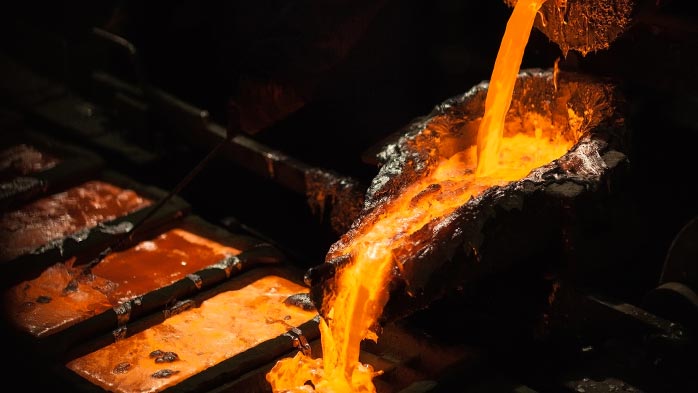 Control de la temperatura durante la fusión de una aleación de aluminio
 Unidad de desgasificación de aluminio fundido
 Significado de «desgasificador de aluminio fundido»
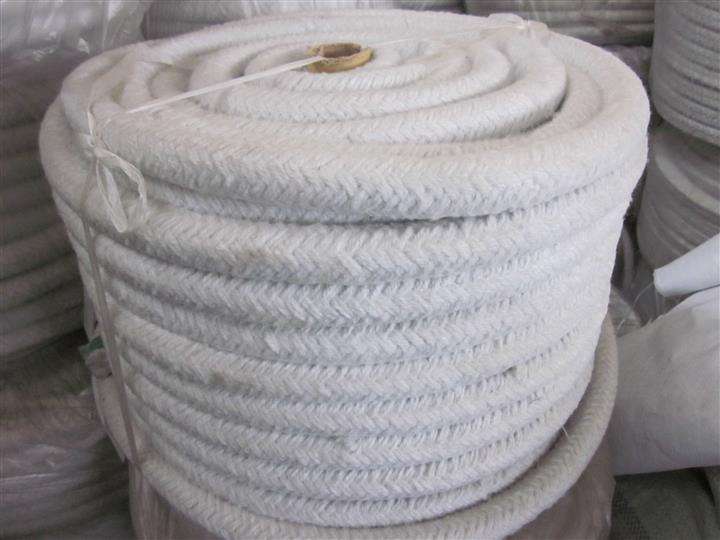 Junta de cuerda de fibra cerámica para altas temperaturas de la fundición Casting Foundry
 Cuerda para altas temperaturas, cuerda de fibra cerámica, cuerda aislante
 Desgasificación del aluminio fundido
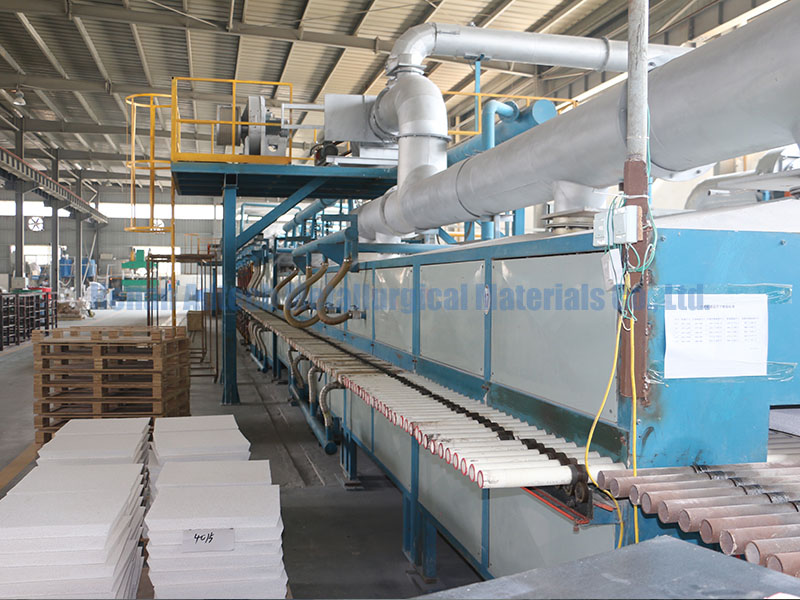 Filtro de fundición de aluminio para la filtración de metales a alta temperatura
 Purificación de la masa fundida de aleación de aluminio
 Preguntas sobre la fundición en relación con la desgasificación
 Precio unitario de la unidad de desgasificación de aluminio fundido
Conocimientos sobre fundición: Desgasificación del aluminio 1
Fundente para el refinado de aleaciones de aluminio
Precio unitario de la unidad de desgasificación de aluminio fundido
Conocimientos sobre fundición: Desgasificación del aluminio 1
Fundente para el refinado de aleaciones de aluminio
 Desgasificación en la fundición de aluminio
 Fundente para fundición de aleaciones de aluminio
No Comments