
14 يوليو أحواض غسل القوالب
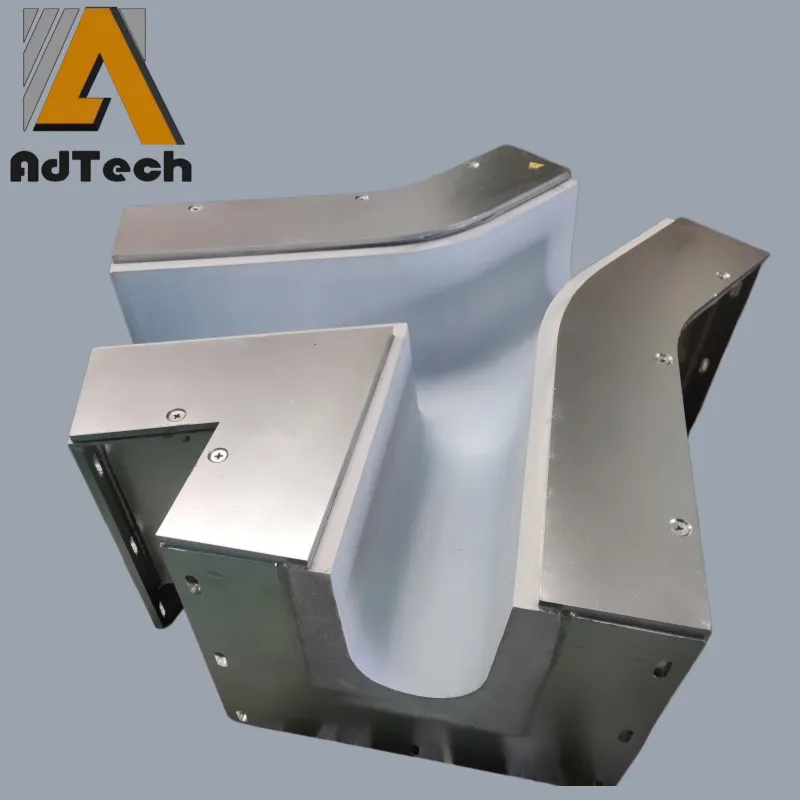
An aluminum casting launder transfers molten aluminum from a melting or holding furnace to downstream equipment, such as a filtration unit, degassing station, or casting machine. A properly designed launder system helps maintain metal temperature, control flow, reduce heat loss, and minimize turbulence during transfer. Its performance depends on the launder geometry, refractory lining, insulation structure, operating temperature, and flow requirements of the casting line.
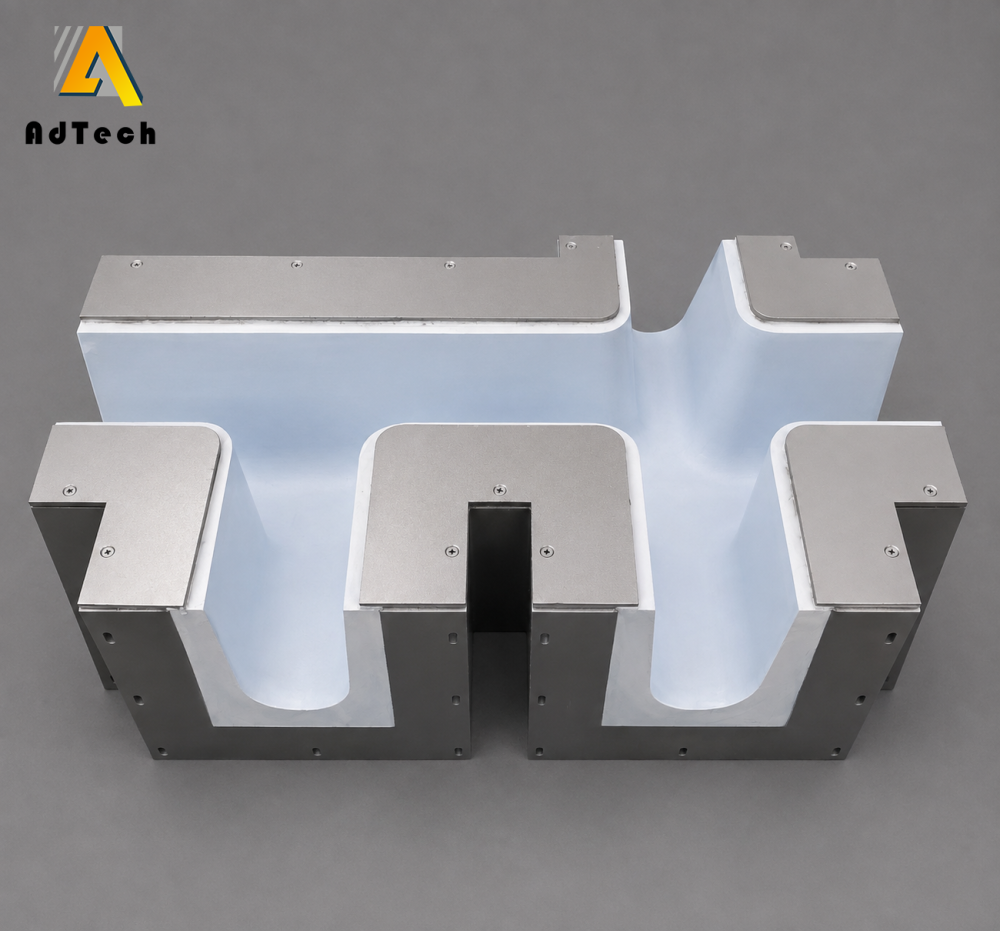
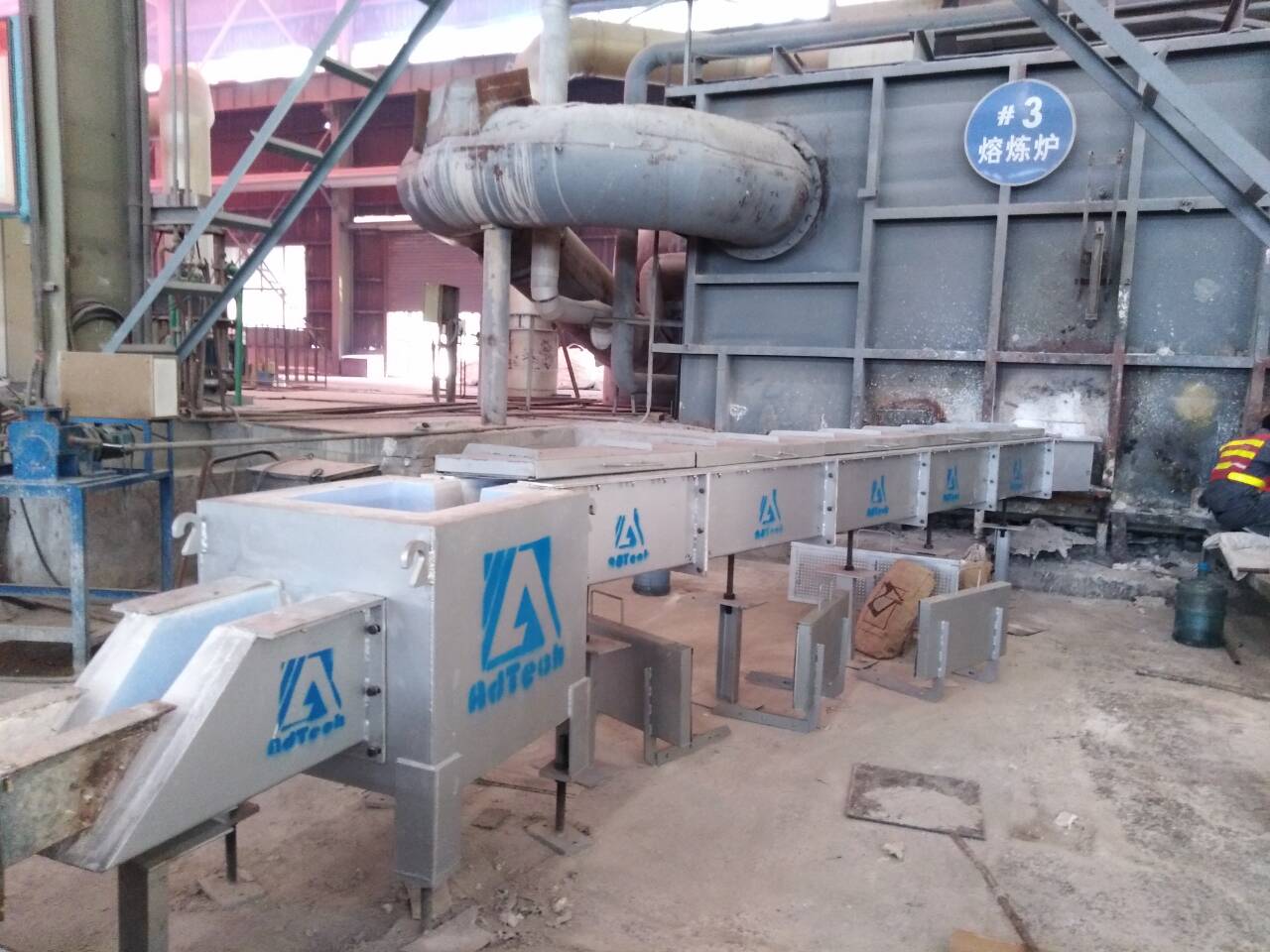
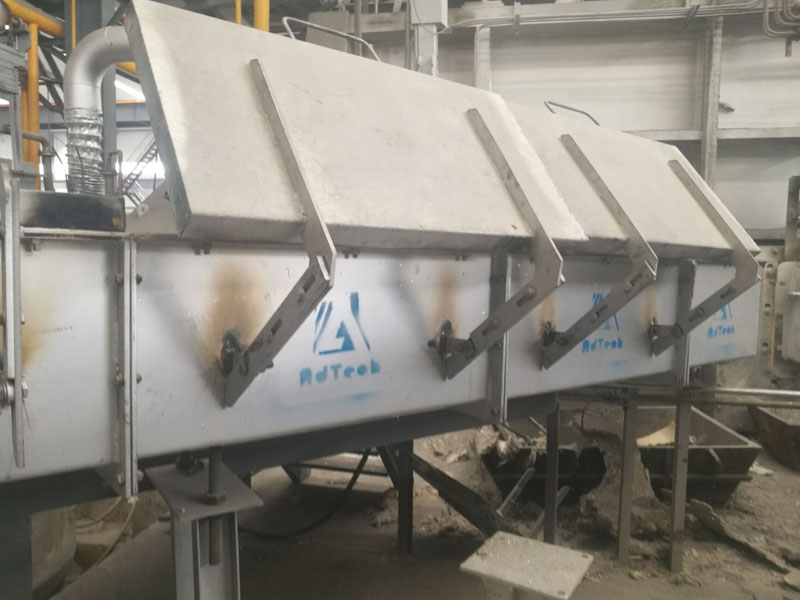
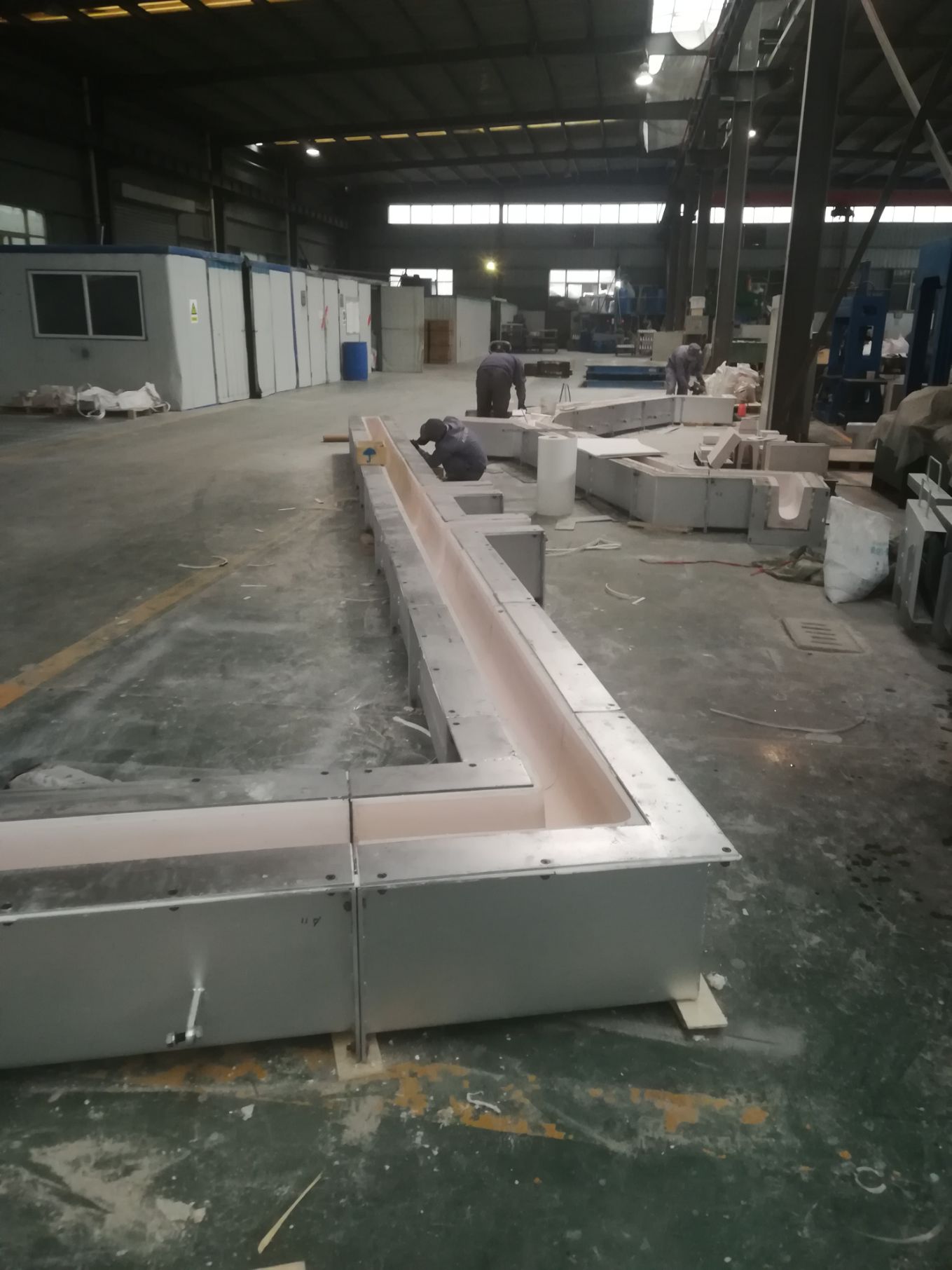
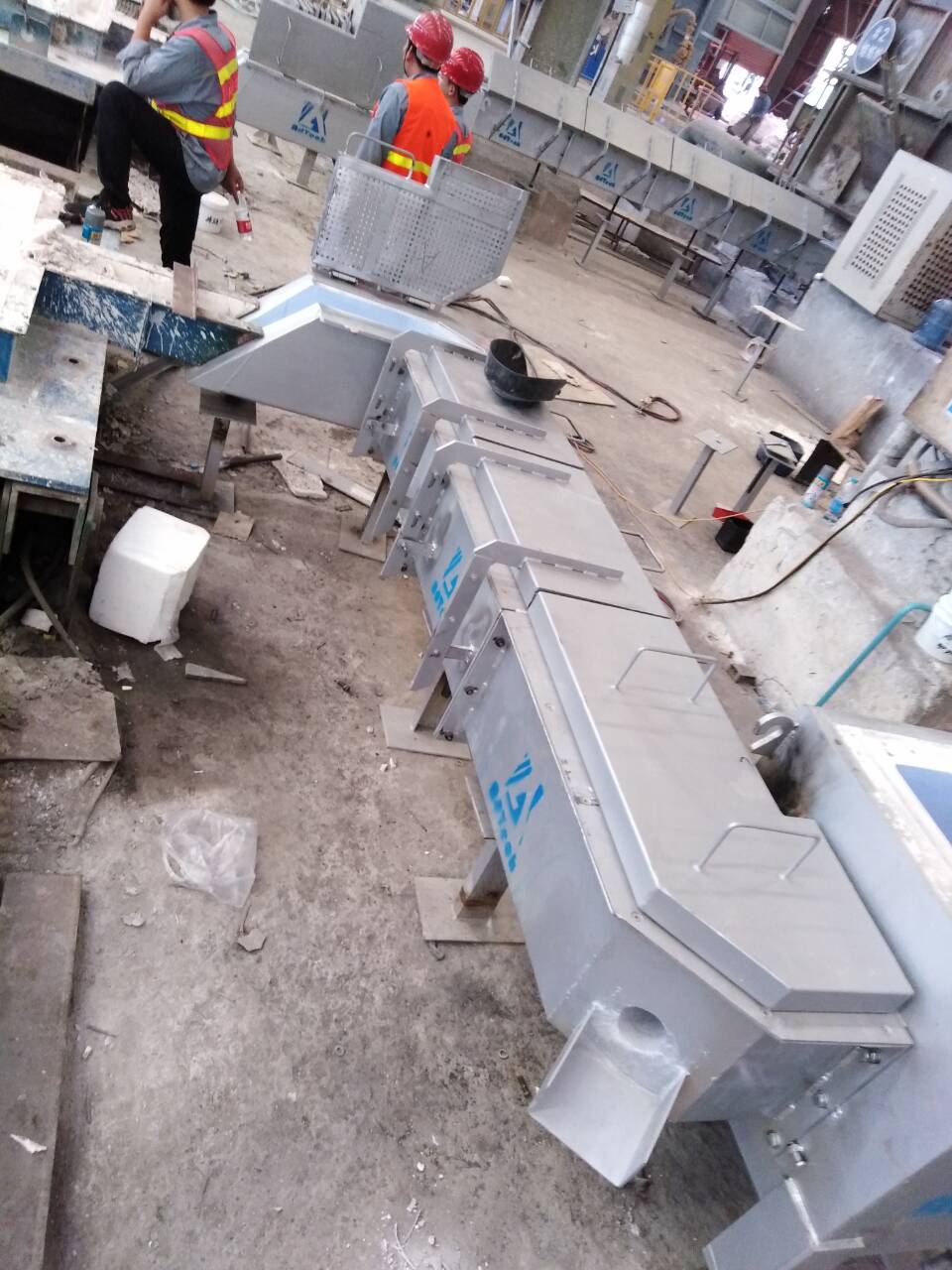
launder for aluminum casting
What Is an Aluminum Casting Launder?
An aluminum launder system is a molten metal transfer channel used in aluminum casting operations. It connects furnaces and downstream processing equipment, providing a controlled route for molten aluminum throughout the casting process.
Fixed casting launders typically consist of a supporting shell, a thermal insulation layer, and a working lining that comes into direct contact with molten aluminum. Depending on the production line, the system may also incorporate heating elements, flow-control components, filter boxes, or connections to degassing equipment.
The primary functions of an aluminum casting launder include:
- Molten aluminum transfer: Moving metal between furnaces, treatment equipment, and casting machines.
- Temperature preservation: Limiting heat loss during transfer and helping maintain the required casting temperature.
- Controlled metal flow: Maintaining a suitable flow path and reducing unnecessary turbulence.
- Process integration: Connecting melt treatment, filtration, and casting equipment into a continuous production line.
The launder should be designed around the required metal throughput and the layout of the casting plant, rather than treated as a simple refractory-lined channel.
How Is a Fixed Aluminum Casting Launder Designed?
A fixed launder with a supporting shell generally combines structural support, thermal insulation, and a working lining. Each layer serves a different purpose, and the design must account for operating temperature, mechanical loads, thermal expansion, and maintenance requirements.
| المكون | Main function | Important design considerations |
|---|---|---|
| Outer shell | Supports and contains the launder structure | Mechanical strength, dimensional stability, installation |
| Insulation layer | Reduces heat loss from the molten metal | Thermal conductivity, thickness, operating temperature |
| Working lining | Contacts and conveys molten aluminum | Aluminum adhesion, erosion resistance, chemical compatibility |
| Joints and connections | Connect launder sections and equipment | Sealing, thermal movement, metal leakage prevention |
| Optional heating system | Helps maintain metal temperature | Heating capacity, temperature uniformity, control requirements |
The shell provides structural support, while the insulation and working lining help maintain thermal and operating stability. The exact construction depends on the launder length, cross-section, metal flow rate, operating temperature, and whether the system uses electric, gas-fired, or other heating arrangements.
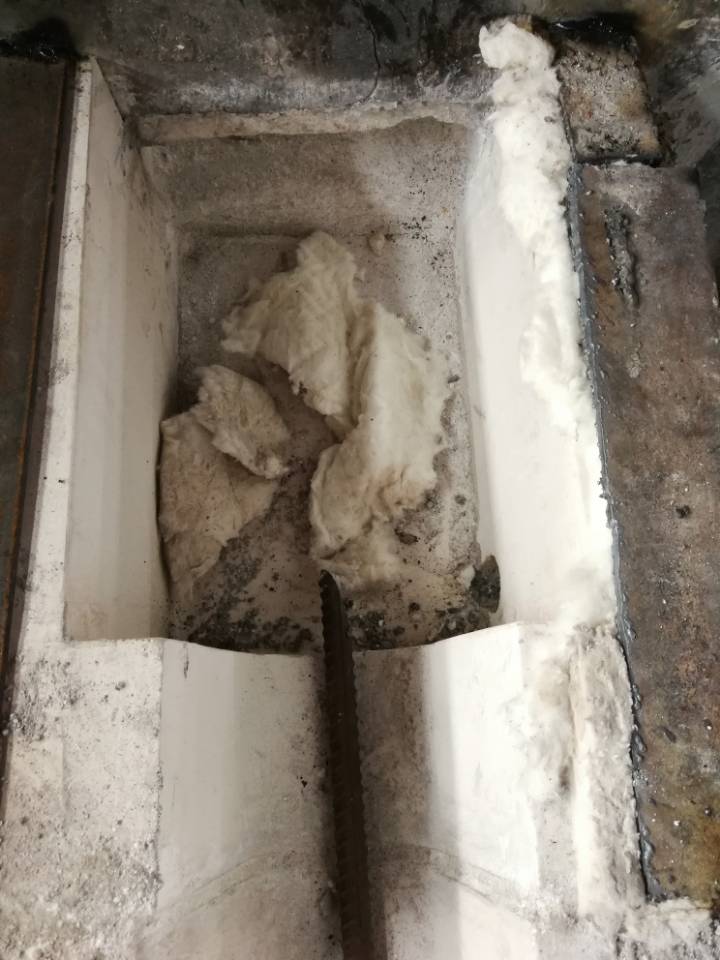
A suitable design should also allow for inspection and maintenance. Poorly designed joints, damaged lining sections, or uneven thermal expansion can affect metal flow and increase the risk of operational problems.
What Material Is Used for the Inner Lining of an Aluminum Launder?
The working lining must withstand prolonged contact with molten aluminum while limiting metal adhesion, penetration, and deterioration during service. Material selection should consider chemical compatibility, volume stability, thermal cycling, surface condition, and the intended operating temperature.
ULTRA-CAST FS is designed for aluminum processing equipment that comes into direct contact with molten aluminum. Its applications include aluminum transfer launders, filter boxes, insulation furnaces, and aluminum ladle linings.
Fused quartz is used as the main raw material. Its low thermal expansion helps provide dimensional stability under appropriate operating conditions. The formulation also incorporates additives intended to reduce aluminum adhesion and penetration, while the material is designed to provide a relatively smooth working surface.
For a launder lining, these characteristics are important because excessive aluminum adhesion can make cleaning more difficult, while penetration and lining deterioration may shorten service life.
| Lining requirement | Why it matters in aluminum casting |
|---|---|
| Volume stability | Helps maintain lining dimensions during thermal cycling |
| Resistance to aluminum adhesion | Reduces metal sticking to the working surface |
| Resistance to metal penetration | Helps protect the lining structure |
| Surface quality | Supports smooth metal flow and easier cleaning |
| Thermal performance | Contributes to temperature stability |
| Service durability | Influences maintenance frequency and lining replacement |
The appropriate lining material should be selected according to the operating conditions and equipment configuration. Material suitability, installation quality, preheating procedures, and thermal cycling all influence actual service performance.
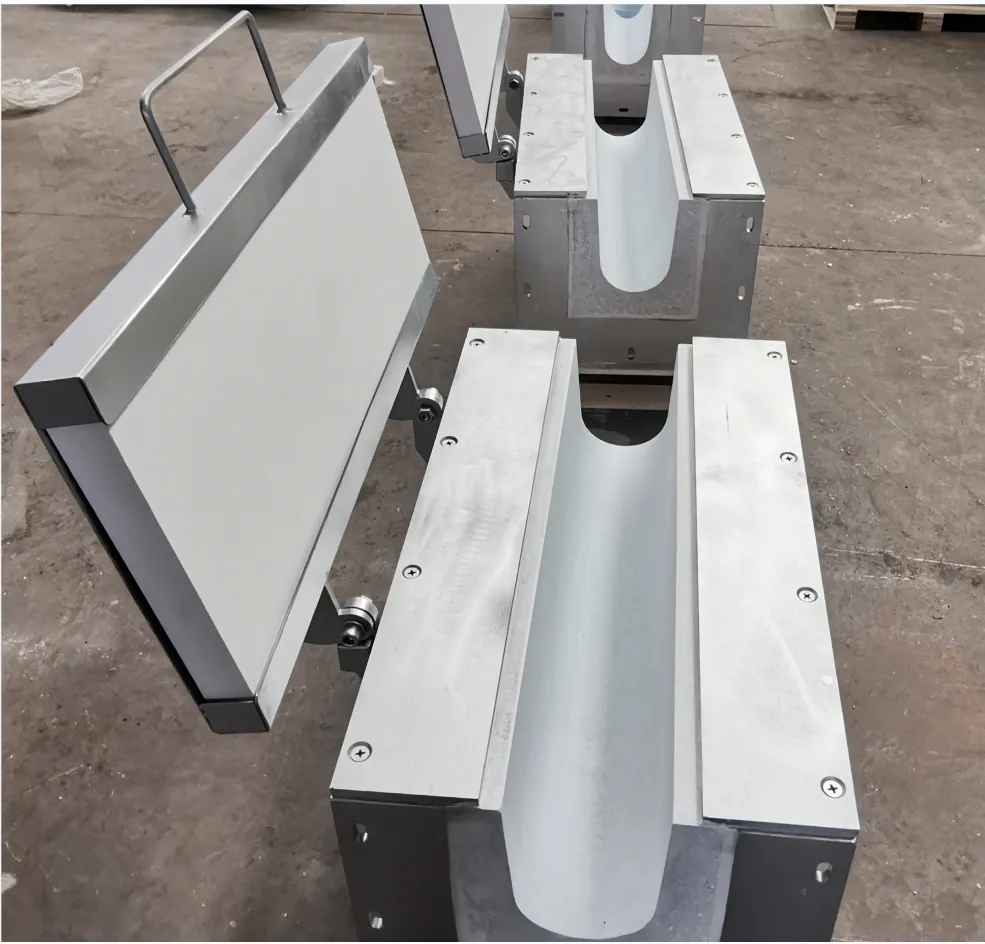
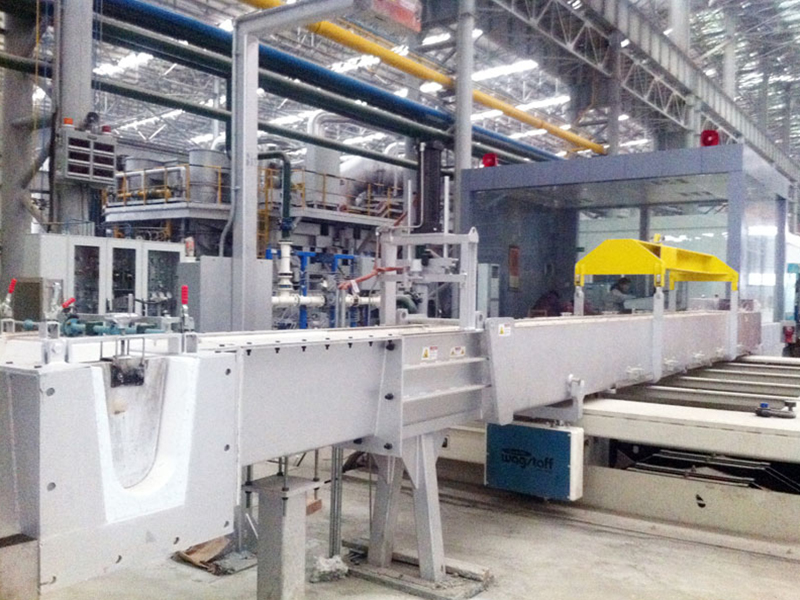
ceramic launder for aluminum casting
What Are High-Temperature Insulation Shapes Used for in Casting Launders?
High-temperature insulation shapes are rigid, preformed components manufactured to fit specific sections of industrial equipment. In fixed aluminum casting launders, they can be used as insulation components within the shell structure, helping reduce heat transfer while providing the required shape and dimensional support.
These components are commonly manufactured from ceramic fiber materials using a vacuum-forming process. Their formulation and density can be adjusted to meet the thermal and mechanical requirements of the intended application.
Unlike loose insulation materials, molded insulation shapes can be produced to match specific profiles, bends, joints, and equipment interfaces. This can simplify installation where standard board or blanket materials would be difficult to fit accurately.
Typical characteristics include:
- Low weight and useful thermal insulation performance.
- Low shrinkage within the specified service temperature range.
- Custom shapes and dimensions for equipment-specific applications.
- Machinability or trimming where required for installation.
- Resistance to thermal cycling within the material’s design limits.
Some grades are also designed to provide improved resistance to abrasion or surface peeling. However, the actual performance depends on the material formulation, density, temperature exposure, and mechanical loading.
Insulation shapes should not automatically be treated as the working lining. The component directly exposed to molten aluminum must have the appropriate resistance to metal contact and penetration for the intended application.
How Do Launder Linings and Insulation Work Together?
The working lining and insulation layer perform complementary functions.
The working lining provides the surface that contacts molten aluminum. The insulation layer reduces heat loss through the launder structure, while the shell provides mechanical support.
A suitable combination helps maintain metal temperature without compromising the lining’s resistance to aluminum adhesion or the structural stability of the assembly.
| Design factor | Working lining | Insulation layer |
|---|---|---|
| Direct molten aluminum contact | Yes | Normally no |
| Primary function | Protects the metal-contact surface | Limits heat loss |
| Key property | Aluminum resistance and lining durability | Thermal insulation and dimensional stability |
| Main risk if unsuitable | Sticking, penetration, erosion | Excessive heat loss or insulation deterioration |
| Selection basis | Metal chemistry, temperature, operating conditions | Temperature, heat-loss target, mechanical requirements |
The two materials must be compatible with the same operating environment. Selecting an insulating material solely for its low thermal conductivity is insufficient if it cannot withstand the temperature and mechanical conditions at its installation location.
What Should Be Considered When Selecting a Casting Launder System?
ceramic launder for aluminum casting
Launder selection should begin with the requirements of the casting line. A system designed for one production capacity or layout may not be suitable for another.
The main factors include:
- Metal throughput: The channel dimensions and flow path must accommodate the required aluminum flow rate.
- Operating temperature: The lining and insulation must be suitable for the actual temperature range.
- Transfer distance: Longer launders generally require greater attention to heat loss and temperature uniformity.
- Launder geometry: Cross-section, slope, bends, and connections affect flow behavior.
- Heating requirements: Some applications require supplementary heating to maintain metal temperature.
- Maintenance access: The design should allow practical inspection, cleaning, and replacement of lining components.
- Integration with melt treatment: Connections to degassing units and filtration equipment must suit the production sequence.
For casting lines that include melt purification, the launder layout should also minimize unnecessary turbulence and avoid conditions that could introduce additional oxide films during transfer. Where a filter box is installed, its position and connection geometry should be coordinated with the launder design.
How Can a Launder System Help Maintain Aluminum Casting Quality?
A launder does not replace degassing or filtration, but its design affects the conditions under which molten aluminum reaches these treatment stages and the casting machine.
Excessive heat loss can change metal temperature and disrupt stable casting conditions. Poorly designed flow paths can generate turbulence and increase metal exposure to air, potentially contributing to oxide formation. Damaged or unsuitable lining materials can also lead to maintenance issues and contamination risks.
For this reason, the launder should be considered part of the overall molten aluminum handling system, alongside furnace operation, melt treatment, filtration, and casting.
AdTech provides aluminum launder systems and related melt-treatment equipment for aluminum processing applications. The appropriate configuration depends on the production line, required metal flow, thermal conditions, and installation requirements.
الأسئلة الشائعة
1. What is an الألومنيوم casting launder?
و الألومنيوم casting غسل is a channel that transfers molten الألومنيوم من a melting or holding furnace إلى downstream equipment, such as a تصفية box or casting machine.
2. What is الـ main function من a casting launder?
Its main function is إلى transport molten الألومنيوم while maintaining metal temperature, controlling flow, و minimizing unnecessary turbulence.
3. What materials هي used for الألومنيوم غسل linings?
البطانة materials هي selected for المقاومة إلى molten aluminum, metal adhesion, penetration, thermal cycling, و operating temperatures. Fused-quartz-based materials هي used in some الألومنيوم transfer applications.
4. Why does an الألومنيوم غسل الحاجة thermal insulation?
Thermal insulation reduces heat loss during metal transfer, helping maintain a suitable temperature for downstream treatment و التصوير.
5. What is الـ difference between a غسل lining و insulation?
الـ working lining directly contacts molten الألومنيوم و resists metal interaction. الـ insulation layer sits behind الـ lining إلى reduce heat transfer من خلال الـ غسل structure.
6. Can الألومنيوم casting launders be electrically or gas heated?
نعم. Depending on الـ production requirements, غسل systems can استخدام electric heating, gas-fired heating, or other suitable heating arrangements إلى help maintain metal temperature.
7. What factors should be considered when selecting a casting launder?
Key factors include metal flow rate, transfer distance, operating temperature, channel geometry, insulation requirements, heating method, و connection إلى downstream equipment.
8. How does غسل design affect الألومنيوم casting quality?
فقير flow design can increase turbulence و metal exposure إلى air, potentially promoting oxide formation. Excessive heat loss can also disrupt temperature control during التصوير.
9. Can a casting غسل remove inclusions من molten aluminum?
A standard غسل primarily transports molten metal; it does not replace dedicated purification equipment. السيراميك foam filters و إزالة الغازات systems هي used إلى control solid inclusions و dissolved hydrogen, respectively.
10. Can الألومنيوم casting launders be customized?
نعم. غسل dimensions, channel geometry, lining materials, insulation, heating arrangements, و connections can be designed إلى suit الـ casting line layout و production requirements.
مقالات ذات صلة:
 أنظمة الغسيل
 الأحواض والمجاري
 قنوات تصريف «إيزي فلو» للألمنيوم المنصهر
 التحكم في درجة حرارة صهر الألومنيوم: لماذا يُعد أمرًا مهمًّا قبل عملية الصب
 حوض تدفق الصب
 أنظمة غسل الألومنيوم
 غسيل القوالب
 نظام قنوات الألمنيوم
 أحواض غسيل لأفران صهر الألومنيوم
 نظام قنوات الألمنيوم
 قناة الألومنيوم المزودة بعزل سيراميكي من الألومينا
 نصيحة حول الصب
 قطع الصب لصب الألومنيوم
 حوض خط الصب
Sorry, the comment form is closed at this time.