
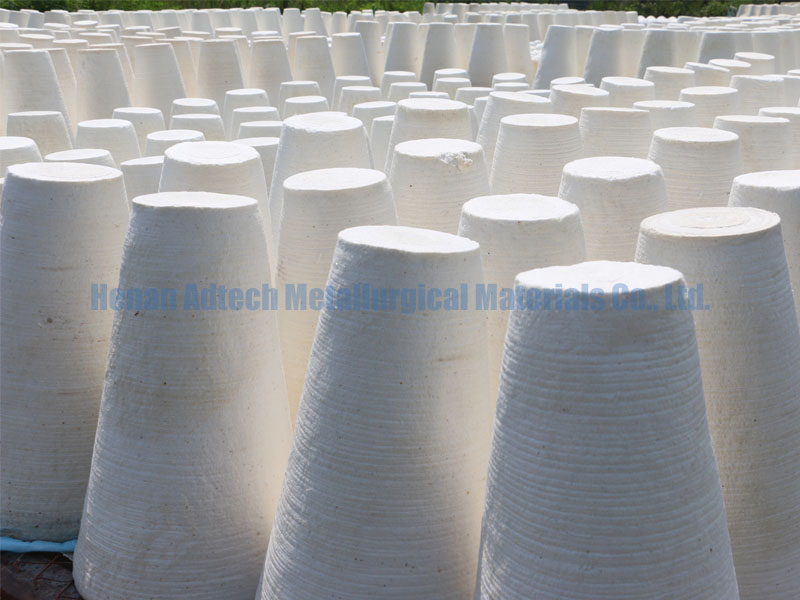
19 Jul Tap-Out Cone
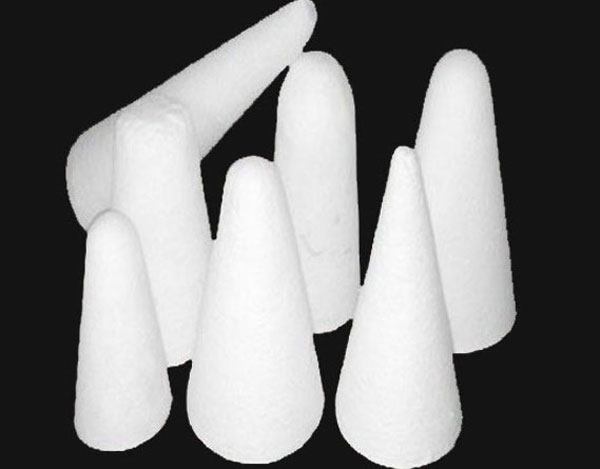
In primary and secondary aluminum smelting, casthouse operations, and Direct Chill (DC) casting facilities, controlling molten metal flow from furnace tap holes is an absolute operational priority. A Tap Out Cone—often referred to as a refractory tap hole plug, sealing cone, or launders plug—is a high-temperature, engineered refractory consumable designed to seal, throttle, and shut off the flow of liquid aluminum, zinc, and other non-ferrous alloys.
Operating at temperatures frequently exceeding 750°C to 1100°C (1382°F to 2012°F), these precision-engineered cones are subject to severe mechanical shear, intense hydraulic pressure, extreme thermal shock, and chemical attack by molten metal and corrosive fluxing agents.
Failure of a tap out cone can result in catastrophic molten metal breakouts, severe furnace downtime, product contamination, and life-threatening casthouse safety hazards.
To pour the molten aluminum from melting or holding furnaces for aluminum casting, some units use tap hole block, which is sealed with Tap-Out Cone.
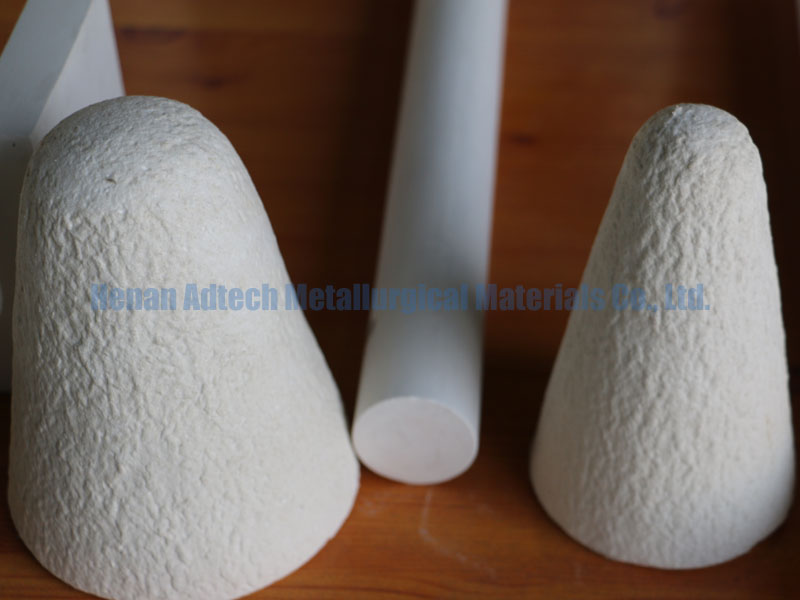
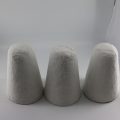
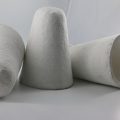
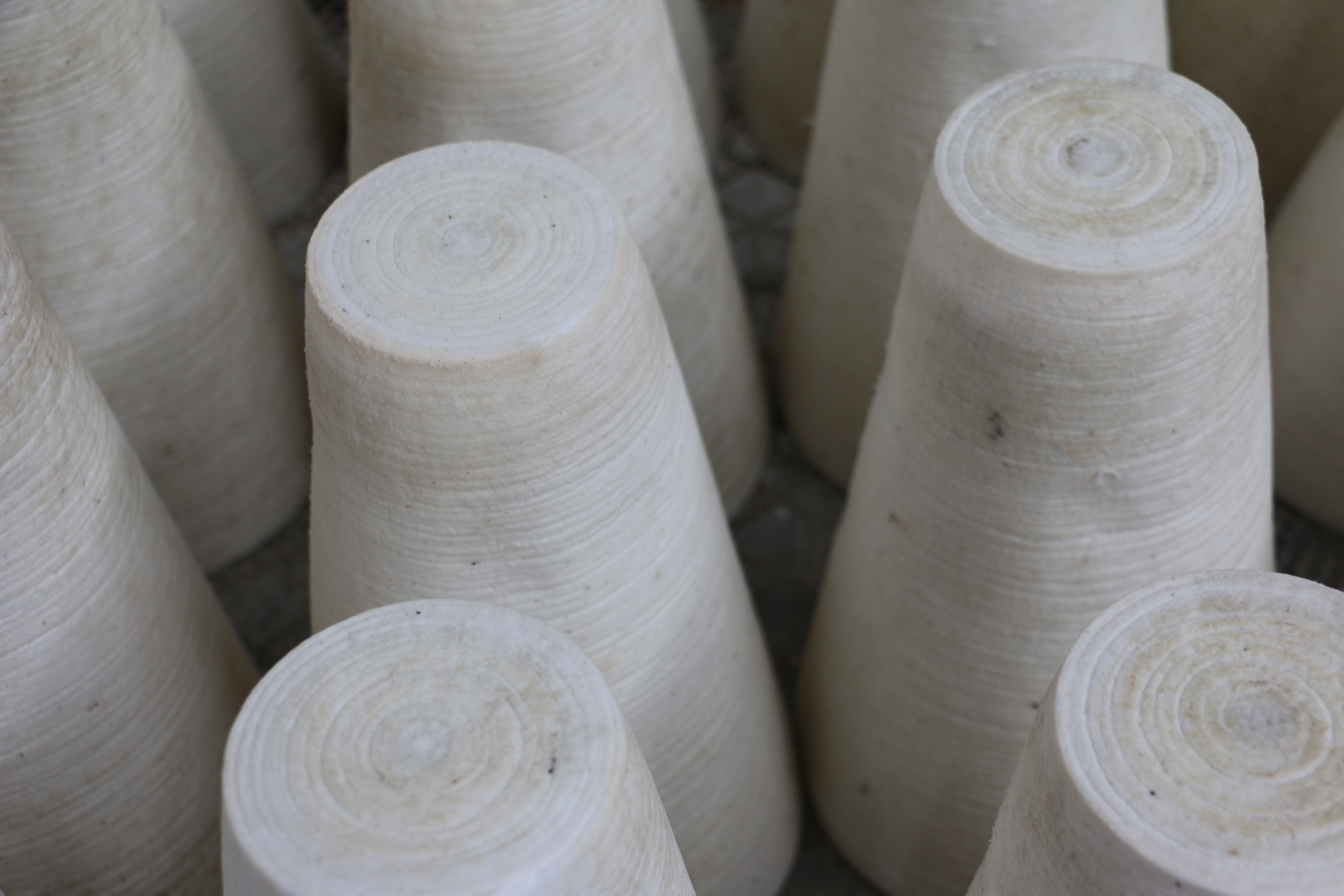
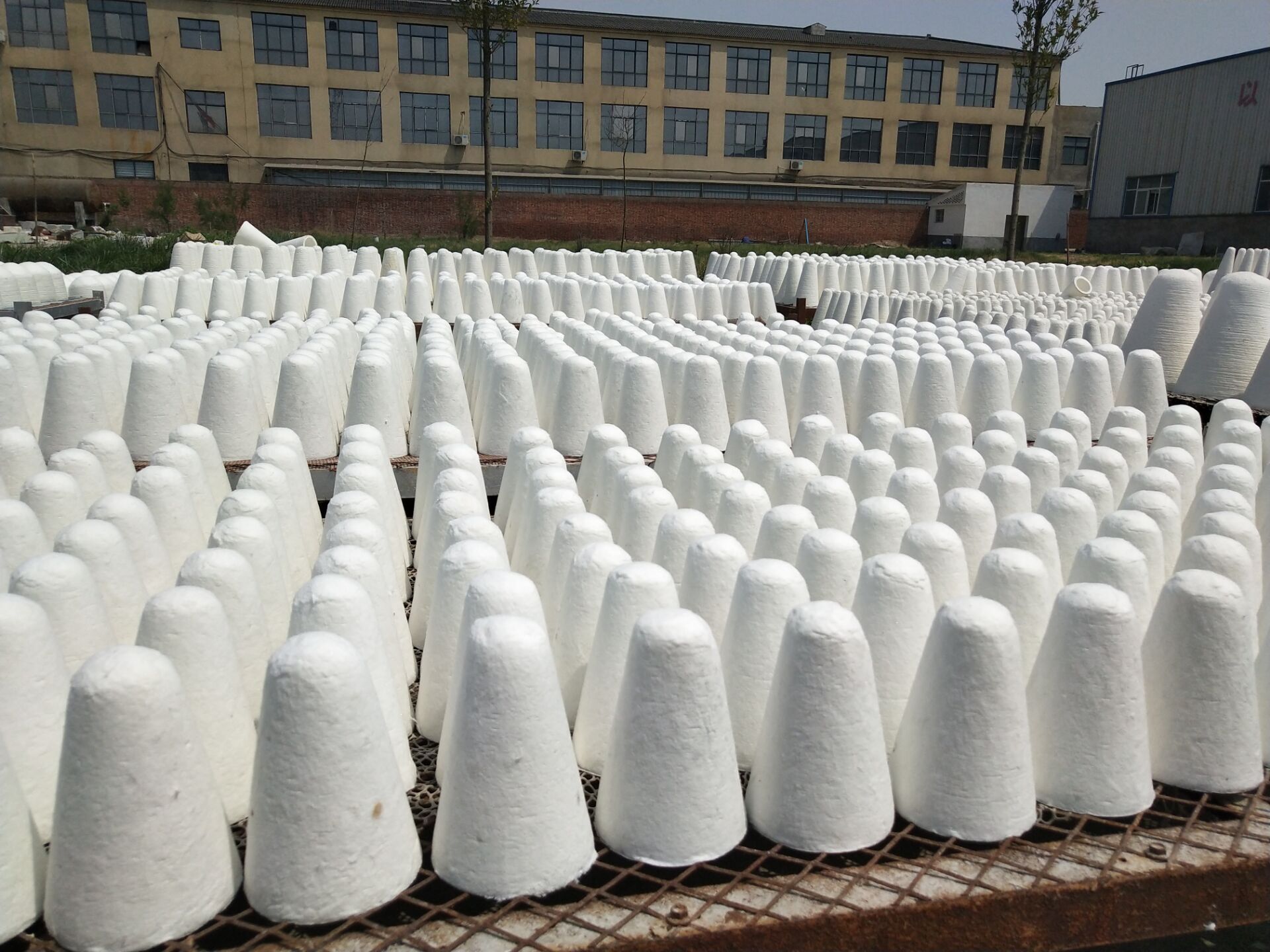
AdTech Tap-Out Cone is made from high purity alumina silicate fibers mixing with inorganic binders by vacuum forming process, our product provide Good Thermal Insulation, Smooth Surface, Right Hardness and Extreme Tenacity for applications, to make the aluminum and its alloy casting process more convenient.
Tap Out Cone
Ceramic Fiber Tap-Out Cone
AdTech began manufacturing ceramic fiber Tap-Out Cone for molten metal applications in the 2010s. Our cones are disposable and are recommended for one-time use; all sizes are packaged in cardboard boxes. Today, we produce more than 100 different sizes of cones.
1. High temperature refactory cone is made from ceramic fiber material
2. non-stick aluminum and non-slagging
3. plastid evenly distributed good elasticity, tight blockage, stable flow control
4. Length 20-350mm, usually conical; or made according to the customer’s requirement.
The opening surface and the coating of the working surface are smooth and it can resistant to the corrosion of the liquid aluminum , guarantee the purity of the aluminum sheet.
It is vacuum absorbed and made by Aluminum silicate fiber nonstick aluminum non-slagging;
plastid evenly distributed,good flexibility, tight blockage, stable flow control,longer life.
Find the most proper ceramic fiber tap out cone supplier today , please give us email now.
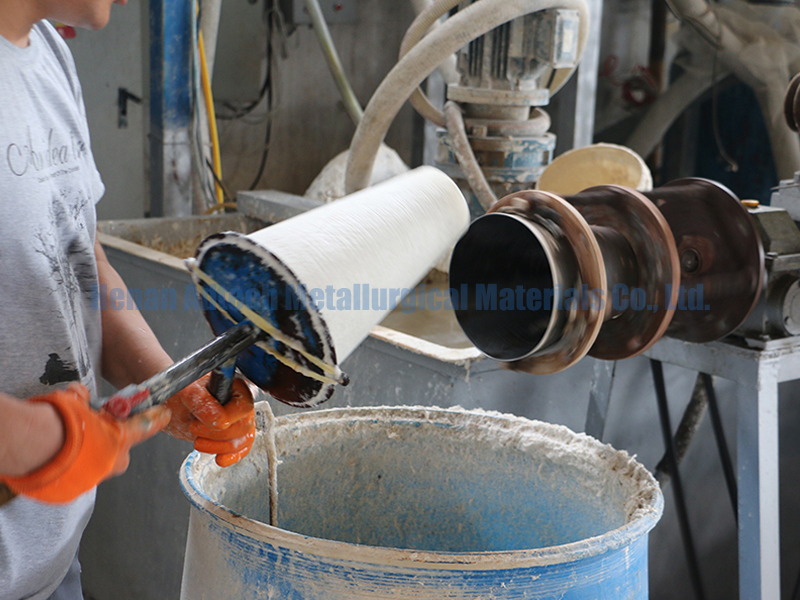
Molten aluminum casting foundry using a high-temperature Tap Out Cone for safe metal flow control
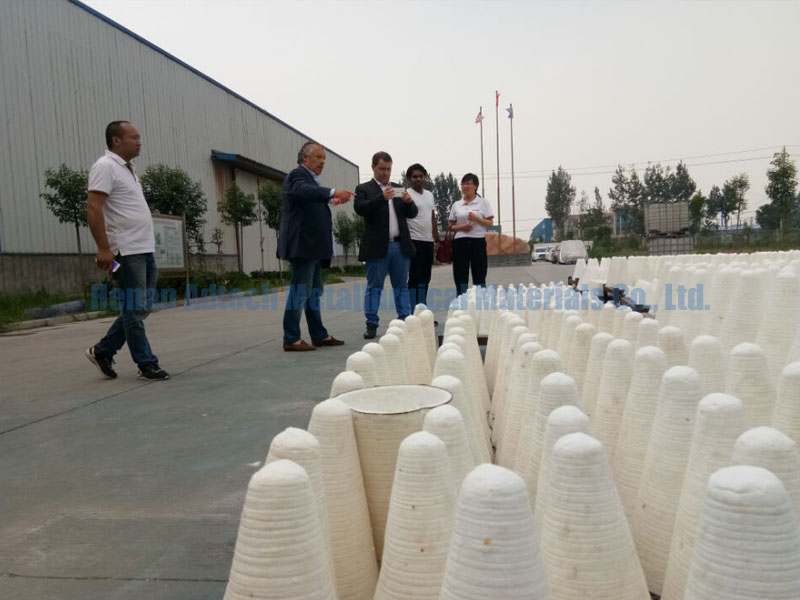
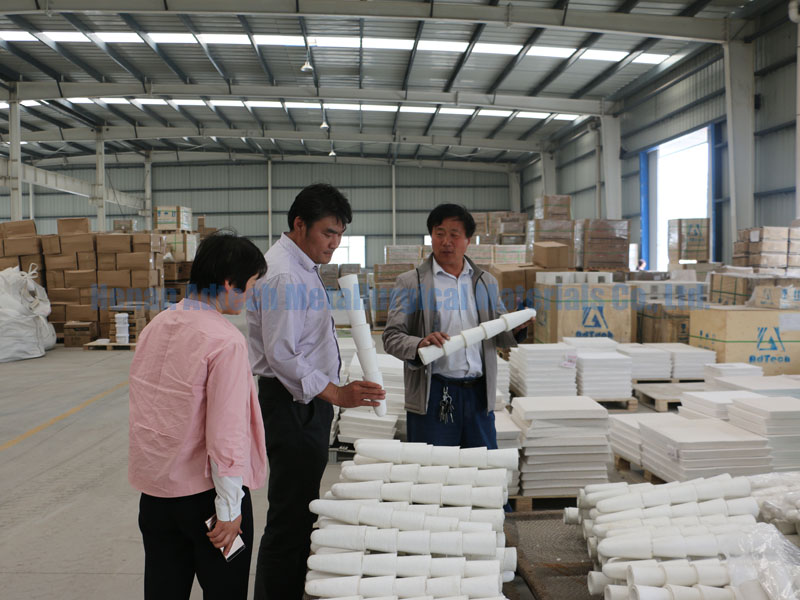
Indian customers visit AdTech factory to Tap Out Cone production
1. Metallurgical & Physical Requirements for Tap Hole Sealing
To withstand the aggressive conditions inside a molten aluminum tapping system, a tap out cone must satisfy four fundamental physical and chemical criteria:
-
1. NON-WETTING BEHAVIOR: Prevents aluminum adherence and dross accumulation.
-
2. EXCELLENT THERMAL SHOCK RESISTANCE: Zero cracking during hot plug-in.
-
3. ELASTIC COMPRESSIBILITY: Ensures a 360-degree leak-free mechanical seal.
-
4. HIGH RESISTANCE TO EROSION: Withstands high-velocity molten metal flow.
Non-Wetting Properties (Aluminum Repellency)
Molten aluminum possesses a high affinity for reacting with silica and various metal oxides. If a refractory cone is “wetted” by liquid aluminum, the metal penetrates the porous structure of the cone, causing the material to fuse to the tap hole block or launder. Upon removal, this leads to tearing of the fiber matrix, severe dross accumulation, and degradation of the tap hole geometry. High-performance tap out cones utilize specialized non-wetting agents (such as barium sulfate, boron nitride, or proprietary non-wetting binders) that increase the contact angle (greater than 90 degrees) of the molten aluminum relative to the refractory surface, guaranteeing clean release.
Thermal Shock Resistance
When a cold or preheated tap out cone is inserted directly into an active 750°C+ molten aluminum stream, it experiences instantaneous thermal expansion. Standard dense refractories or low-grade ceramics frequently spall, crack, or explode due to internal thermal stress. Ceramic fiber-based tap out cones maintain an exceptionally low coefficient of thermal expansion and high internal porosity, enabling them to absorb thermal shock without structural degradation.
Elastic Compressibility and Mechanical Resilience
A tap hole is rarely a perfect geometric cylinder over its operational lifespan. Thermal cycling, mechanical scraping, and refractory erosion distort the tap hole block. A rigid plug cannot seal an irregular opening. Vacuum formed ceramic fiber tap out cones feature a unique structural elasticity—the outer shell is rigid enough to maintain shape under insertion force, while the fibrous core compresses under axial load to conform to irregular tap hole contours, establishing a 360-degree hermetic seal.
2. Vacuum Forming Manufacturing Process
The performance of a tap out cone is directly dictated by its manufacturing methodology. The industry standard for high-performance non-ferrous refractory plugs is the Vacuum Filtering Slurry Process.
Manufacturing Workflow:
-
Raw Material Preparation: High-purity alumina-silica fibers (45% to 55% Al2O3, balance SiO2) or bio-soluble alkaline earth silicate (AES) fibers are blended with deionized water, inorganic binders (colloidal silica/alumina), organic green-strength binders, and non-wetting additives in a high-shear agitator.
-
Vacuum Submersion & Forming: Precision male/female mesh molds corresponding to exact cone taper angles (typically 5 degrees to 45 degrees) are submerged into the slurry tank. A high-vacuum pump pulls liquid through the mesh, depositing a uniform layer of intertwined ceramic fibers onto the mold surface.
-
Dewatering & Compaction: Controlled vacuum pressure consolidates the fiber matrix, establishing the targeted bulk density (0.25 to 0.45 g/cm3) and wall thickness uniformity.
-
Multi-Stage Thermal Drying: The green cones are transferred to continuous convection ovens. Drying occurs in temperature-controlled zones (100°C to 250°C) to burn off excess moisture without migrating the inorganic binders to the surface.
-
Post-Processing & Coating: Cones can be treated with surface rigidizers, boron nitride topcoats, or CNC precision trimmed at the base to ensure perfect fitment.
3. Comprehensive Material Comparison Matrix
Choosing the correct material formulation depends on furnace temperature, cycle frequency, alloy chemistry, and mechanical insertion methods (manual tap-pole vs. pneumatic/hydraulic tap-hole plunger).
Technical Comparison of Tap Out Cone Material Formulations
| Technical Parameter | Standard Ceramic Fiber (RCF) | High-Alumina Polycrystalline Fiber | Bio-Soluble Fiber (AES) | Calcium Silicate Rigid Cone |
| Primary Composition | 45% Al2O3 + 53% SiO2 | 72% Al2O3 + 28% SiO2 | CaO – MgO – SiO2 | CaSiO3 (Non-fibrous) |
| Max Service Temperature | 1260°C (2300°F) | 1600°C (2912°F) | 1100°C (2012°F) | 1000°C (1832°F) |
| Bulk Density (g/cm3) | 0.28 to 0.38 | 0.35 to 0.45 | 0.26 to 0.35 | 0.85 to 1.10 |
| Thermal Conductivity (800°C) | 0.12 W/m K | 0.10 W/m K | 0.14 W/m K | 0.22 W/m K |
| Non-Wetting Rating to Al | Excellent (with additives) | Superior (Natural Inertness) | Very Good | Moderate |
| Compressibility & Resilience | High (15% to 25% deflection) | Moderate (10% to 15%) | High (20% to 30%) | Rigid (Less than 2%) |
| Shot Content (> 45 microns) | Less than 8% | Less than 2% | Less than 12% | N/A (Solid Matrix) |
| Regulatory / EHS Status | Regulated (RCF / SVHC in EU) | Exempt | Exempt (Soluble in lung tissue) | Exempt |
| Primary Applications | Standard Aluminum Smelting, Holding Furnaces, DC Casting | High-Purity Alloys, Aerospace-Grade Aluminum | General Casthouse, EHS-Strict Facilities | Static Launder Shutoffs, Low-Temp Zinc |
4. Dimensional Standardization & Custom Engineering
Tap out cones must match the exact geometry of the tap hole block or orifice insert. Using an improperly sized cone creates point-contact sealing, leading to aluminum bypass and catastrophic failure.
Essential Dimensional Variables
-
Major Outer Diameter (D): Must exceed the maximum degraded width of the tap hole opening by at least 15 to 20 mm to prevent the cone from being pushed entirely through the orifice.
-
Minor Tip Diameter (d): Must be small enough to penetrate past the erosion zone of the tap hole throat, ensuring deep internal contact.
-
Taper Angle: Standard tap hole tapers range between 10 degrees and 30 degrees. The cone taper angle should match the tap block taper within +/- 1 degree. A mismatched taper leads to line-contact sealing rather than full surface-contact sealing.
-
Height / Length (H): Standard lengths range from 50 mm for shallow launder drains to 300 mm+ for deep furnace tap blocks.
-
Hollow Inner Core vs. Solid Body: Light-duty tap cones are often produced with a hollow core to increase elasticity and reduce material cost, whereas heavy-duty furnace shutoff cones feature a solid or reinforced core to withstand high back-pressure from deep molten metal baths.
Specification:
| Items | Length | Shape | Package | Special Package |
| Tap out cone | 20-350mm | Cone shape / cylinder / open shape | 100-300pcs/box | As required |
Chemical component:
| Chemical Composition | AL2O3 | SiO2 | Fe2O3 | TiO2 |
| Model Parameter(%) | 45.28 | 51.79 | 0.3 | 1.3 |
Technical Parameters:
| Item | Density g. cm3 |
Rupture modulus (816℃ Mpa) |
Thermal expansivity (680℃ K-1) |
Thermal conductivity
540℃W/k.m |
Max operating temperature (℃ ) |
| Index(%) | 0.3 | 1.5 | 1.56*10-6 | 0.05 | 1100 |
5. Industrial Applications Across Aluminum Processing
Primary Melting and Refining Furnaces
In primary aluminum smelters and large recycling reverberatory furnaces, tap hole openings are subjected to continuous head pressures up to 50 kPa. Tap out cones used here must possess high bulk densities (greater than 0.35 g/cm3) and strong mechanical resistance to survive automated pneumatic tapping machines.
Holding & Tilting Furnaces
Holding furnaces require precise flow regulation to feed downstream degassing and filtration units. Tap out cones used in holding furnaces are subjected to frequent insertion and removal cycles (“throttling”). High resilience and thermal shock resistance are paramount to prevent cone degradation during repeated cycling.
Direct Chill (DC) Billet & Slab Casting
In DC casting pits, the metal level inside the distribution pan or launder must remain rock-steady to avoid surface defects (cold folds, segregation) in the cast ingot. Tap out cones fitted to mechanical actuator arms control the liquid metal feed rate with millimeter-level accuracy. High dimensional stability and zero shot content are mandatory to prevent non-metallic inclusions in aerospace-grade alloys (2xxx, 7xxx series).
Continuous Strip & Rod Casting
Twin-belt and twin-roll continuous casters utilize smaller, ultra-precise ceramic fiber cones to initiate and terminate casting runs instantly. These cones require smooth surface finishes and precision-machined tips.
6. Step-by-Step Installation, Operation & Maintenance Protocol
To achieve maximum reliability and safety when utilizing refractory tap out cones, casthouse personnel should adhere to the following standard operating procedure (SOP):
- STEP 1: Tap Hole Inspection & Cleaning — Inspect the tap hole block or refractory sleeve. Use a mechanical scraper to remove accumulated dross, oxidized aluminum crusts, or remnants of previous plugs.
- STEP 2: Cone Dimensional & Visual Verification — Inspect for transport damage or soft spots.
- STEP 3: Pre-Heating Protocol (Min. 150°C / 302°F) — Pre-heat the cone near the furnace door or in a drying oven to 150°C to 200°C (302°F to 392°F) for 15 minutes prior to insertion to remove ambient moisture.
- STEP 4: Axial Alignment & Controlled Insertion — Align the cone driving rod parallel to the center axis of the tap hole. Apply steady, axial force until the cone compresses by approximately 10% to 15%.
- STEP 5: Post-Operation Analysis — Examine the used cone for uniform compression rings to verify proper dimensional alignment.
7. Troubleshooting Common Tap Out Cone Failures
Diagnosing the root cause of tap hole failures is essential for casthouse process optimization. The table below details common failure modes, root causes, and corrective action plans:
| Failure Mode | Visual / Operational Symptom | Primary Root Cause | Corrective Action Plan |
| Aluminum Adhesion & Tearing | Cone tears apart upon removal; heavy dross buildup fused to the cone body. | Loss or absence of non-wetting agent; excessive furnace temperature (> 850°C). | Upgrade to high-alumina fiber formulation with added Boron Nitride or Barium Sulfate coating. |
| Crushing / Buckling | Cone collapses, warps, or flattens prematurely upon insertion. | Bulk density too low (< 0.22 g/cm3); excessive mechanical drive force. | Increase bulk density to 0.32 to 0.40 g/cm3; recalibrate pneumatic tapping actuator. |
| Molten Metal Seepage (Bypass) | Metal leaks past the cone perimeter despite full insertion force. | Dimensional mismatch in taper angle; severely eroded or ovalized tap hole block. | Re-measure tap block taper angle; utilize a softer, more compressible bio-soluble cone. |
| Cone Blowout / Ejection | Cone is pushed out of the tap hole by internal metal head pressure. | Insufficient friction/taper engagement; high back-pressure; incorrect cone sizing. | Increase major diameter; adjust taper angle to create higher self-locking friction. |
| Steam Explosion / Spalling | Cone cracks or disintegrates with audible pop upon contact with liquid metal. | Moisture absorption during storage in high-humidity casthouse environment. | Implement mandatory 200°C pre-heating SOP; store inventory in sealed, dry rooms. |
8. Environmental, Health, and Safety (EHS) Standards
Regulatory Overview: RCF vs. AES Bio-Soluble Fibers
- Refractory Ceramic Fibers (RCF): Traditional alumina-silica fibers are classified in many jurisdictions (including the European Union under REACH) as Substances of Very High Concern (SVHC) due to airborne dust inhalation risks. When handling dry RCF tap out cones, operators must wear appropriate PPE, including FFP3/N95 respirators, safety goggles, and gloves.
- Alkaline Earth Silicate (AES) Bio-Soluble Fibers: Modern casthouses are increasingly transitioning to bio-soluble fiber tap out cones (CaO – MgO – SiO2). These fibers dissolve rapidly in human lung fluids if inhaled, making them fully exempt from carcinogenic classifications worldwide while maintaining thermal performance up to 1100°C.
9. Frequently Asked Questions (FAQs)
Q1: What is a tap out cone and why is it used in aluminum casting?
A tap out cone is a heat-resistant, vacuum-formed ceramic fiber or refractory plug used to seal, regulate, or stop the flow of molten aluminum, zinc, or other non-ferrous metals from furnace tap holes, launders, and distribution pans. It creates a temporary, tight seal that prevents metal leaks and withstands high temperatures without fusing to the metal.
Q2: What is the maximum temperature a ceramic fiber tap out cone can withstand?
Standard aluminosilicate ceramic fiber tap out cones are rated for continuous operational temperatures up to 1260°C (2300°F). For specialized high-temperature applications or severe aerospace alloy smelting, polycrystalline high-alumina fiber cones can withstand temperatures up to 1600°C (2912°F).
Q3: How do I measure a tap hole to get the right tap out cone size?
To select or manufacture the correct cone, you need three key measurements:
- Major Outer Diameter: The widest part of the cone, which must be larger than the tap hole opening.
- Minor Tip Diameter: The narrowest end of the cone, which enters the tap hole first.
- Height/Length & Taper Angle: The total length and angle of the slope, which must match the taper inside your tap hole block for a full surface seal.
Q4: Can tap out cones be reused after a casting run?
In most high-purity aluminum casthouses, tap out cones are considered single-use consumables. While high-density cones may remain physically intact after a short run, mechanical removal typically damages the outer non-wetting skin and fiber matrix. Reusing a compromised cone significantly increases the risk of metal leakage or furnace blowout.
Q5: What is the difference between RCF and bio-soluble tap out cones?
Refractory Ceramic Fiber (RCF) cones offer higher temperature resistance (1260°C+) but require strict airborne dust safety measures. Bio-Soluble (AES) cones are made from calcium-magnesium-silicate fibers that are safer for workers (dissolving naturally in lung tissue if inhaled) and are rated for temperatures up to 1100°C, making them ideal for standard aluminum holding and casting operations.
Q6: How do non-wetting agents prevent aluminum from sticking to the cone?
Non-wetting additives (such as boron nitride or barium compounds) lower the surface energy of the ceramic fiber matrix. This increases the contact angle of liquid aluminum, causing the molten metal to form beads rather than penetrating the porous fiber structure. As a result, the cone releases cleanly without sticking or tearing during removal.
Q7: Why did my tap out cone blow out or leak during operation?
Cone blowouts or leaks are typically caused by:
- A mismatched taper angle between the cone and the tap hole block.
- Insufficient major diameter, allowing the cone to slide too far into the hole.
- Low cone density that crushed under the metal’s head pressure.
- Uneven or off-center insertion force during placement.
- Moisture in the cone causing steam expansion and pushing the plug out.
Related posts:
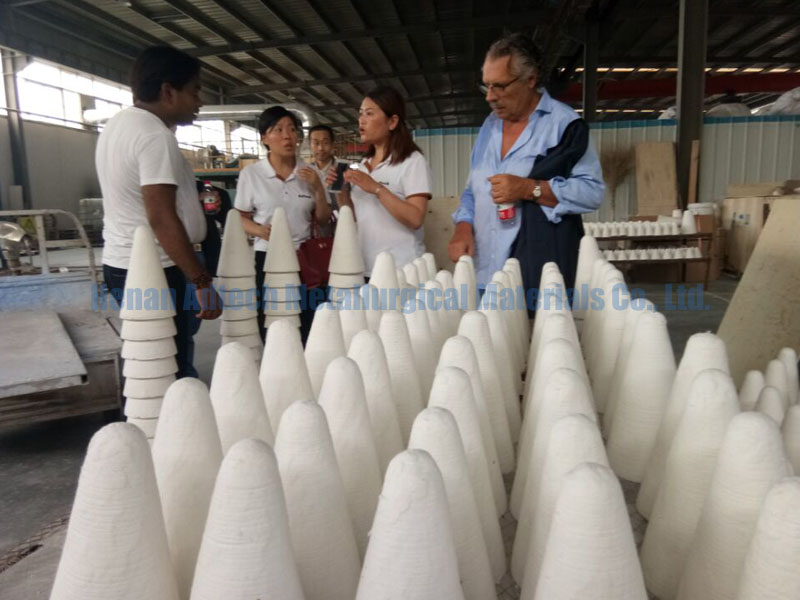 Ceramic Fiber Refractory Tap Out Cone
 Tap out cone
 Tap Hole Cone
 Refractory Fiber Cone
 Tapout Cone from Adtech
 Refractory Tap Out Cone Ceramic Fiber Shape Insulation
 Refractory Ceramic Fiber Taphole Cone
 Silicate Tap Hole Cone
 Refractory Tap Hole Cone
 Tap Out Cone For Non-Ferrous Metal Casting
 Best Tap-Out Cone Supplier
 Ceramic Fiber Plugging Cone
 Dubai Aluminium Company Ltd – Refractory Fiber Cone
 Tap Hole Cone Heating Insulation
No Comments