

23 Nov Online Degassing Equipment for Aluminum Casting: Working Principle and Selection Guide
Online degassing equipment removes dissolved hydrogen from molten aluminum as it flows from the holding furnace toward the casting machine. Unlike batch treatment inside a furnace, an online degassing system is integrated into the casting line, allowing the melt to be treated continuously before casting.
Hydrogen control is important in aluminum production because dissolved hydrogen can form gas porosity during solidification. For foundries producing aluminum billets, slabs, or other cast products, an appropriately designed online degassing system helps maintain more consistent melt quality and supports stable casting operations.
Why Is Online Degassing Needed in Aluminum Casting?
Molten aluminum can absorb hydrogen from moisture in the furnace atmosphere, charge materials, tools, and refractory surfaces. The amount of dissolved hydrogen depends on melt temperature, exposure conditions, and the condition of the production equipment.
The problem becomes more apparent during solidification. Hydrogen is less soluble in solid aluminum than in liquid aluminum. As the melt cools, excess hydrogen may form gas pores inside the casting.
These pores can affect density, mechanical properties, surface quality, and subsequent machining performance. In applications with strict quality requirements, controlling hydrogen before casting is therefore an important part of melt preparation.
Online degassing provides this treatment during metal transfer. Instead of stopping production to treat a separate batch, the system processes molten aluminum as it passes through the equipment.
How Does Online Aluminum Degassing Equipment Work?
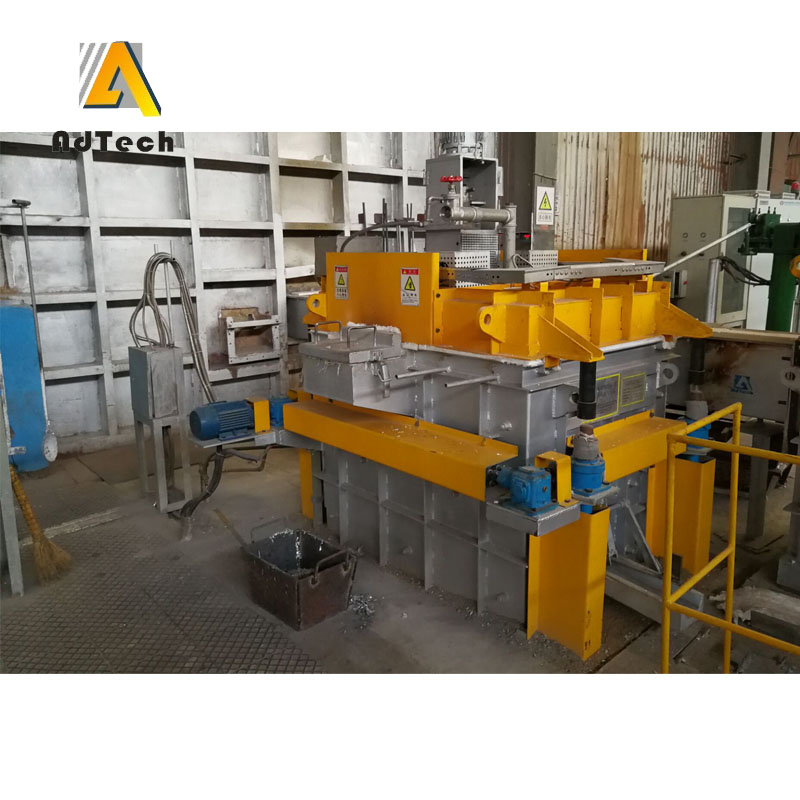
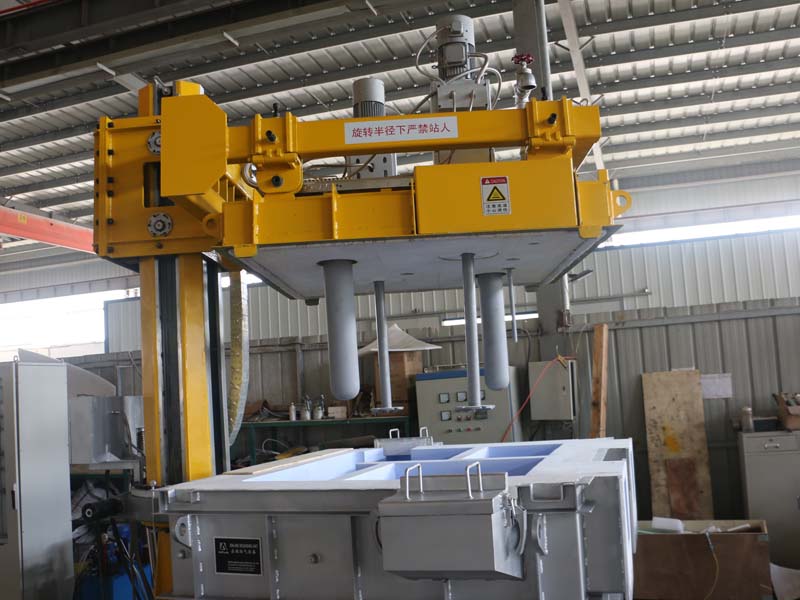
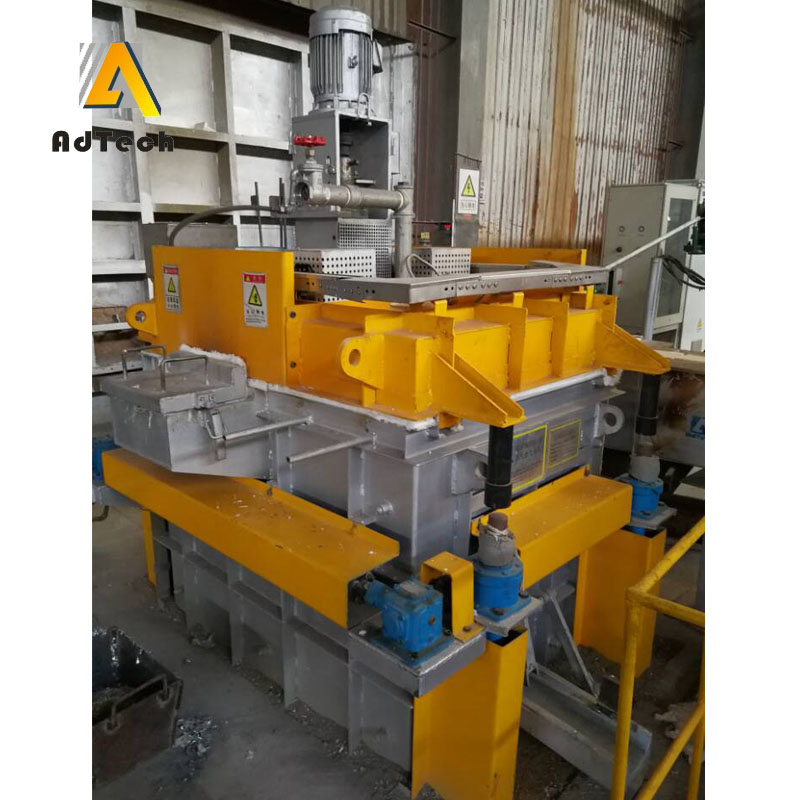
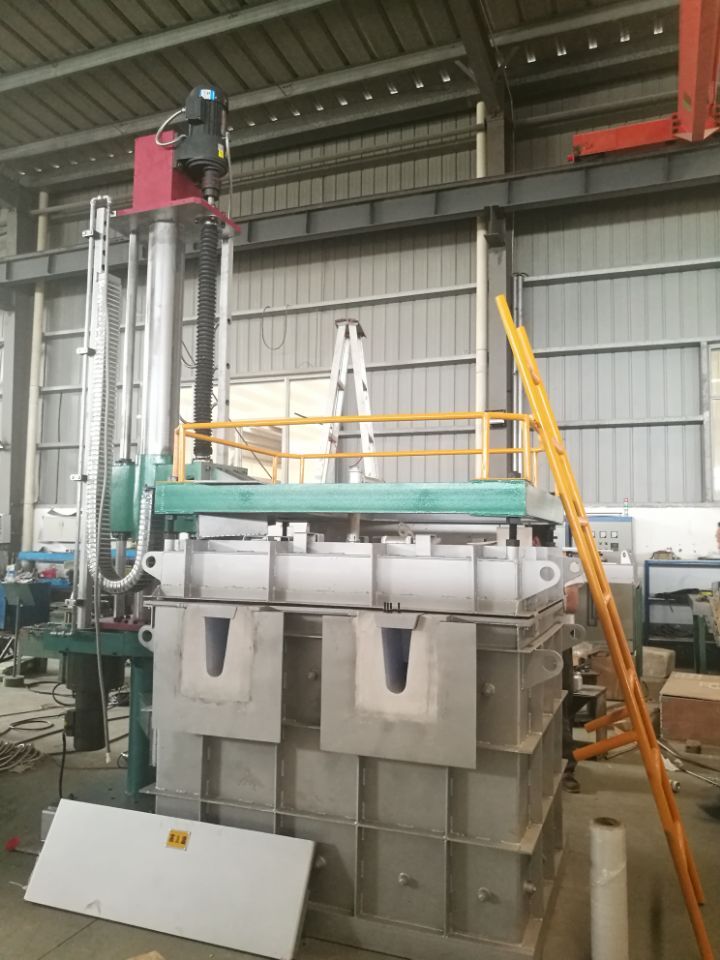
Most rotary online degassing systems use an inert gas injection process. The main components typically include a drive motor, rotating shaft, degassing rotor, gas supply system, and treatment chamber.
The operating process involves four main stages:
Step 1: Molten aluminum enters the treatment chamber
Molten aluminum flows from the holding furnace through a launder into the degassing unit. The chamber provides a controlled space for the treatment process.
Step 2: Inert gas is introduced into the melt
Nitrogen or argon is supplied through the rotating shaft and discharged through the rotor. As the rotor turns, it breaks the gas into fine bubbles and disperses them throughout the molten aluminum.
Step 3: Dissolved hydrogen transfers into the bubbles
Hydrogen moves from the molten aluminum into the inert gas bubbles because of the difference in hydrogen concentration. Smaller, well-dispersed bubbles provide a larger contact area between the gas and the metal, supporting hydrogen removal.
Step 4: Gas bubbles rise and leave the melt
The hydrogen-containing bubbles rise to the surface and escape. The treated aluminum then flows out of the chamber and continues toward the downstream casting process.
The actual degassing result depends on several operating factors, including rotor design, rotation speed, gas flow rate, melt throughput, treatment time, and initial hydrogen content. These parameters need to be matched to the production conditions rather than selected independently.
Online Degassing vs. Furnace Degassing: What Is the Difference?
Both methods are used to reduce dissolved hydrogen in molten aluminum, but they differ in where and how the treatment takes place.
| Comparison | Online Degassing | Furnace Degassing |
|---|---|---|
| Treatment location | Separate treatment chamber integrated into the casting line | Inside a melting or holding furnace |
| Treatment mode | Continuous treatment as molten aluminum flows through the system | Usually batch treatment of a quantity of molten aluminum |
| Production arrangement | Designed for integration with continuous casting operations | Suitable for furnace-based melt preparation |
| Installation considerations | Requires space and suitable connections within the launder system | Requires access and suitable working space around the furnace |
| Process control | Parameters are adjusted according to metal flow and production conditions | Parameters are adjusted according to the furnace batch and treatment conditions |
Neither method is automatically better in every application. The choice depends on production capacity, casting arrangement, melt treatment requirements, and the existing equipment layout.
For a continuous casting line, online degassing can be a practical option because the treatment takes place during metal transfer. For operations based on separate furnace batches, furnace degassing may fit the production arrangement more naturally.
Can Online Degassing Equipment Remove Slag and Inclusions?
Online degassing primarily removes dissolved hydrogen. It should not be considered a complete replacement for deslagging or molten aluminum filtration.
These processes target different contaminants:
- Degassing: Reduces dissolved hydrogen through inert gas bubbles.
- Deslagging: Removes accumulated dross and slag from the surface of molten aluminum.
- Filtration: Captures solid non-metallic inclusions as molten aluminum passes through a filter.
During rotary degassing, some inclusions may attach to rising gas bubbles and move toward the melt surface. This process is called flotation. However, its effectiveness depends on the inclusion characteristics and operating conditions. It does not guarantee the removal of all inclusions.
For this reason, online degassing is often combined with ceramic foam filtration in aluminum casting lines. The degassing unit controls dissolved hydrogen, while the ceramic foam filter captures solid inclusions before the metal reaches the casting machine.
The two processes complement each other, but they perform different functions.
Where Is Online Degassing Equipment Installed in a Casting Line?
Online degassing equipment is generally installed between the holding furnace and the downstream filtration or casting section.
A typical molten aluminum treatment arrangement is:
Holding Furnace → Launder → Online Degassing Unit → Filter Box → Casting Machine
The exact configuration varies according to the casting process and plant layout. Some systems integrate the degassing and filtration equipment more closely, while others use separate chambers and flow-control components.
Installation planning needs to account for more than the physical dimensions of the machine. The following details are particularly important:
- Launder layout and cross-sectional dimensions
- Molten aluminum flow rate
- Metal inlet and outlet elevations
- Available installation space
- Connection with the filter box and downstream casting equipment
- Required maintenance and rotor replacement access
Incorrect installation or poorly matched flow conditions can create operational difficulties, including unstable metal levels and unwanted flow disturbances. Equipment layout should therefore be evaluated together with the customer’s existing casting line.
How to Choose the Right Online Degassing System
A suitable online degassing system should match the actual production requirements. Before requesting a quotation, foundries should prepare the following information.
1. Aluminum alloy grade
The alloy being produced helps determine the melt treatment requirements. For example, a line producing 3104 aluminum slabs may have different process requirements from one producing 6063 billets. The alloy grade should be confirmed before equipment configuration is finalized.
2. Molten aluminum flow rate
The system must accommodate the actual metal throughput of the casting line. Flow rate is usually expressed in tonnes per hour (t/h). It is one of the main parameters used to evaluate equipment capacity.
3. Casting process
Whether the line produces DC slabs, billets, or other cast products affects the equipment arrangement and required treatment conditions.
4. Launder dimensions and elevation
The launder drawing helps engineers understand the available space, inlet and outlet positions, and the relationship between the degassing unit and other equipment.
5. Required hydrogen level
If hydrogen measurements are available, they can help establish the treatment target and evaluate the system’s operating requirements.
6. Rotor and gas configuration
Rotor design, rotation speed, and gas flow rate all influence degassing performance. The configuration should be selected according to the melt throughput and process conditions.
Providing these details at the beginning of a project makes technical evaluation more accurate and reduces unnecessary changes during equipment layout and installation.
AdTech Online Degassing Equipment for Aluminum Casthouses
AdTech provides online degassing equipment and molten aluminum filtration solutions for aluminum foundries and casthouses.
The online degassing system is designed to treat molten aluminum during transfer through the casting line. By introducing and dispersing inert gas into the melt, the equipment helps reduce dissolved hydrogen before the metal enters the downstream casting process.
For projects requiring both hydrogen control and inclusion removal, AdTech can also provide ceramic foam filters and related filtration equipment. The treatment arrangement can be evaluated according to the customer’s alloy grade, production capacity, launder dimensions, and casting requirements.
To evaluate an online degassing project, customers can provide:
- Aluminum alloy grade
- Molten aluminum flow rate (t/h)
- Casting process and production capacity
- Launder layout drawing
- Inlet and outlet elevations
- Available installation space
These details allow the technical team to assess the installation arrangement and recommend a suitable equipment configuration.
Frequently Asked Questions
1. What is online degassing equipment used for?
Online degassing equipment reduces dissolved hydrogen in molten aluminum while the metal flows through a casting line. It is commonly used before filtration and casting.
2. How does an aluminum online degassing machine remove hydrogen?
A rotating rotor disperses nitrogen or argon into fine bubbles. Dissolved hydrogen transfers into the bubbles, which rise to the surface and escape from the melt.
3. Which gas is used in aluminum online degassing?
Nitrogen and argon are commonly used as inert gases. The appropriate choice depends on the alloy, process requirements, and operating conditions.
4. What is the difference between online degassing and furnace degassing?
Online degassing treats molten aluminum continuously during transfer through a dedicated chamber. Furnace degassing generally treats a batch of molten aluminum inside a furnace.
5. Does online degassing remove aluminum slag?
Its primary function is hydrogen removal, not surface slag removal. Surface dross should be removed through a suitable deslagging operation.
6. Does online degassing replace ceramic foam filtration?
No. Degassing reduces dissolved hydrogen, while ceramic foam filters capture solid non-metallic inclusions. Both may be used in the same casting line.
7. Where should an online degassing unit be installed?
It is commonly installed between the holding furnace and the downstream filter box or casting section. The final position depends on the launder layout and production line design.
8. What information is needed for online degassing equipment selection?
The main requirements include alloy grade, metal flow rate, casting process, launder dimensions, inlet and outlet elevations, and available installation space.
9. Can online degassing equipment operate continuously?
It is designed for continuous treatment during molten aluminum transfer. Actual operating conditions and production continuity depend on the system configuration and casting line arrangement.
10. Is online degassing suitable for aluminum billet and slab casting?
It can be used in both billet and slab casting lines. The equipment capacity and configuration must be matched to the metal flow rate, alloy, and installation conditions.
Related posts:
 Rotary Degassing Equipment for Aluminum Casting in Indonesia
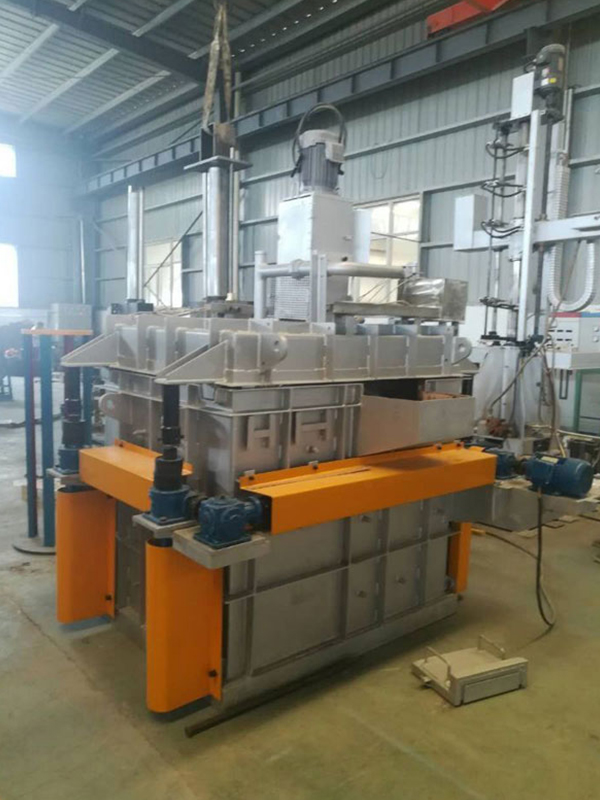 Online Degassing Device
 Aluminium Degassing Equipment
 Online Aluminum Degassing
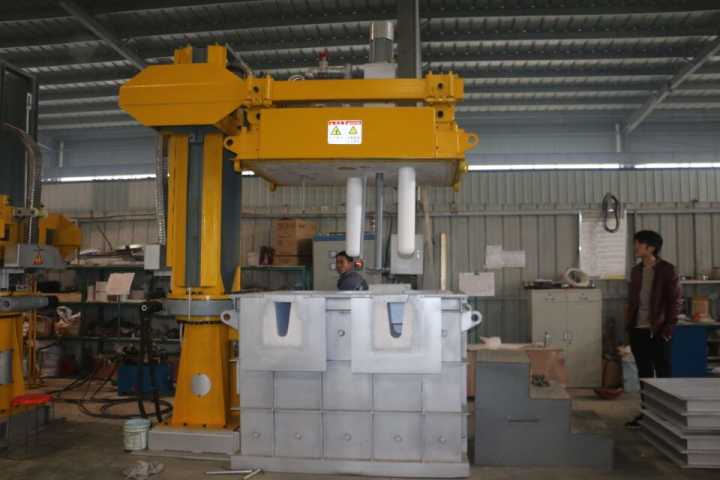 Degassing Equipment
 Aluminium Hydrogen Degassing Equipment
Casting knowledge-Aluminum Degassing 1
 Degassing In Aluminium Casting
 Degassing Equipment
 Degassing Aluminum Casting Unit
 Metal Metallurgy Casting Foundry Aluminium Degassing Treatment
 Aluminum Degassing Equipment
Online Degassing Unit for High Purity Aluminium
 Degassing In Aluminium Casting
Sorry, the comment form is closed at this time.