
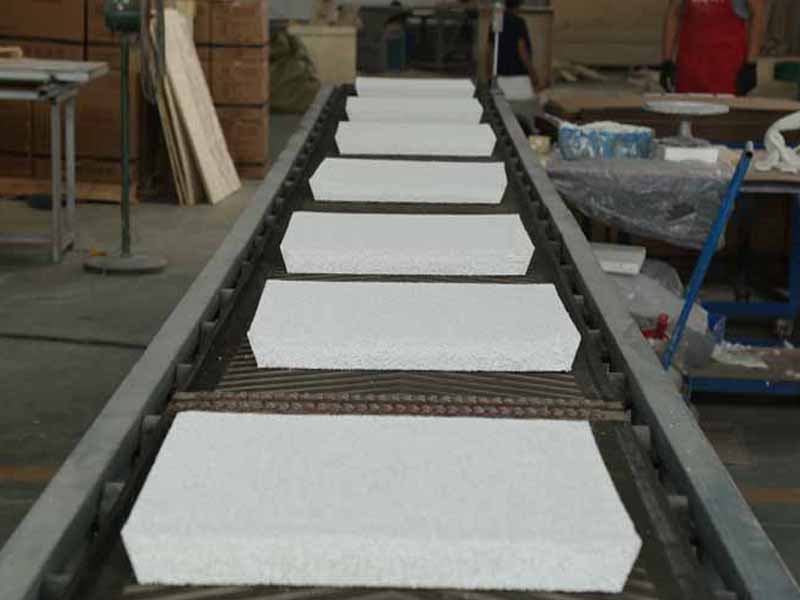
4 أغسطس اشترِ مرشحات الرغوة الخزفية
Buy Ceramic Foam Filters from China Adtech, you will know its basic principles and be able to use it better.
The usual manufacturing method of foam ceramic filter plate is to invade the polyurethane sponge into the ceramic slurry, extrude the excess part, dry, and finally sinter at high temperature to form a three-dimensional porous ceramic material related to the original foam structure.
Some people think that ceramic foam is a replica of foam plastic, but in fact there is a big difference between the two.
Polyurethane foam is an irregular three-dimensional network structure connected by Strand. These strings are surrounded by numerous polyhedrons of varying sizes.
Theoretically, each small cell tends to have a 12-sided structure, which is customarily called Cell.
If the amount of mud hanging is very small and uniform, the resulting foam ceramics still maintains a three-dimensional network structure, but the string connecting each node is thickened, and its configuration remains unchanged.
However, this is not the case.
Due to the process itself and from the consideration of filtration efficiency and strength, the foam ceramic filter plate prepared in this way is no longer a three-dimensional network structure, but a pipe with twists and turns interconnected with uneven thickness.
It is precisely this uneven tube wall that plays a key role in trapping small inclusions in the aluminum melt. This is the same as the filtration mechanism of deep bed filtration.
كما أن هذا التصميم يزيد من المسار الذي يتلامس خلاله الألومنيوم المنصهر مع الجزء الخزفي من لوحة المرشح، مما يزيد من احتمالية امتصاص جزيئات الشوائب.
It seems that the perfect three-dimensional network structure can facilitate the passage of aluminum melt but may not have a good slag removal effect.
ينبغي أن يبدأ تقييم مزايا وعيوب لوحة الترشيح من آلية الترشيح نفسها، مع مراعاة أدائها الشامل بدلاً من التركيز على عنصر واحد فقط.
Selection of filter plate
In addition to the geometric size, strength, chemical stability and thermal stability to meet the requirements, the use effect of the filter plate depends to a large extent on its internal structure.
Before choosing a ceramic foam filter plate, we need to understand a few terms.
1.Cell Size
For polyurethane foam, the unit cell refers to a polyhedron surrounded by multiple “strings”. Numerous small polyhedrons are arranged closely to form a large foam, and all the unit cells are connected.
The situation of the foam ceramic filter plate is different. The original string becomes thicker, and the original polyhedron surrounded by lines becomes a polyhedron composed of ceramic pillars and faces, which reduces and narrows the passage between the unit cells. .
The so-called unit cell size is the average value of the unit cell diameter in the parallel and vertical cross-sections of the filter plate measured multiple times.
2.Window Size
The window size refers to the diameter of one cell entering the channel of another adjacent cell.
A unit cell can have multiple windows with different sizes to communicate with the surrounding unit cell, and there is a linear relationship between the window size and the unit cell size.
On the cross-section of a ceramic foam filter plate, it is not easy to distinguish which one is the window, because they all seem to be holes of different sizes.
No matter which standard distinction is selected, there is a certain degree of arbitrariness. Even for the unit cell of the same size, the size of the hole formed is very different due to the different distance between the section and the center.
The aluminum melt has both small and coarse places on the path through the ceramic foam filter, and the flow rate is also slow and rapid, which is also conducive to increasing the collision between the inclusion particles in the aluminum melt and the filter medium.
3.Pore size
The pore size refers to the diameter of a channel in and out of a unit cell, which is similar in meaning to a window.
4. Porosity
Porosity refers to the percentage of open pore volume in the total volume of the foam ceramic filter plate. Generally, this indicator is not used to measure the size of the filter plate’s micropores. The measurement results show that for a 17-inch 10ppi and a 17-inch 30ppi filter plate, the porosity is 80% and 79.1%, respectively, which is almost the same.
5.Pressure drop
Pressure drop refers to the pressure difference of the melt flowing from one side of the filter plate to the other, which is a quantity related to the transmittance.
Some people divide the filter plate into several grades according to the pressure difference. The higher the value of the stage, the greater the pressure drop.
6.Permeability
Permeability refers to the difficulty of the fluid flowing through the مرشحات الرغوة الخزفية (or polyurethane foam), and indicates the resistance of the ceramic foam filter plate to the fluid passing through it.
Obviously, for a given flow rate, the greater the permeability of the filter plate, the smaller the pressure drop, and vice versa.
How to choose the filter plate size scientifically?
Theoretically, the smaller the speed of the aluminum melt flowing through the filter plate, the easier it is to adsorb the impurities.Considering the actual production situation, the recommended flow speed is generally 10-19mm/s.
Then you can calculate the selection range of the filter plate size according to the capacity (t/h) and flow rate of the aluminum casting production line.
When you Buy Ceramic Foam Filters, you can consult Ceramic Filter Manufacturers sales@adtechamm.com.
Selection of pore size of foam ceramic filter plate
The common way to express the pore size of the ceramic foam filter plate is ppi
تؤدي اختلافات عدد النقاط في البوصة (ppi) وسمك ألواح الترشيح إلى اختلاف تأثيرات الترشيح على الجسيمات.
كلما زاد عدد النقاط في البوصة (ppi) وزاد سمك الطبقة، كان تأثير الترشيح أفضل.
The thickness of the common standard filter plate is 50mm. If it is too thick, the speed of the melt will slow down, and the size of the filter plate has to be increased to achieve a certain flow rate.
عندما يكون السُمك ثابتًا، تختلف كثافة النقاط في البوصة (ppi)، كما تختلف قدرة الترسيب على احتجاز الجسيمات، لا سيما الجسيمات الصغيرة التي يقل حجمها عن 20 ميكرومتر.
كلما زاد عدد النقاط في البوصة (ppi)، زادت القدرة على التقاط الجسيمات الصغيرة.
When you Buy Ceramic Foam Filters, you can consult Ceramic Filter Manufacturers sales@adtechamm.com.
When choosing the pore size of the filter plate, the first consideration should be the quality requirements of aluminum products.
For example, for civil extruded ingots and slabs of plates, filter plates of 10-40ppi can be selected according to the product grade and the degree of melt cleanliness.
High-end foils and can blanks require 30-80ppi filter plates.
The choice of filter plate depends on the user’s practice and experience, combined with their respective conditions of use. Finally, whether the cleanliness of the product meets the quality requirements shall be used as a measure.
مقالات ذات صلة:
 اشترِ رغوة تصفية بدقة 30 نقطة في البوصة
 اشترِ مرشحات «فاوندري» الخزفية
 مرشحات الرغوة الخزفية للذوبان
 مرشحات الرغوة المستخدمة في صناعة السبك
 مرشحات الرغوة السليكونية
 مرشحات الرغوة الشبكية
 مرشح رغوي عالي الكثافة (PPI)
معايير مرجعية بشأن استخدام المرشحات الرغوية.
مرشح رغوي عالي الكثافة (PPI)
معايير مرجعية بشأن استخدام المرشحات الرغوية.
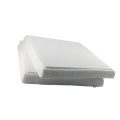 شراء مرشحات «آسيان فاوندري»
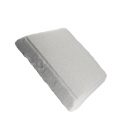 شراء مرشح من الألومنيوم المصبوب
 شراء مرشح سيراميكي
 شراء مصنع مرشحات خزفية
 مرشحات الرغوة المعدنية
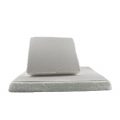 شراء أنظمة ترشيح المعادن المنصهرة
Sorry, the comment form is closed at this time.